What Travelling Has Taught Me That Google Never Could
Travel teaches lessons that no algorithm or guide can replicate: how a stranger's unexpected kindness shifts your entire worldview, what profound silence feels like at 4,000 meters, and that cultural differences often reveal shared human truths rather than divisions. These lessons come from lived experience, not research. The most transformative insights from travel are the ones you couldn't have Googled in advance because they required you to be physically present, vulnerable, and open to being changed.
You can Google any country.
You can read about its food, watch videos of its landmarks, scroll through thousands of photographs of its streets and people and light. You can know, in a factual sense, a great deal about a place you have never been to.
And then you go. And something happens that no amount of prior research prepared you for.
That gap — between knowing about a place and being inside it — is where travel does its real work. I've been thinking about what happens in that gap for years, across many countries and many trips, and this is my attempt to explain what I've found there.
Why Is Travelling More Than Just Going Somewhere?
There's a phrase I keep coming back to: the world is a book, and those who don't travel read only one page.
I've seen versions of this sentiment attributed to various sources over the years, but the reason it persists is because it's accurate. A book read cover to cover gives you access to worlds and perspectives beyond your own experience. Travel does the same thing — except the book reads you back. It doesn't just show you other places. It shows you yourself, from angles that staying home never could.
I travel in different ways depending on the destination — sometimes with a tour group, sometimes independently in a small group, sometimes solo. Each has its own texture and its own lessons. But what all of them share is this: they take you out of the environment you've spent your whole life calibrating to, and drop you somewhere that operates by different rules. And the moment you start noticing the different rules, you start questioning why you assumed your rules were the default.
That questioning — gentle, curious, non-defensive — is what I think travel is actually for.
How Does Travel Challenge the Way You Think?
The lessons that have stayed with me longest are not the dramatic ones. They're the quiet observations that accumulated across different countries and refused to leave.
In Singapore, I noticed that most people commute by train. Not because they can't afford cars — but because the infrastructure makes it the sensible, efficient choice. The default is different. Why isn't the default different at home?
In Taiwan, I got lost and a stranger didn't just point me in the right direction. They physically walked with me to where I was going. Not because they had nothing else to do. Because helping someone who is lost was simply what you did. That interaction cost me nothing and rearranged something small but real in my thinking.
In Hong Kong, restaurant tables are shared with strangers as a matter of course. Space is precious; the table belongs to whoever needs it right now. You sit down next to someone you've never met, you eat, you leave. Nobody performs the politeness of pretending the other person isn't there, and nobody is offended by the proximity. It's efficient and, once you adjust to it, oddly companionable.
None of these things required a guidebook to notice. They required being physically present, paying attention with all five senses active rather than passively scanning.
And each one came with the same question in its wake: Why don't we do this at home? What would it take? Could I adopt even a small version of this in my own daily life?
That's what I mean when I say travel challenges your thinking. Not through grand revelation — through small, accumulating observations that quietly shift the furniture of your assumptions.
What Happens When Travel Makes You Uncomfortable?
Not everything travel shows you is beautiful in a straightforward way.
In Tibet, water is scarce in a manner that is difficult to understand until you've seen it. The washrooms in some areas carry the smell of that scarcity. The living conditions in mountainous communities are genuinely hard — not as a travel inconvenience, but as a daily reality for the people who live there and they not allowed to own passport. I stood in one of the most breathtaking landscapes I have ever seen and found myself thinking, with some discomfort, about what it meant to visit a place as a tourist that other people cannot leave.
In Morocco, the Sahara Desert is not just a photogenic backdrop. The locals who live and work there wrap their faces against the heat and the dust as a matter of survival, not style. And in Fes, the leather tannery is a place you photograph from above while workers stand in vats of dye below — beautiful from a distance, harsh from any other angle.
In Hong Kong, the Montane Mansion is one of the most photographed buildings in the city. It is also a building where real people live in real apartments of very real smallness, stacked on top of each other in a city where space is so scarce that the building's photogenic quality and its residents' daily reality exist in complete indifference to each other.
These moments don't have tidy conclusions. They're not lessons you can summarise in a caption or resolve with the right hashtag. They sit with you, and they should. Travel that only shows you beauty is not showing you the whole picture. The discomfort is part of the education.
What I've found is that travelling to places where daily life is harder than mine has never made me feel good about my own circumstances in a self-congratulatory way. It has made me feel responsible — to be more conscious of what I have, more thoughtful about how I use it, and more awake to the gap between the world I see from home and the world that actually exists outside it.
What Does Travelling Alone or in a Small Group Teach You?
There is a particular kind of learning that only happens when you can't defer to someone else.
When you travel in a large group or with a commercial operator handling all the logistics, you are a passenger — comfortable, supported, and largely protected from the friction that produces growth. That's not a criticism; some destinations genuinely require it and the experience is still valuable. But there is something different available in small-group or solo travel that I think is worth seeking out when conditions allow.
Getting lost, for instance. Not dangerously lost — directionally lost, in an unfamiliar neighbourhood, with imperfect language and no guarantee that the next person you ask will understand your question. What happens when you don't panic is that you start to problem-solve. You notice more. You make decisions on your own feet, in real time, with limited information. And you discover, usually, that you're more capable of navigating uncertainty than you thought.
Travel sharpens the mind not because it's exotic but because it's novel. New environments require active processing rather than passive habit. You can't move through a foreign city on autopilot. Every decision — which street, which café, which direction — requires actual thought. After a trip, I consistently return home feeling more alert than I left, and I think this is why.
How Does Travel Change the Way You See Your Own Country?
This is the part that surprises people when I mention it.
Travelling doesn't primarily change how you see the places you visit. It changes how you see where you come from.
You return from Switzerland and notice differently that your tap water has a cost attached to it (you can drink directly from the tap). You come back from Taiwan and notice how rarely strangers extend themselves for people they don't know. You return from Singapore and look at the cars and think about why we made the choices we made.
Stray dogs are being care in Turkey (an Islamic country). They are given food and neuter. In Taiwan and most European countries, pets are treated like a child. They even can ride rides such as train, cable car like any children.
None of these observations are judgements — they're perspectives. Travel hands you a lens that you didn't have before you left, and once you have it, you can't unsee what it shows you. Your own city, your own habits, your own defaults — they become visible as choices rather than inevitabilities.
That's uncomfortable sometimes. And it's also, I think, exactly the point.
The question I've learned to ask when I come home from any trip is: what can I take from this? Not as a souvenir. As a practice. Something small and real that I can bring into ordinary life, that keeps the journey working after the journey has ended.

Country: Switzerland
Dogs can ride public transport

Country: Taiwan
Dogs are being loved and treated like own child (you will see them everywhere)
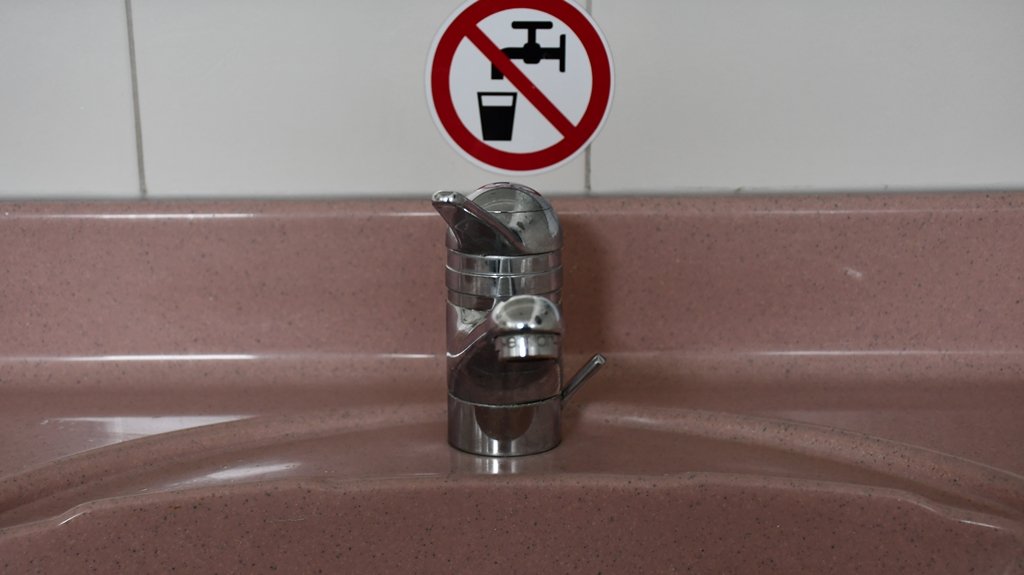
Country: Switzerland
Only water not suitable to drink from any tap will be put symbol. We can drink water from any tap or fountain
Why Does the Experience of Travel Outlast the Trip Itself?
The photographs fade in emotional charge after the first few viewings. The gifts you brought home end up in drawers. The hotel and the flight become impossible to distinguish from other hotels and flights.
What stays is harder to point to, but it's there.
It's in the way a particular conversation changes what you're willing to say to a stranger. The way standing somewhere genuinely vast and ancient makes your own problems briefly and helpfully small. The way making a friend on a trip — someone you'd never have encountered otherwise, whose entire frame of reference is different from yours — quietly expands what you believe is possible in other people.
Experience is the only souvenir that doesn't depreciate. It accumulates instead — layers of perception and perspective built up across years and countries, each one refining the way you move through the world, including the parts of the world you never leave.
The postcards on my wardrobe wall are a version of this. So are the photographs I still surprise myself with when I scroll back far enough. So is every conversation I've had with someone from somewhere I'd never have found without a ticket and the willingness to go.
The world is a book. I intend to keep reading.
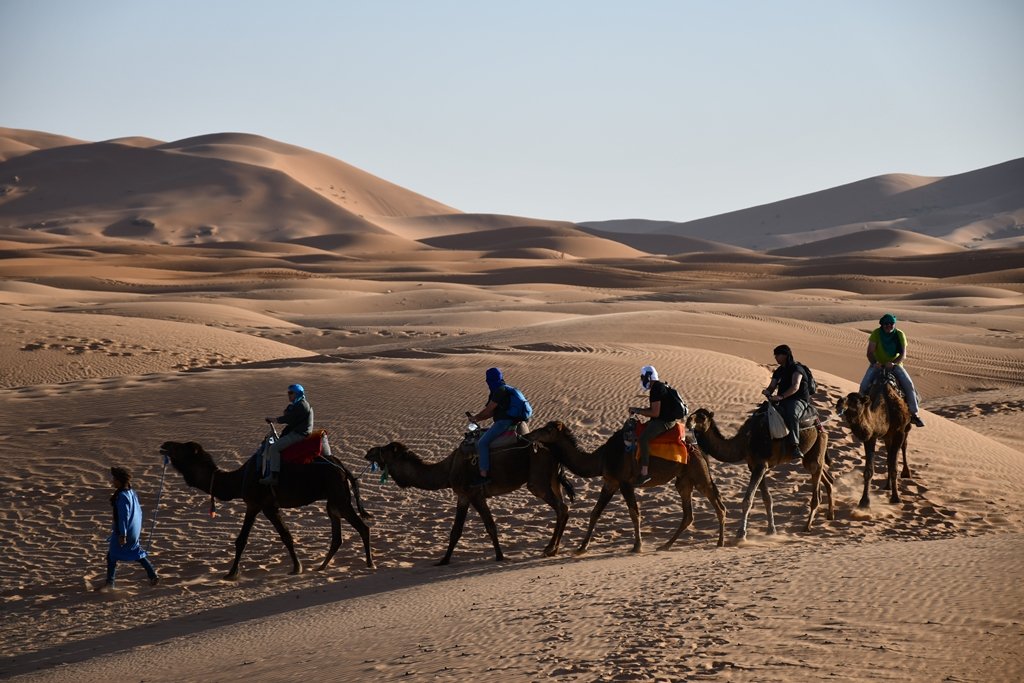
Country: Morocco
Sahara Desert - It is so hot that local and tourists need to wear scarf

Country: Morocco
Local praying even bringing tourists to Sahara Desert

Country: Hong Kong
The Famous Montane Mansion which is very instagrammable but most importantly the residents are living in such a cramp and compact space.

Country: Morocco
Leather Tannery – it is very smelly due to the way of making of leather products, image how harsh the condition the workers work in their life

Make new friends whether with the group we are travelling and with the locals.
We will learn even more when we try to understand each other
Frequently Asked Questions
Does travel really change your perspective?
Yes — but not automatically. Travel changes your perspective when you approach it with genuine curiosity rather than confirmation of what you already believe. The travellers who return unchanged are usually the ones who stayed inside the tour bus, ate familiar food, and filtered everything they saw through what they already knew. Travel with open senses and a willingness to be surprised, and it will change how you see things. It's difficult to avoid.
Is solo travel the best way to learn from travelling?
Solo or small-group travel creates conditions for deeper learning because it removes the buffer of a large group between you and the place you're in. That said, not every destination lends itself to independent travel, and a guided tour done thoughtfully — with genuine attention paid to what you're seeing — can be equally transformative. The format matters less than the quality of attention you bring to it.
How do you make the most of travelling to a new country?
Activate all five senses rather than just your eyes. Eat what the locals eat, not what the tourist menu offers. Walk instead of riding when you can. Accept invitations. Get lost occasionally and don't panic about it. Talk to people beyond your travel group. And write something down while you're still inside the experience — your own observations, in your own words, before the familiar life at home begins to smooth over what you felt.
Can travel make you a better person?
It can make you a more informed, more empathetic, and more curious person — which are the conditions for being better. But travel is not a shortcut to growth; it's a catalyst for it. What you do with what you see is still your own responsibility. I've met travellers who've visited dozens of countries and learned nothing except how to find the same comfort foods in every city. The passport count is not the point. The attention is.
Why is travelling better than watching documentaries or reading about places?
It isn't always — a great documentary or a well-researched book can give you context and depth that a short trip can't. But physical presence activates something that screens cannot: your body's full sensory response to a place. The smell of a medina at night. The weight of altitude on your lungs. The particular quality of light in a landscape you've only ever seen in photographs. These are not details — they are the experience. And they are only available in person.
You might also enjoy
📖 Reflect · The Quotes in Postcard that I Write to My Future Self at Every Country I Visit
📖 Reflect · What Travel Photography Has Taught Me About Life: 5 Lessons fromYears Behind the Lens