From 40°C Delhi to Cool Shimla: What I Found in the India Nobody Warns You About
17 - 30 March 2024
Delhi hits you before you're ready for it.
Not the crowds, not the noise — I'd prepared for those. It was the heat. We landed at Terminal 3 on a Sunday evening in March, and even at 10pm the air sat heavy in a way that didn't feel like night. I remember stepping out of Indira Gandhi International Airport thinking: thirteen more days of this.
I was wrong. But I didn't know that yet.
Himachal Pradesh — the northern Indian state covering Shimla, Manali, and Dharamsala — offers a markedly different experience from India's plains cities. Temperatures in March range from −3°C-16°C across HP's cities, compared to 38–42°C in Agra and Jaipur. Cities are smaller, less crowded, and more affordable, and foreign tourist numbers are sparse compared to the Golden Triangle. For travellers finding the pace of Delhi or Agra overwhelming, Himachal Pradesh provides genuine relief without leaving the country.
Two Indias, One Trip
Our route ran from the 17th to the 30th of March 2024. Thirteen days, twelve nights, two completely different Indias.
We started in Delhi, then took a Shatabdi train north to Chandigarh on day two, before driving four hours up into Shimla. From Shimla we went further into Himachal Pradesh — Manali, then Dharamsala, then Amritsar — before looping south through the plains: Delhi again, Agra, Jaipur, and finally back to Delhi for the flight home. The majority of the trip was spent in the north. And that turned out to matter more than I expected.
The India of the plains operates at full volume. By mid-afternoon in Agra or Jaipur, the temperature sat between 38-42°C — the kind of heat that turns a lunch break from a choice into a survival strategy. The air in Delhi and Agra sits heavy. The larger cities feel built for scale, not for slowing down, and everywhere you look there's evidence of how hard ordinary life is here: people carrying loads that would require equipment elsewhere, vehicles packed beyond what seems physically possible, and a rubbish situation in the bigger cities that isn't carelessness so much as infrastructure that hasn't caught up to the pace of everything else.
These aren't observations I could have made from a tour bus window and then moved on from cleanly. You see a woman hanging laundry from a government signpost, passengers standing on a moving vehicle's rear bumper because the inside is already full, a woman in a bright orange sari carrying a bundle on her head across a parched Rajasthan roadside. Life here is visible in a way that is confronting precisely because it isn't hidden.
It was confronting. Looking away wouldn't have been honest.
Then we went north. And everything changed — starting with the temperature.
Himachal Pradesh and India's plains cities are dramatically different experiences — in temperature, pace, cost, and atmosphere. Building your itinerary around both gives you a more complete picture of what India actually is.
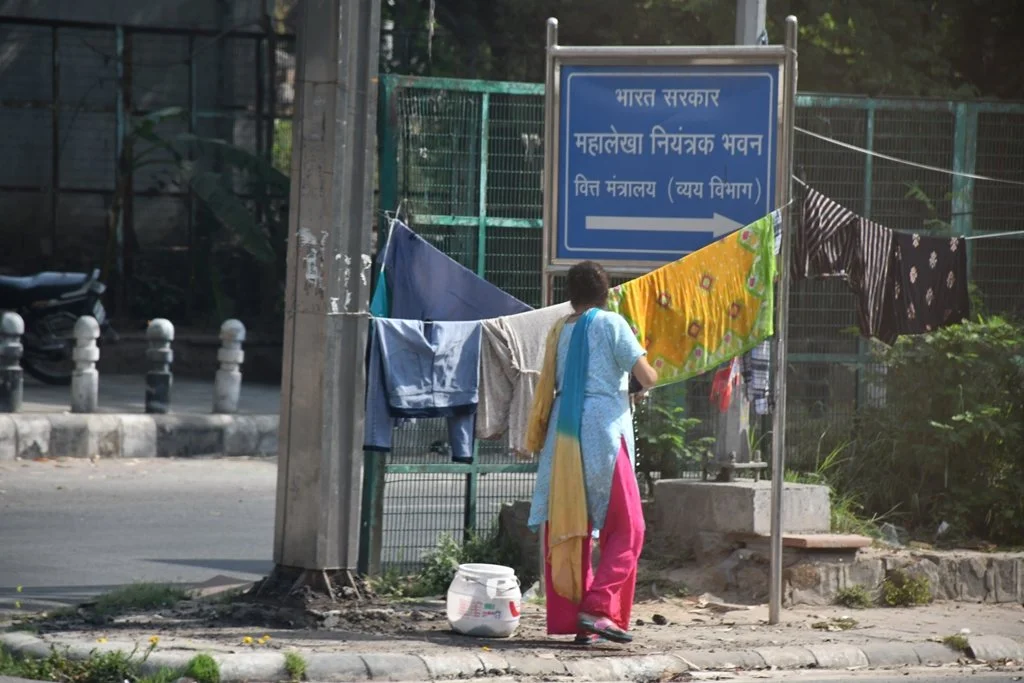
A woman hangs laundry on the roadside — daily life carrying on, as it does, in whatever space is available.
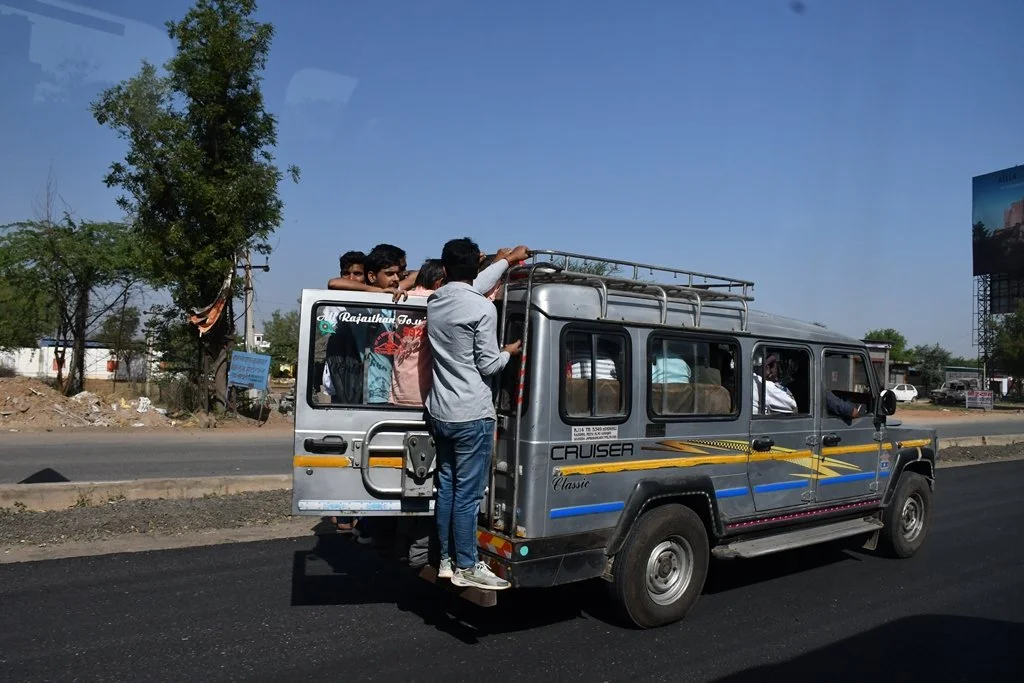
A Rajasthan-registered Cruiser with passengers hanging off the back bumper, somewhere on the road between Jaipur and Delhi. Vehicles here are treated as a suggestion of capacity, not a limit.
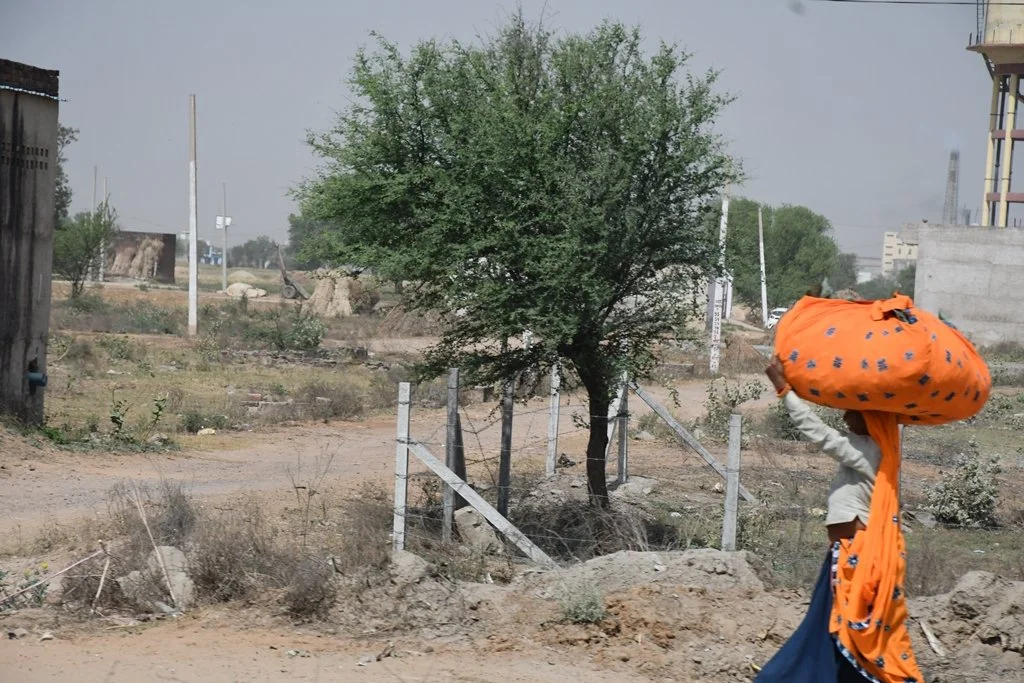
A woman carries a load on her head through a dry, dusty landscape on the outskirts. The sky is heavy, the ground parched — this is the India of the plains in March.
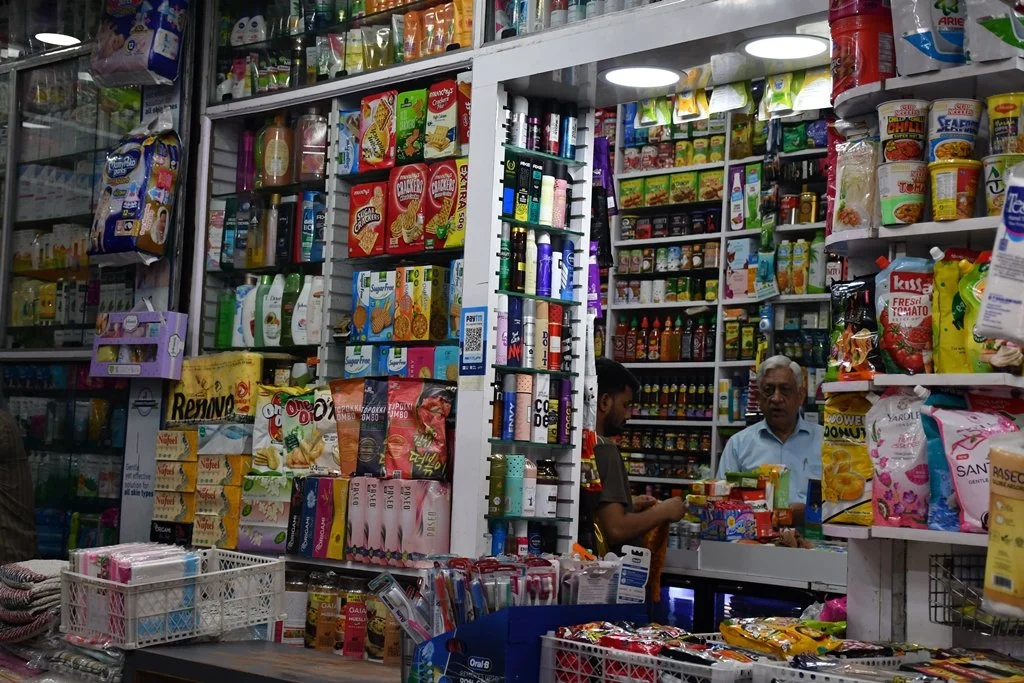
A general store in Delhi packed floor to ceiling with every brand and product imaginable — biscuits, shampoo, cooking oil, snacks. The efficiency of small spaces, perfected.
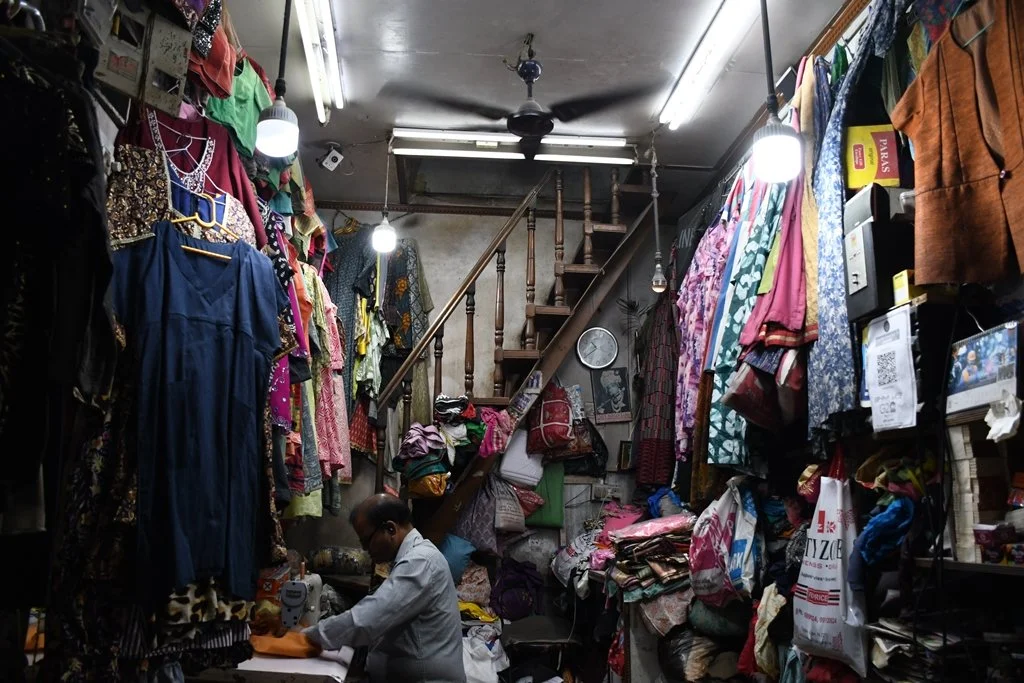
A tailor works at his sewing machine in a narrow Delhi shop, surrounded by garments hanging from every surface and stacked on every ledge. The staircase behind him suggests there's somehow a second floor.
What Cool Air Feels Like When You've Forgotten It
Shimla: 10-16°C
The shift into Himachal Pradesh is gradual and then sudden. The landscape changes first. By the time we reached Shimla, the thermometer had dropped to somewhere between 10-16°C— mild enough to finally breathe, cold enough to feel like a different country.
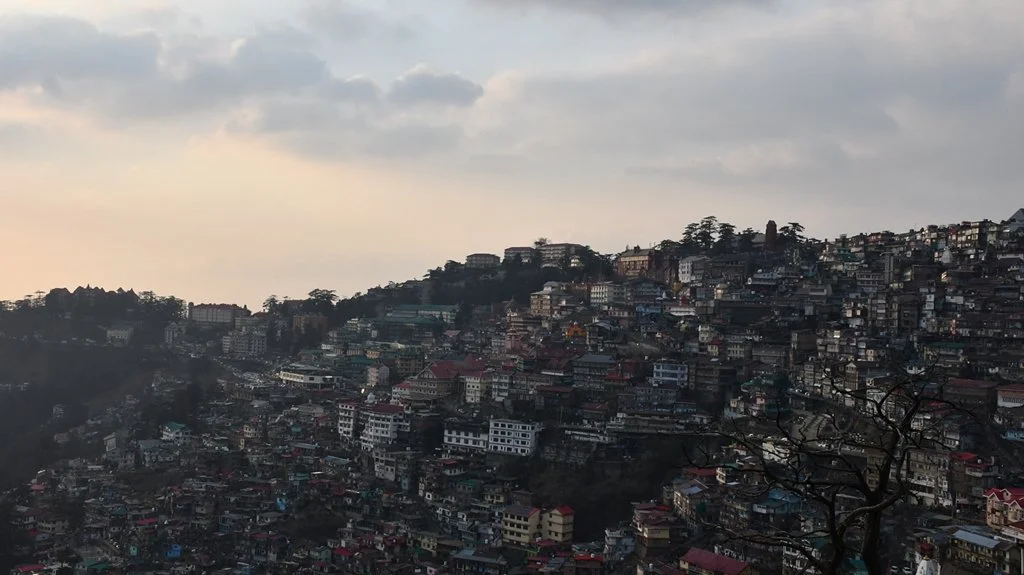
Shimla (Overview)
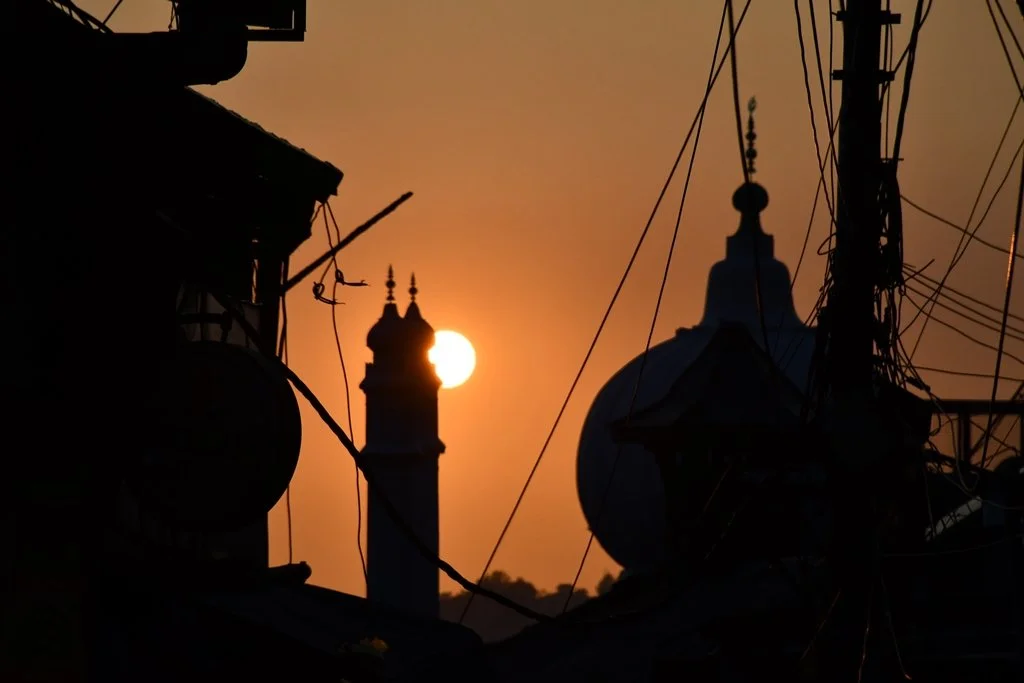
Sunset over the Shimla street. After the plains, the cool air here felt like a physical relief.
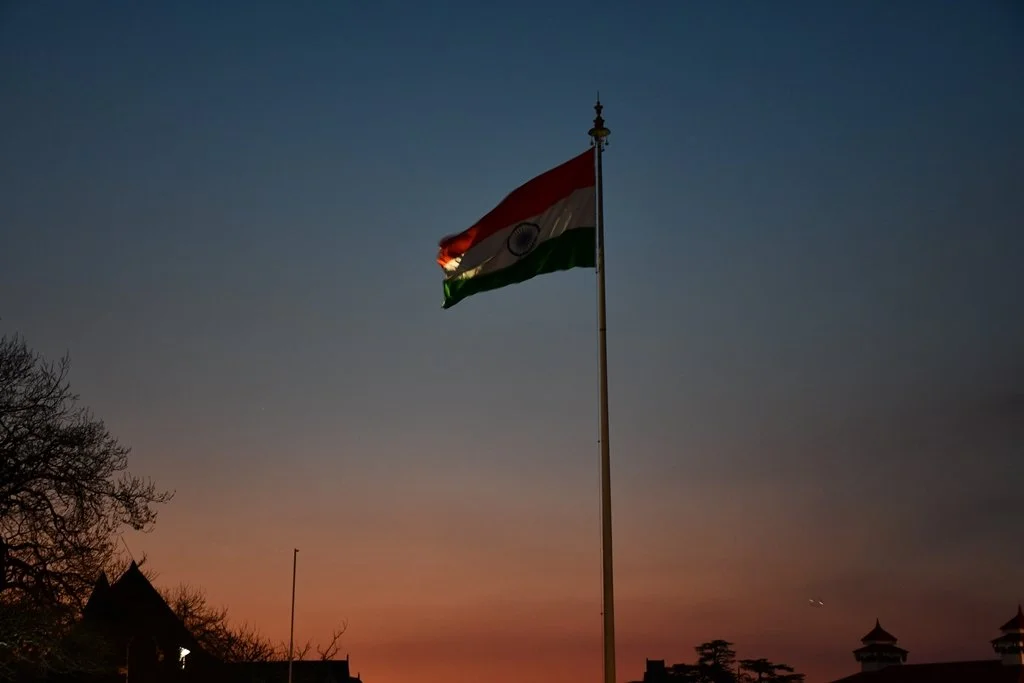
The Indian flag at dusk on Shimla's Ridge — the same spot where Mall Road stretches out below, traffic-free.
What surprised me most about Shimla was its order. Mall Road, the main pedestrian strip, has no vehicular traffic — you walk it, full stop. The colonial architecture along the ridge tells you immediately that this was the British Summer Capital; most of the buildings here were constructed during that period and it shows in the proportions, the stone, the strange familiarity of a hill town that feels vaguely European in silhouette but entirely Indian in everything else.
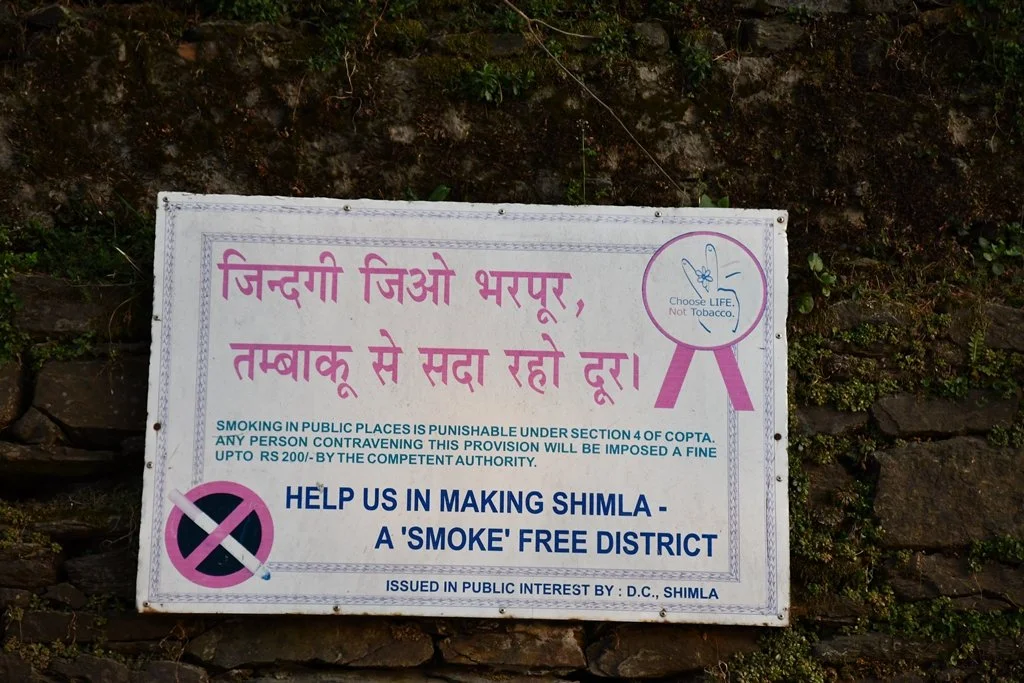
One of the signboards along Mall Road — Shimla's pedestrian-only main strip has a noticeably managed, ordered feel compared to the larger plains cities.
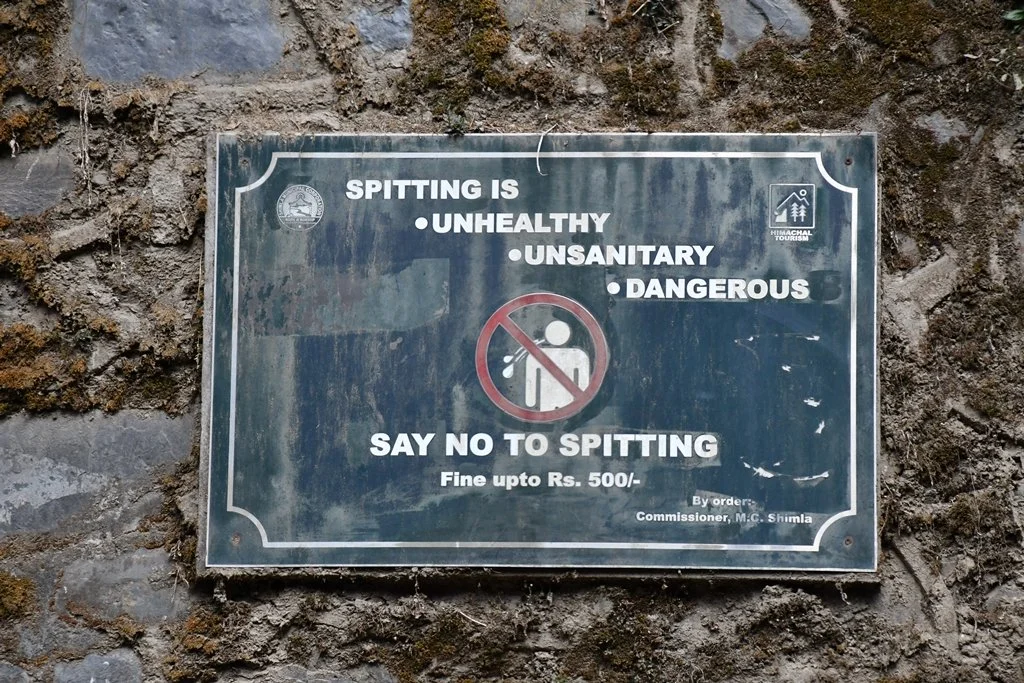
Public signage in Shimla. Small details like these reflect the difference in how the city manages its public spaces.
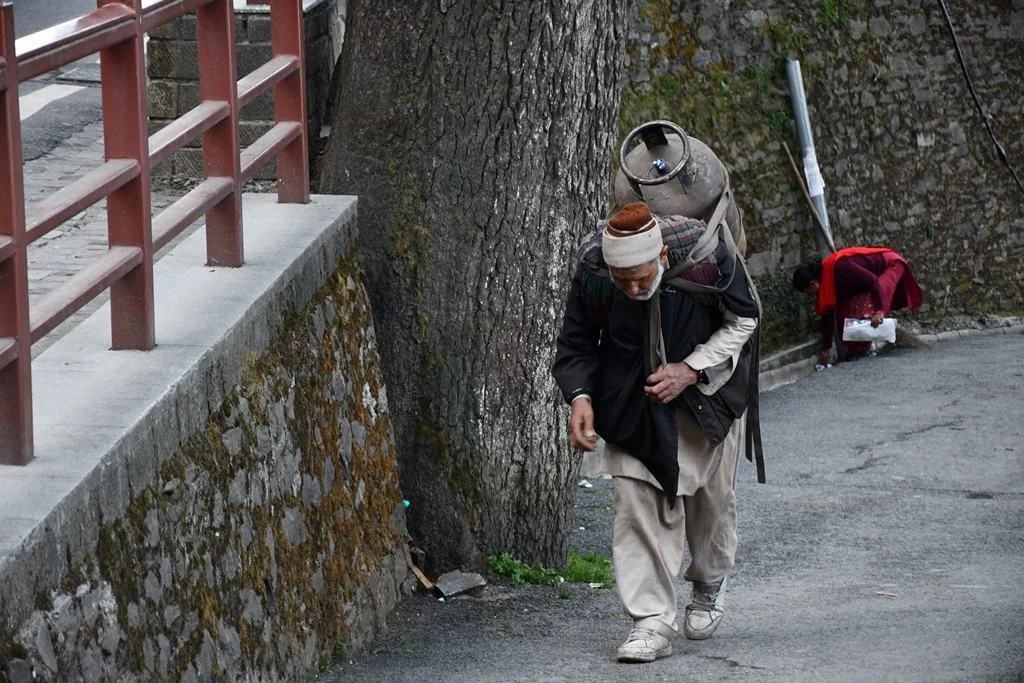
An elderly man carries a gas cylinder on his back up a Shimla street, steadied by a strap across his forehead. What would be a delivery van job elsewhere is a one-man effort here.
On our second morning, we boarded the Kalka–Shimla Railway for a 45-minute ride to Taradevi. This narrow-gauge line is a UNESCO World Heritage site, and once you're on it, it's easy to understand why — it winds through tunnels and over bridges with the kind of deliberate slowness that makes you look up from your phone. After Taradevi, we drove back to Mall Road for lunch, and in the afternoon we trekked to the Indian Institute of Advanced Studies — housed in the old Viceregal Lodge, built between 1884 and 1888. The lodge is ringed by pine trees and surrounded by spacious gardens, and the round-trip covering the historical sites along the route is about six kilometres of the most peaceful walking I did in India.
Shimla is orderly, walkable, and cooler than anything on the plains — and the Kalka–Shimla Railway alone is worth a morning of your itinerary.
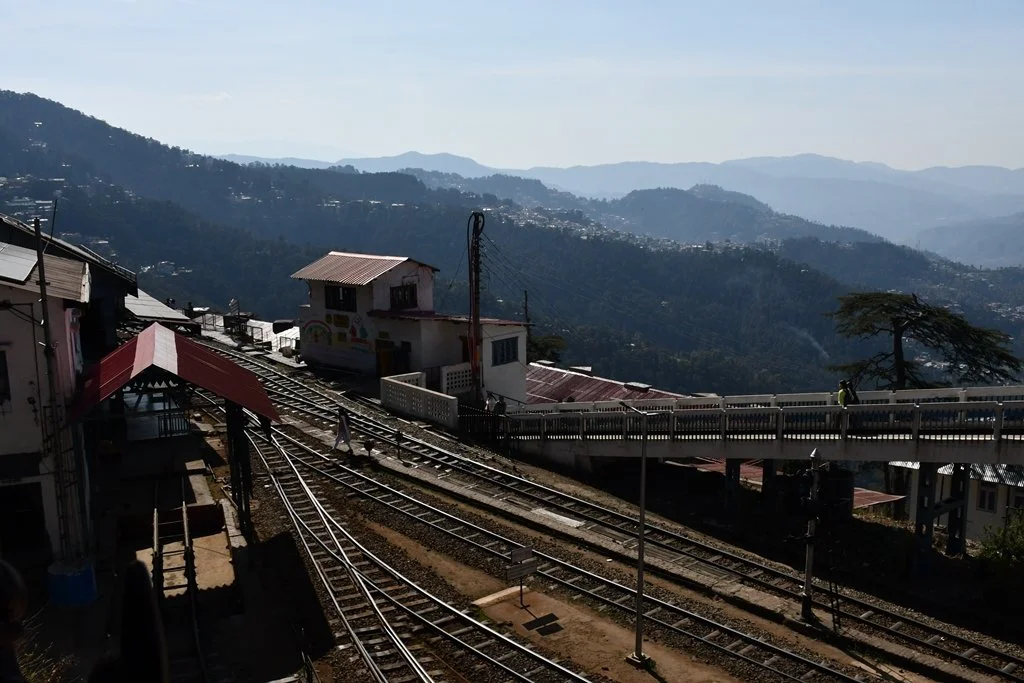
Kalka–Shimla Railway
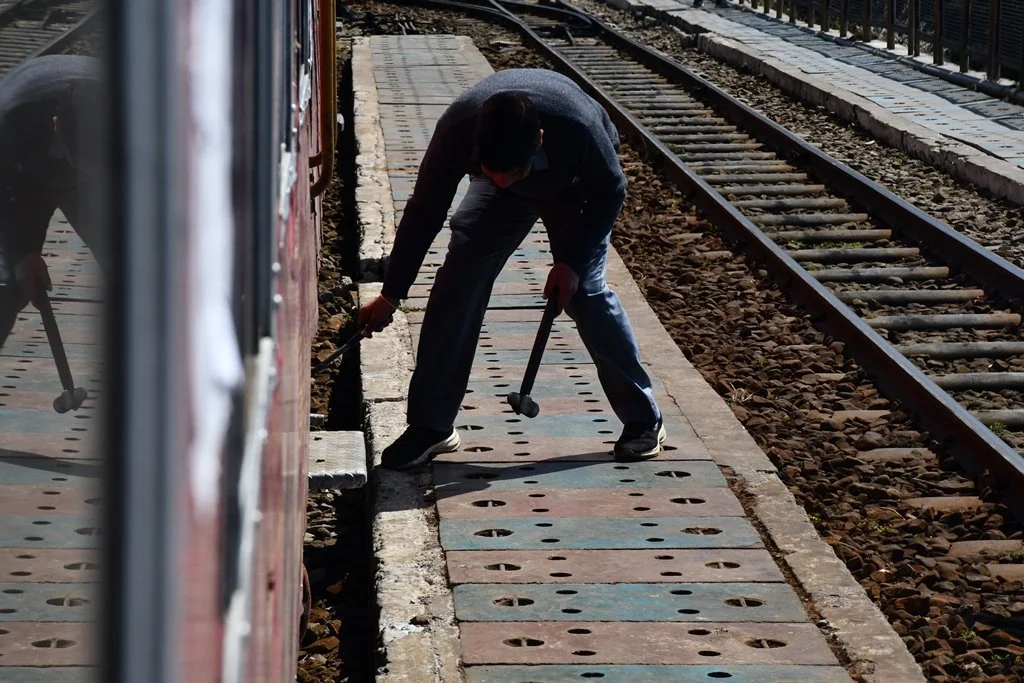
Kalka–Shimla Railway - Final checks before departure. The toy train runs at a deliberate pace that forces you to actually look at the landscape rather than scroll past it.
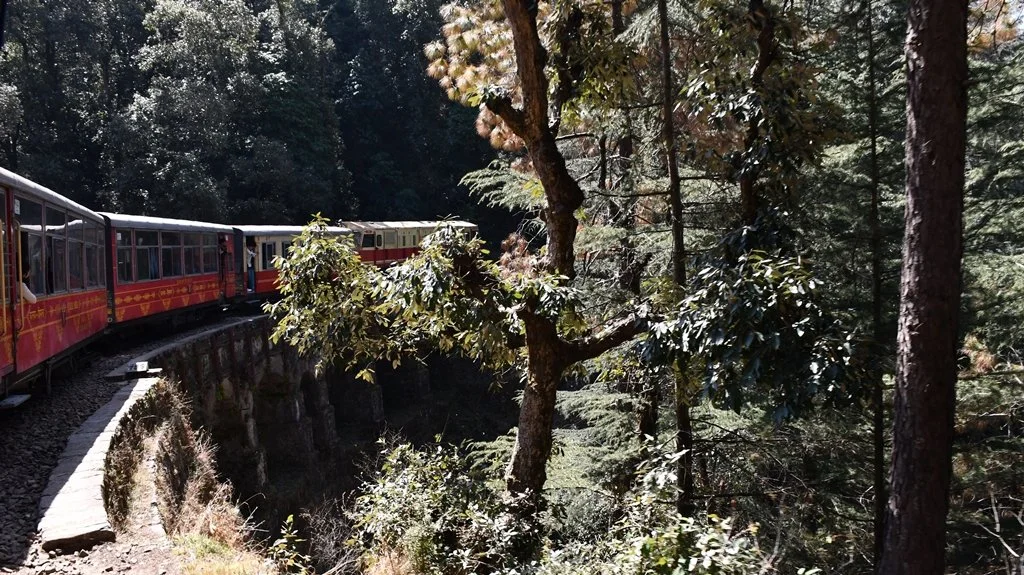
The view from the Kalka–Shimla Railway as it winds through the hills — the kind of journey that makes the destination feel earned.
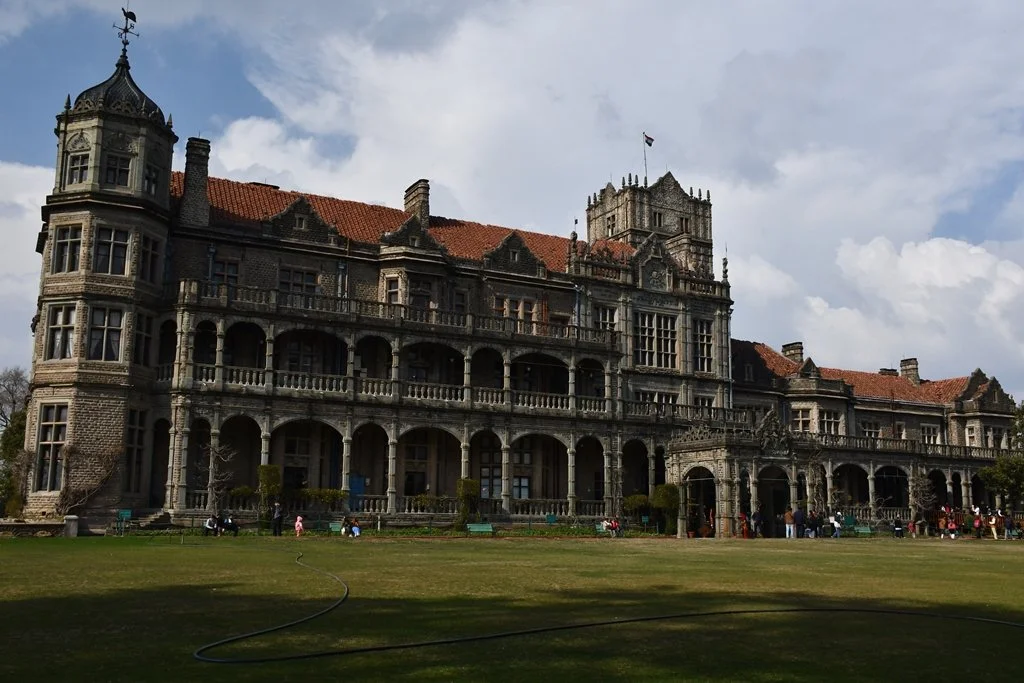
The Indian Institute of Advanced Studies, housed in the old Viceregal Lodge built between 1884 and 1888. Six kilometres of pine-lined paths connect the historical sites on the trek here.
Manali: −3-10°C
The drive from Shimla to Manali is one of those journeys that makes you realise roads can be experiences in themselves. The landscape shifts constantly — descending into valleys, climbing back up, snow-capped peaks appearing and disappearing depending on the bend in the road. The Himalayas don't give you a fixed view; they keep rearranging themselves.
One thing worth knowing before you go: the winding mountain roads through Himachal Pradesh are relentless. Our guide warned us in advance to bring car sickness medication — and she wasn't being overly cautious. She'd done this route before, knew the roads well, and still got sick herself on the journey. If you're prone to motion sickness even mildly, don't leave this to chance. Take the tablet before you get in the vehicle, not after the nausea starts.
The roads through Himachal Pradesh are narrow in a way that takes some adjustment — and this isn't one stretch or one bad patch. It's the nature of mountain roads here. What looks like a single lane is somehow a two-way road, carved into the hillside with a rock face on one side and a considerable drop on the other, and the vehicles coming from the opposite direction aren't bicycles. They're full-sized buses. Our driver would ease the car to within inches of the rock face without breaking pace, the bus would pass close enough to count the scratches on its side, and then both would carry on as if nothing unusual had just happened. Across the mountainous stretches of Himachal Pradesh, this is simply how driving works — and the drivers here have mastered it in a way that is, once you stop gripping your seat, genuinely impressive to watch.
Bring car sickness medication for the mountain roads — and expect the drivers to be more skilled than the roads have any right to require.
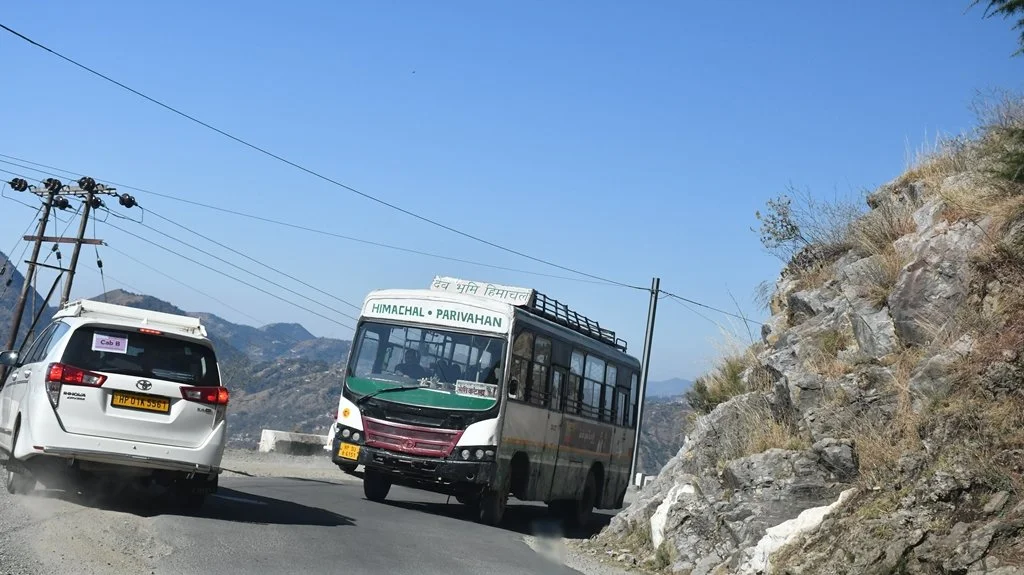
Toyota Innova and a Himachal Parivahan bus negotiate the same narrow mountain road in opposite directions — a scene that plays out without hesitation across the hills of Himachal Pradesh.
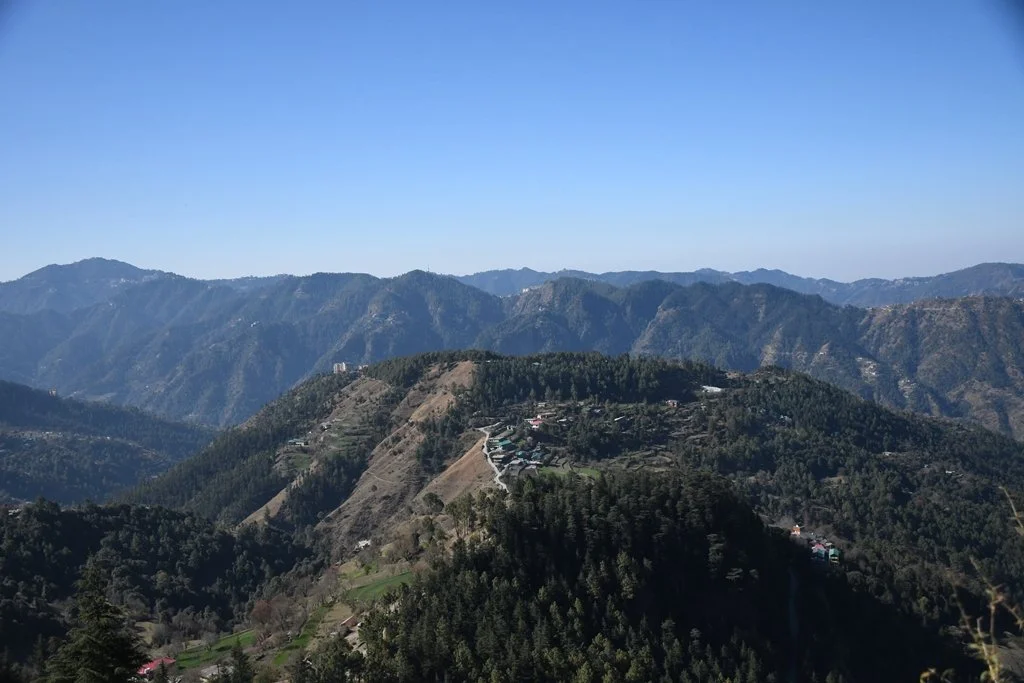
Scenic roads in the Himalayas from Shimla to Manali
By the numbers, Manali was actually colder than Shimla — the temperature range dipped to -3°C at the low end. But I'd been told to expect something brutal, and what I got was cool and manageable. Whether the week was milder than usual or my expectations had been deliberately overset, I can't say. Manali surprised me by being liveable.
We spent a full day exploring on foot: the 500-year-old Hidimba Devi Temple, a wooden carved structure set among deodar trees with a stillness that makes the carvings feel more significant than their age; Old Manali village, named after the Hindu sage Manu; and the quieter neighbouring village of Goshal. Then the following morning, we drove up to Solang Valley, where you can paraglide or ski if conditions allow, and continued to Snow Point — the maximum accessible road toward Rohtang Pass at 3,978 metres. The Atal Tunnel,the world's longest highway tunnel above 10,000 feet.
Manali surprised me by being liveable — cooler than expected, quieter than Delhi, and genuinely worth more than a single day.
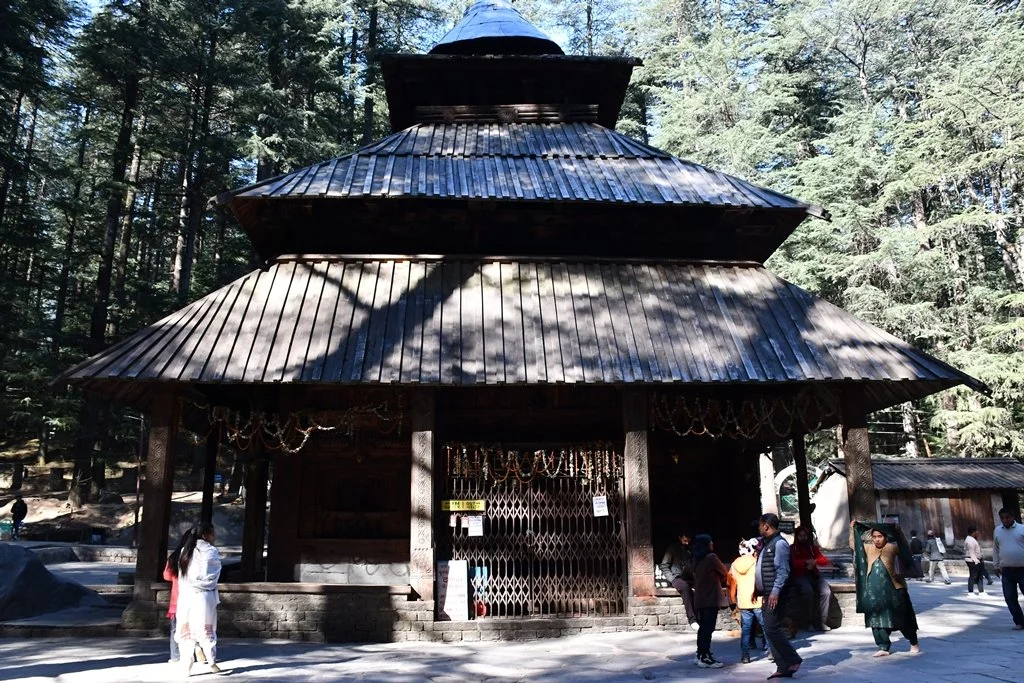
The Hidimba Devi Temple in Manali — a 500-year-old wooden structure set among deodar trees, with a stillness that makes the carvings feel more significant than their age.
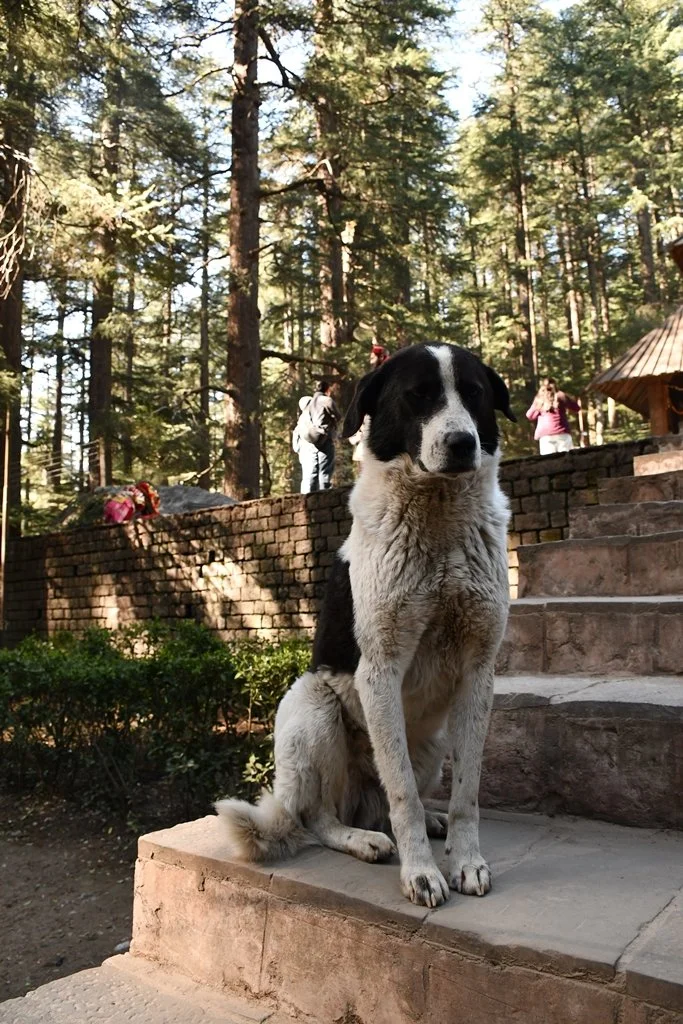
A resident of the Hidimba Devi Temple grounds. Dogs in India, particularly in the north, have a way of attaching themselves to wherever the people are.
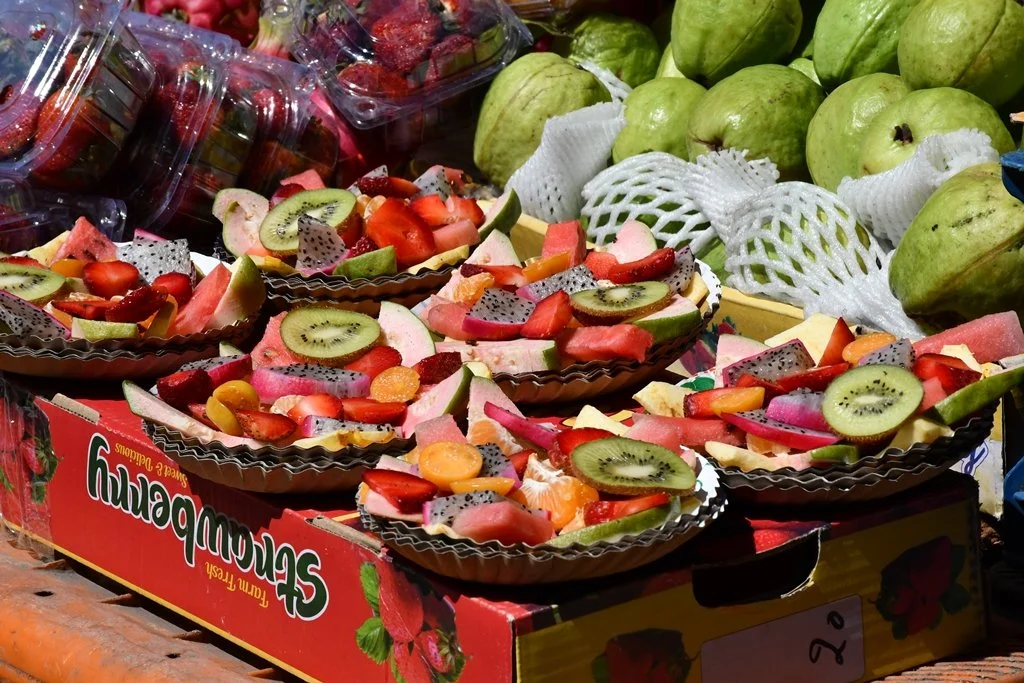
Mixed fruit cups at a Shimla roadside stall all cut fresh.
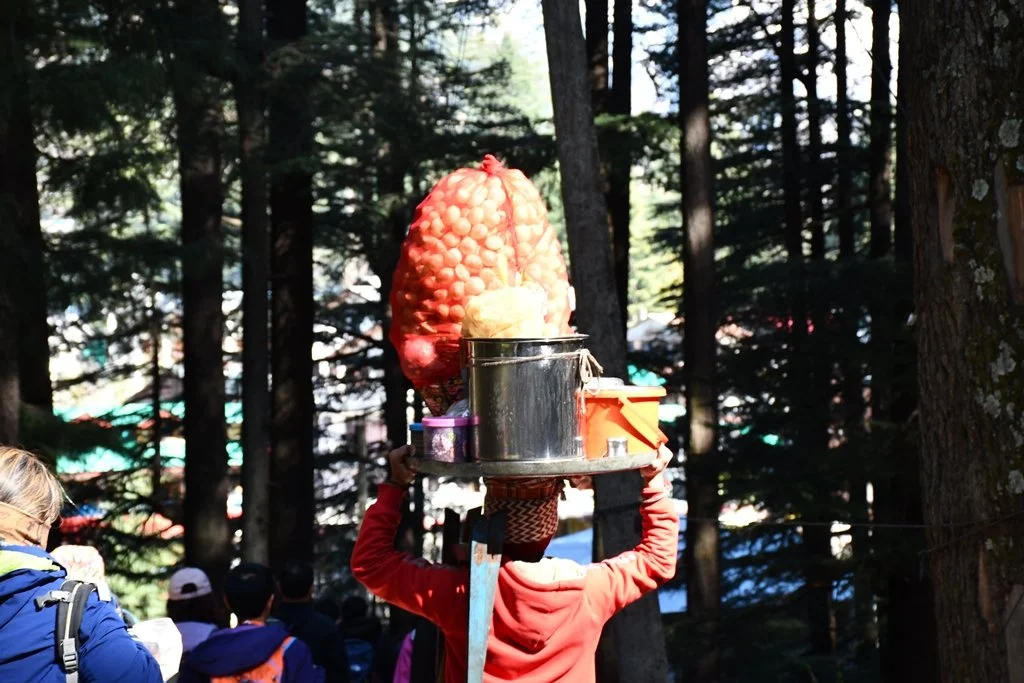
A vendor carries a tray loaded with a net bag of oranges, steel pots, and condiments balanced on his head through the deodar trees — his entire shop, moving with him.
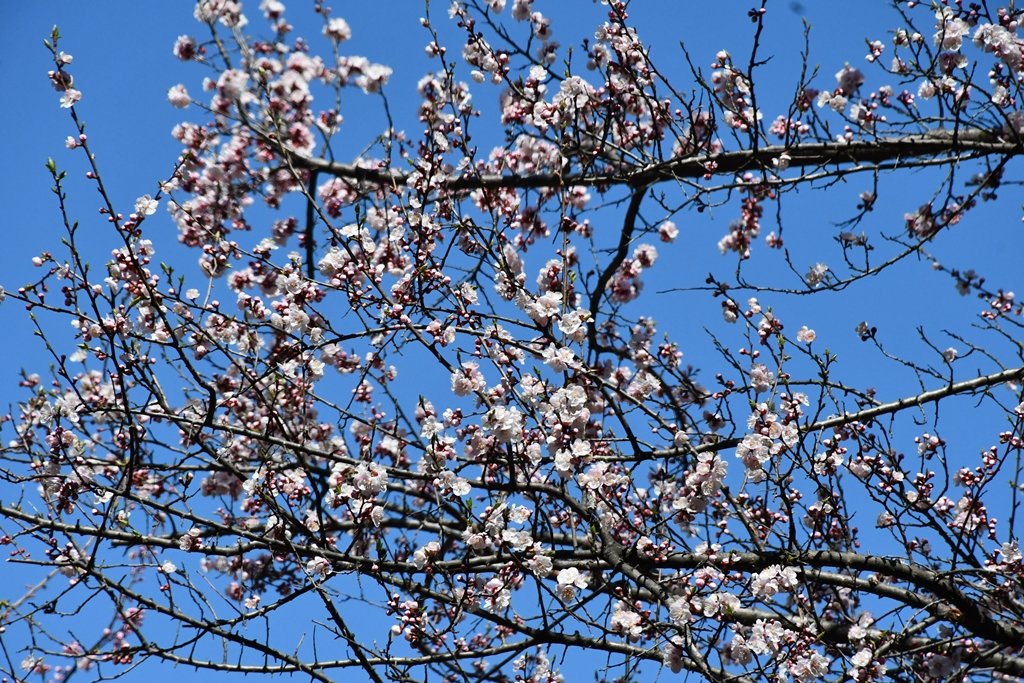
Blossom trees along the path through Old Manali village — not cherry blossom, but close enough to make you stop.
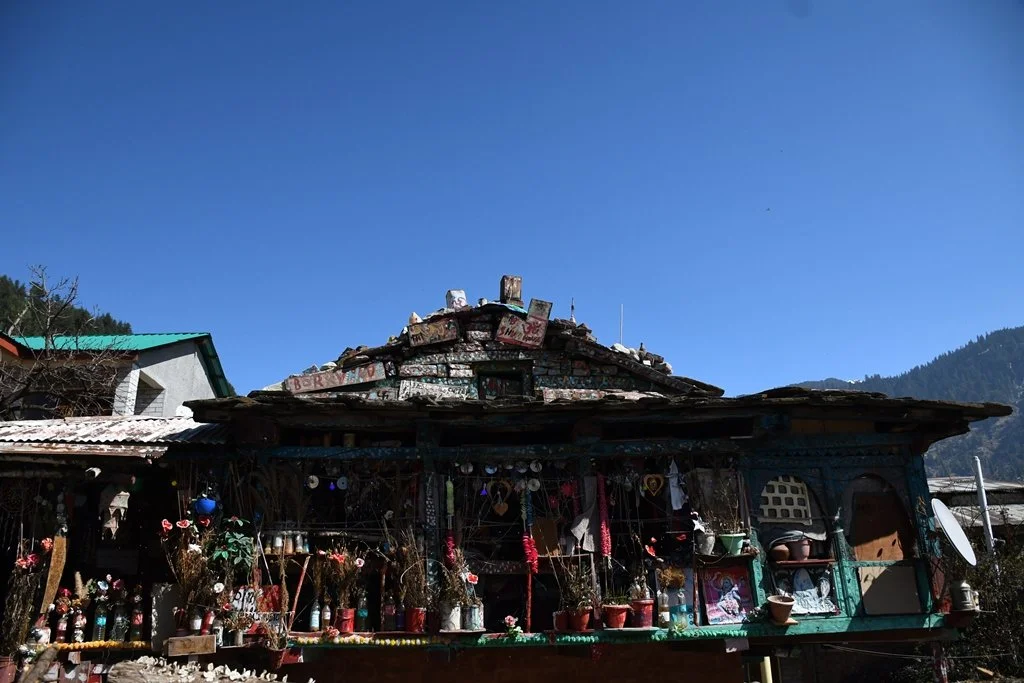
A traditional stone and timber house in Old Manali village — the architecture here is a world removed from anything in the plains cities.
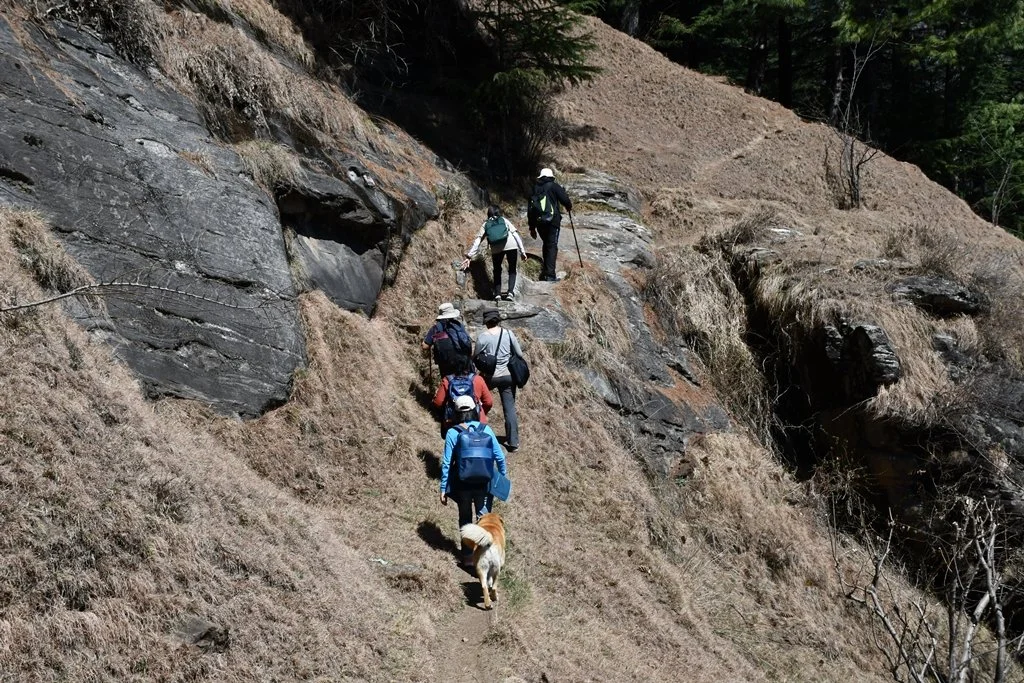
A stray dog appointed itself our companion for the afternoon trek through Manali — not unusual here.
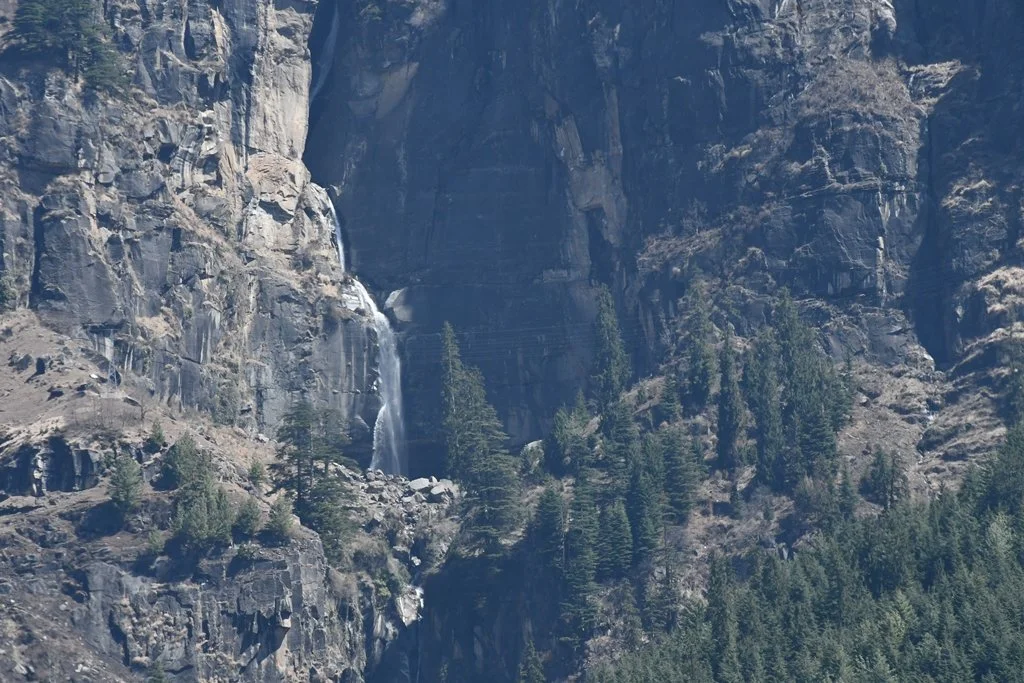
A waterfall on the trek above Manali. The sound of it after days of city noise was its own kind of relief.
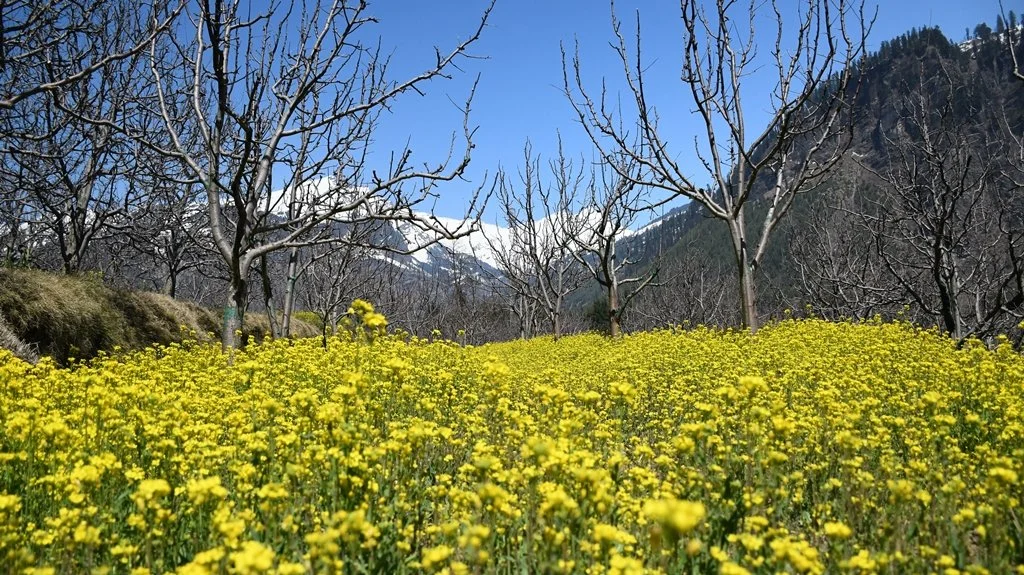
Canola flowers in bloom along the trail through Manali village. March brings colour to the lower Himalayan slopes before the snow fully retreats.
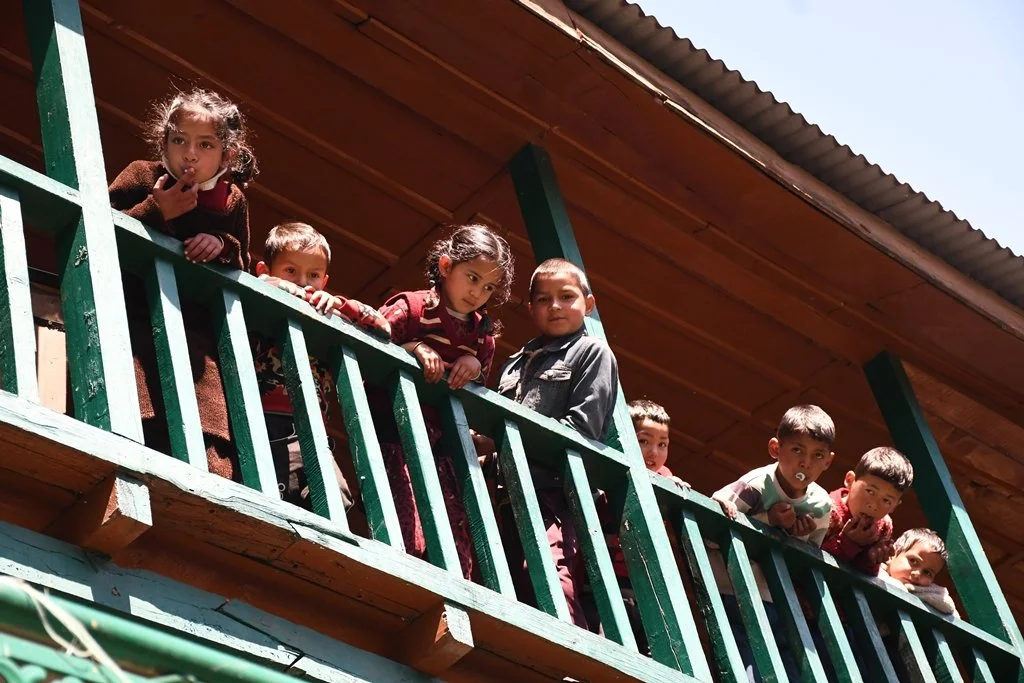
A school in Manali village. Our guide had suggested bringing stationery to give away to children we passed along the route — a small thing that landed unexpectedly.
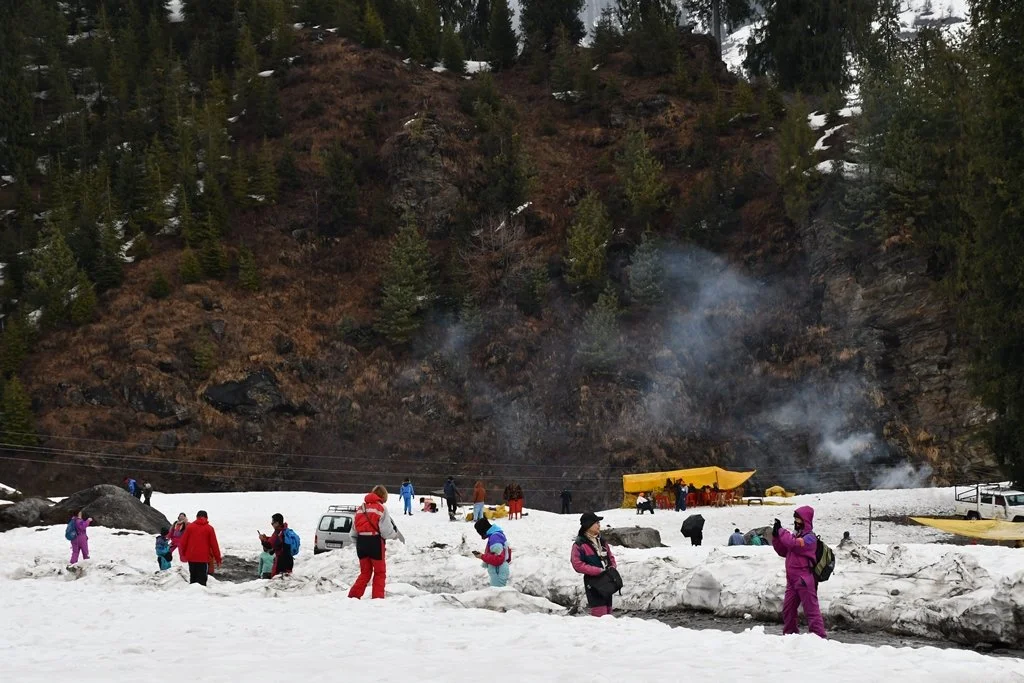
Snow Point, Manali — the maximum accessible road toward Rohtang Pass at 3,978 metres. Suits and boots are to rent; the cold at this altitude is not optional dressing.
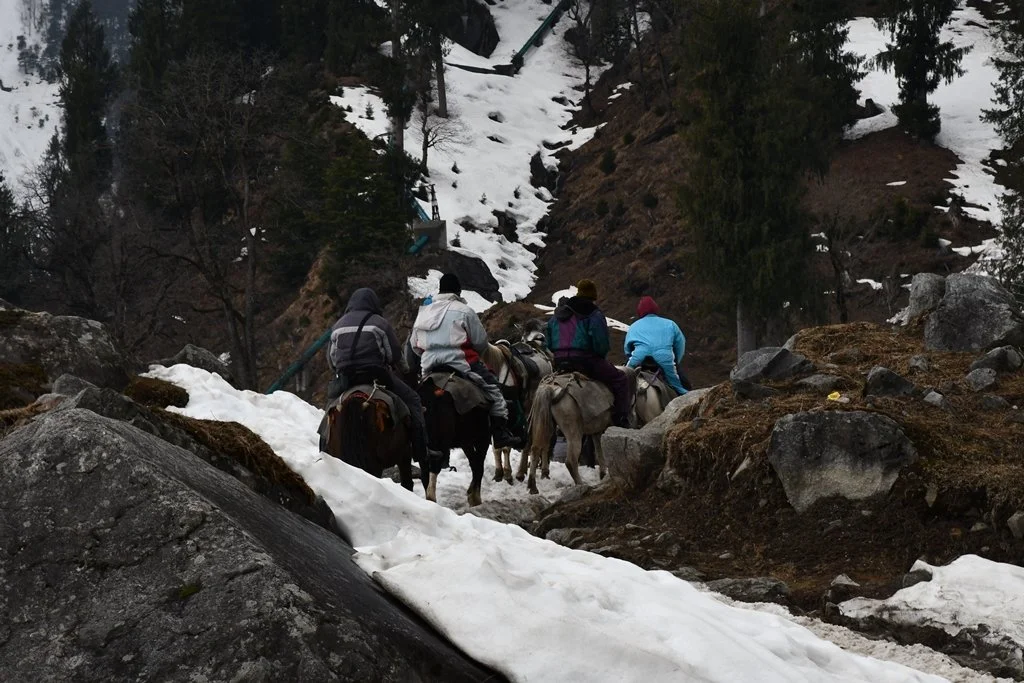
Horse riding at Snow Point, near Rohtang Pass — at nearly 4,000 metres, the air is thin and the landscape stripped back to rock and snow.
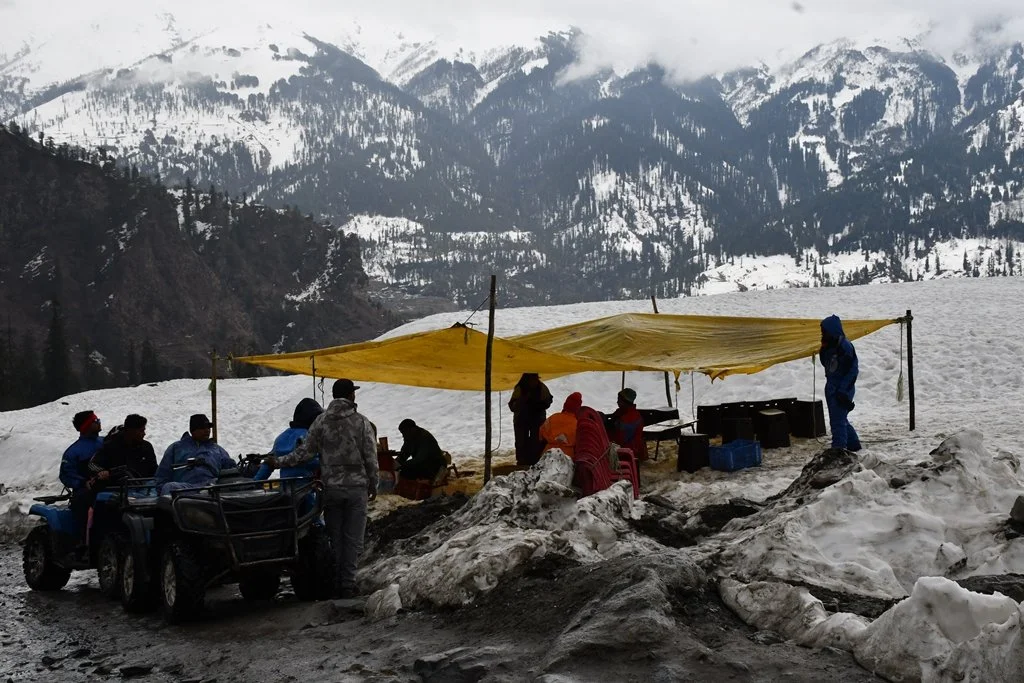
A food stall operating at Snow Point — vendors set up here daily regardless of the altitude or the cold. Business finds a way.
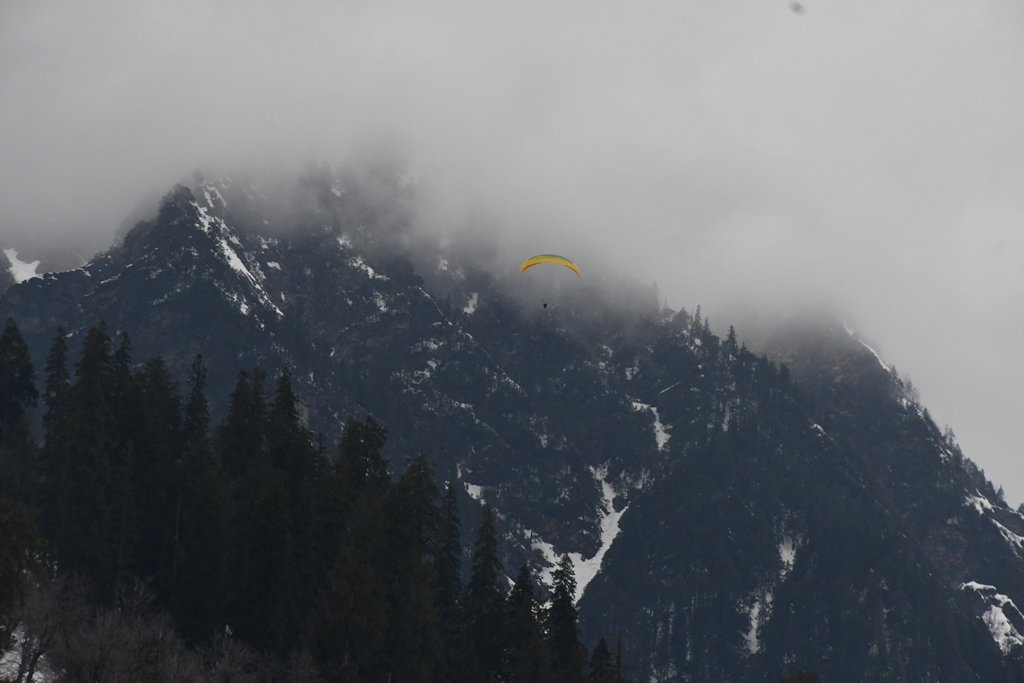
Paragliders launching from Snow Point above Solang Valley — one of the activities on offer if conditions allow, at an elevation most places would consider impractical.
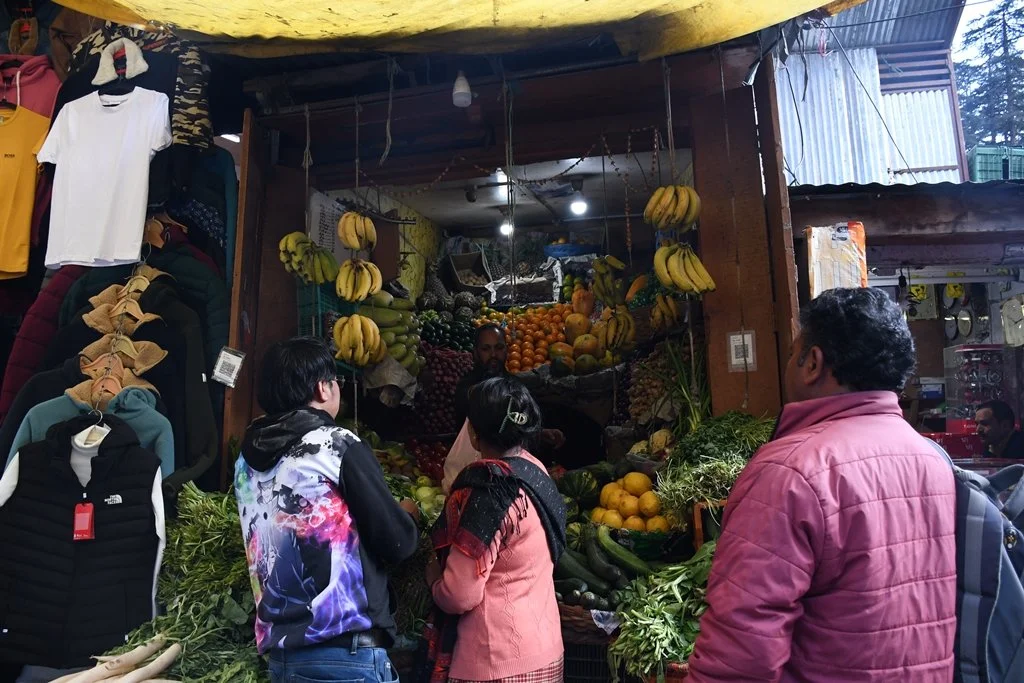
Manali street - A fruit and vegetable stall — bananas hanging from the ceiling, oranges stacked at the front, the vendor managing a small crowd in a space no larger than a wardrobe.
Bring car sickness medication for the mountain roads — and expect the drivers to be more skilled than the roads have any right to require.
The Drive to Dharamsala: A Shiva Temple at 800 Years Old
The drive from Manali to Dharamsala is long — 260 kilometres and eight to nine hours — but one stop along the way earned its place on the itinerary independently. Baijnath, the Town of Shiva, holds a 13th-century temple with a story worth sitting with for a moment.
The story goes like this: Ravana, the ten-headed demon king of Ramayana, offered his heads to Lord Shiva one by one, trying to win immortality. Shiva wasn't moved — not until the tenth head. Then he gave Ravana a Shivlinga to carry home to Lanka. But Ravana stopped to rest, set it down, and found it wouldn't budge. So a temple went up on that spot instead. The same Shivlinga is still inside. I'm not a religious traveller by instinct, but standing in a 700-year-old building whose story predates it by millennia does something to you.
The Baijnath Shiva temple is worth the stop on the long drive south — one of those places that earns its place on an itinerary without trying to.
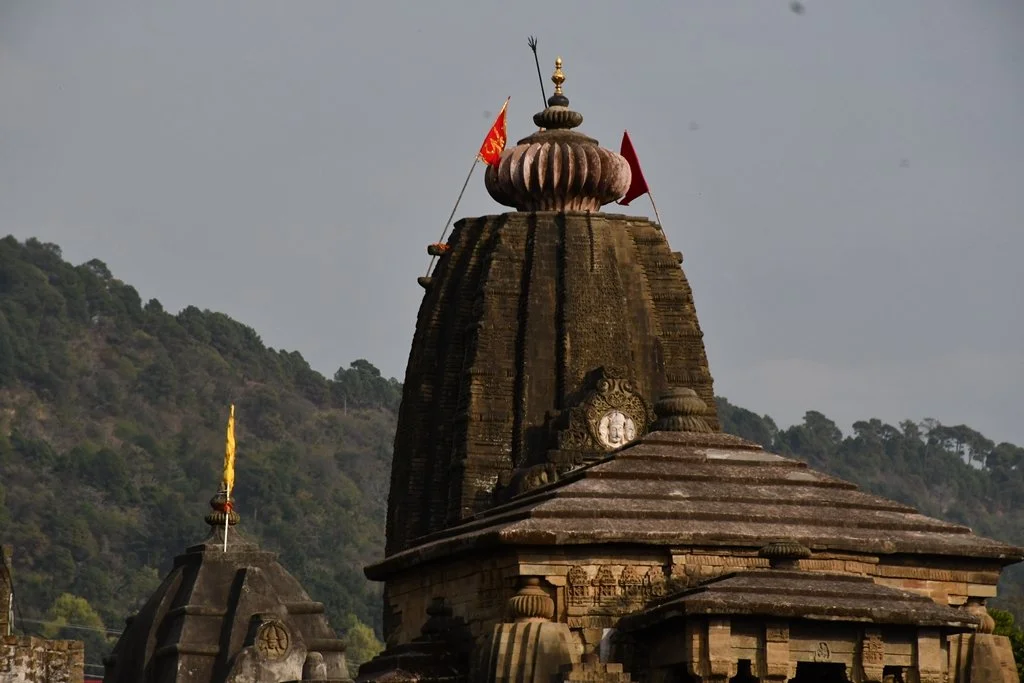
The 13th-century Shiva temple at Baijnath — built, according to legend, on the spot where the demon king Ravana set down a Shivlinga and found it too heavy to lift.
Dharamsala: 10–16°C
Dharamsala feel categorically different from the other Himachal Pradesh stops. The Tibetan influence is immediate. You feel it in the food first, then in the monastery architecture, then in the quietness — which has a different quality here than just the absence of noise. The Dalai Lama's residence is here. The Buddhist monasteries are here. And at the Norbulinga Institute, craftspeople are trained in traditional Tibetan painting and handicraft — it's a working institution, not a museum, and you feel that difference immediately.
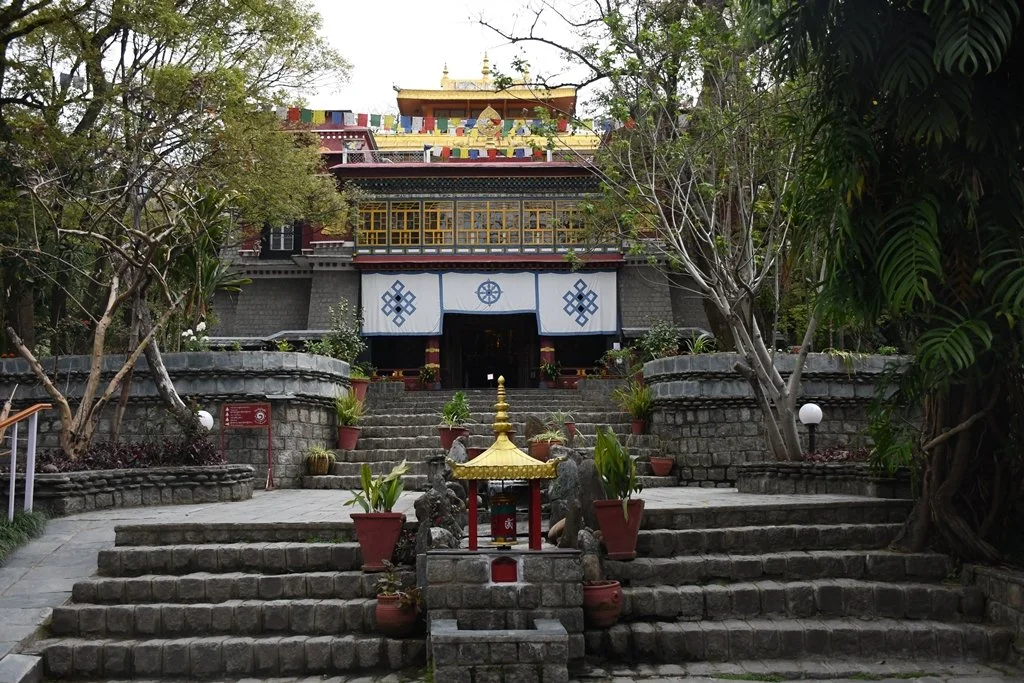
The Norbulinga Institute in Dharamsala, where craftspeople are trained in traditional Tibetan painting and handicraft — a living centre of Tibetan culture rather than a museum of it.
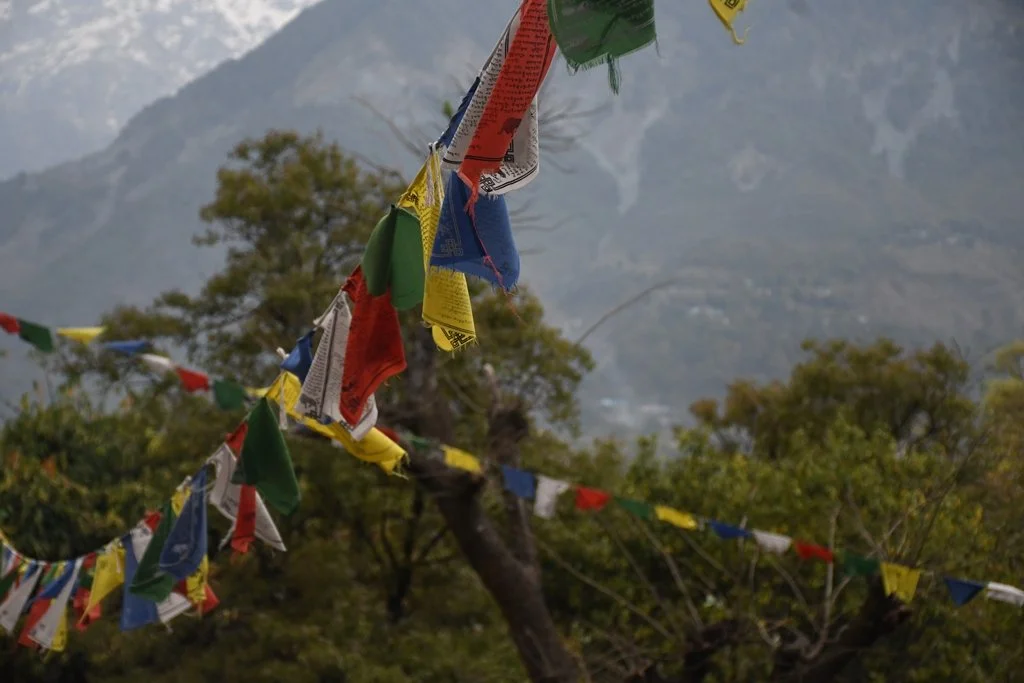
Prayer flags at the Norbulinga Institute. Dharamsala's Tibetan influence is visible everywhere — in the architecture, the food, and in small details like these that accumulate into a different kind of atmosphere.
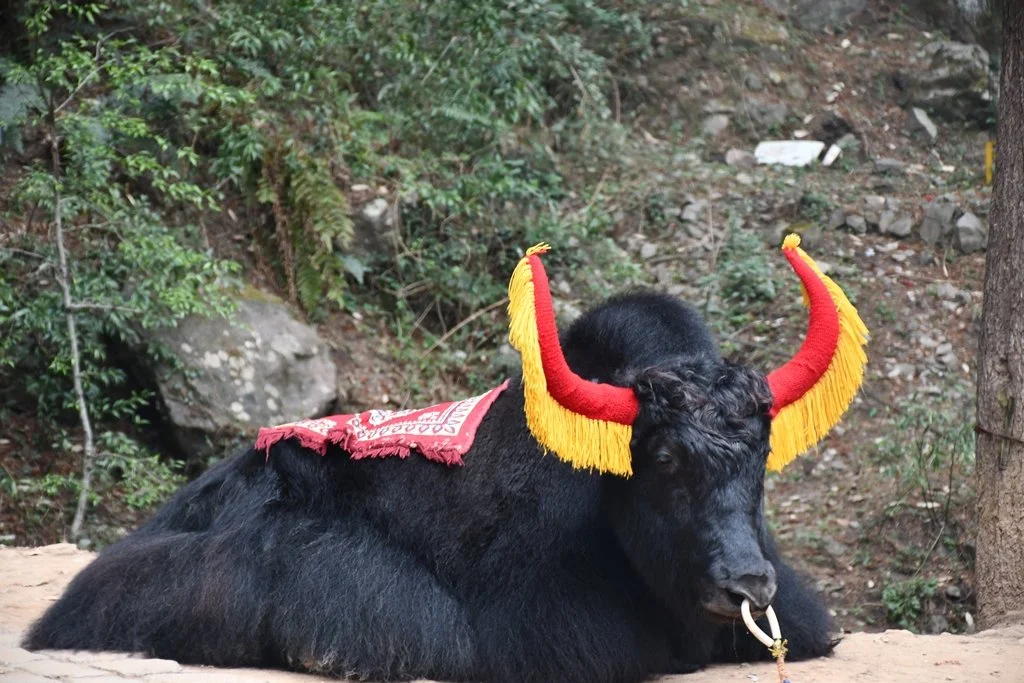
A decorative yak on the road into McLeod Ganj.
We had lunch in McLeod Ganj, then visited the Dalai Lama monastery and the Tibet Museum. The museum's main exhibition — "A Long Look Homeward" — documents both the history of Chinese occupation and Tibet's vision for its future through photographs, texts, and installations. It's not light material, but it's presented with clarity rather than polemic, and I left it with a fuller sense of what Dharamsala actually means for the Tibetan community who have built their lives here.
Dharamsala feels unlike anywhere else in Himachal Pradesh — the Tibetan cultural influence gives it a quietness and intentionality that takes a day to properly absorb.
Wagah-Attari Border Flag-Off ceremony, 5pm
We drove out to the Wagah-Attari border — the official crossing point between India and Pakistan, on the road connecting Amritsar to Lahore — that same evening. The ceremony — a joint flag-lowering ritual performed by Indian and Pakistani soldiers at sunset, every single evening — draws thousands to the stadium-style stands on both sides of the gate. I'd read about it before going. Reading about it does almost nothing to prepare you.
The walk from the parking area to the stands is about 10 minutes, and the atmosphere builds the entire way — food vendors, souvenir stalls, the noise level rising steadily the closer you get. Entry is free, but arrive early. Seating is first-come, first-served, and the stands fill up fast. Leave your bags behind if you can; security is strict and bags generally aren't permitted through.
The Indian side was loud in the best possible way. Punjabi pop pumped from large speakers. People waved flags printed with "I Love My India" in bold capitals. The soldiers began their movements — high-kicks, sharp turns, a theatrical precision clearly designed to be witnessed — and then the Pakistani side responded in kind across the gate. The crowd noise moved in waves. For a moment the gates opened, both sides visible to each other, and then the flags came down — both at exactly the same moment. The soldiers saluted each other across the border. The gates closed.
The ceremony takes around 45 minutes. What stayed with me was the fact underneath the spectacle: two countries that have fought multiple wars share a daily ritual, without exception, in which they face each other directly. I haven't quite stopped thinking about it.
Arrive at least an hour early, leave your bags behind, and give the ceremony your full attention. It's one of the most unexpectedly moving things you can witness at a border anywhere in the world.
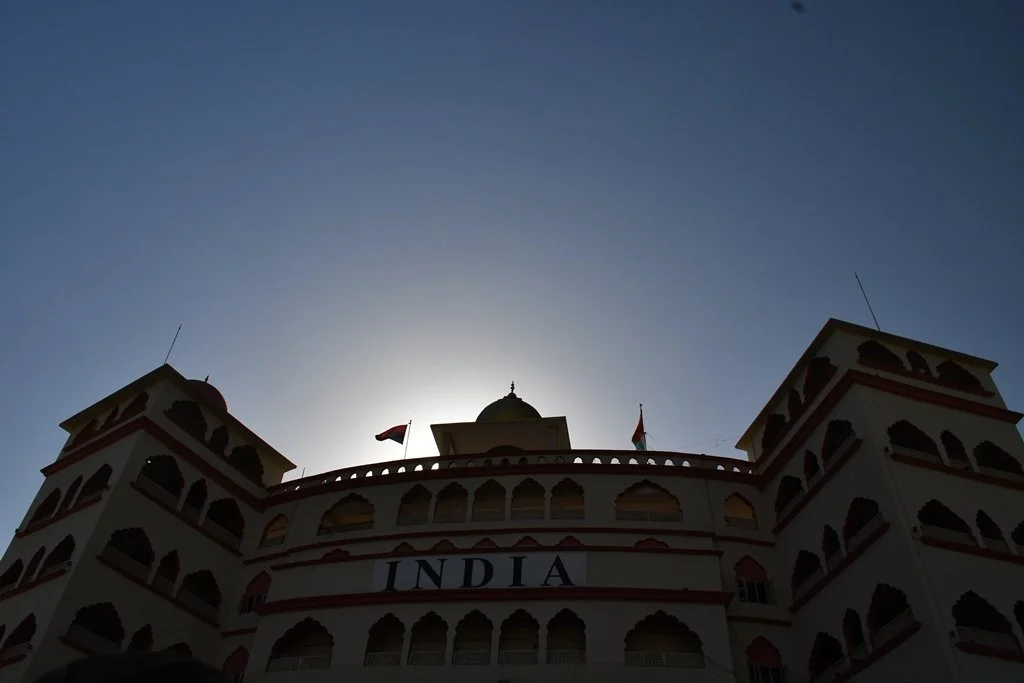
The Wagah-Attari border crossing between India and Pakistan — every evening at sunset, thousands gather on both sides for the flag-lowering ceremony that has taken place here daily since 1959.
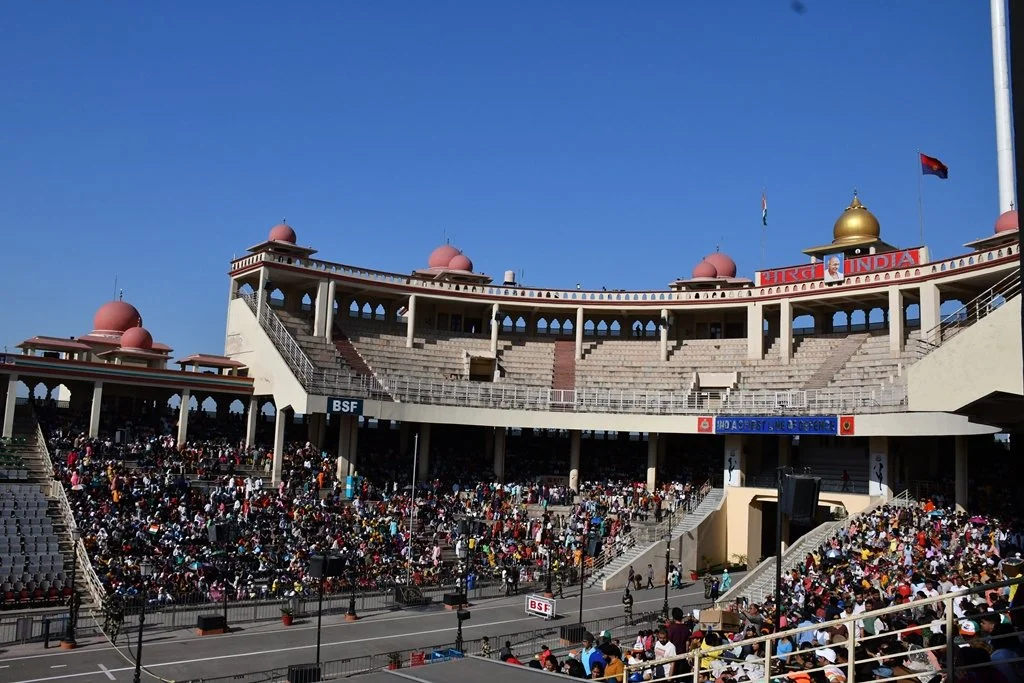
Wagah border (Pakistan-India) to watch flag off Ceremony - The ceremony is part military precision, part theatre, and entirely unlike anything else.
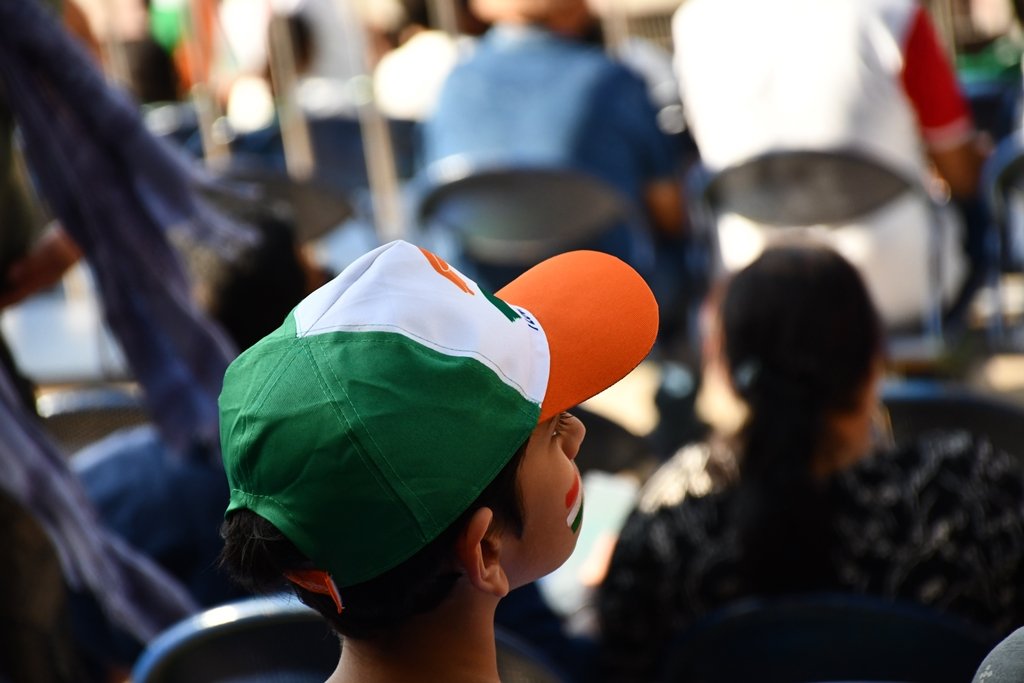
Patriotism spirit at Wagah border (Pakistan-India) flag off Ceremony
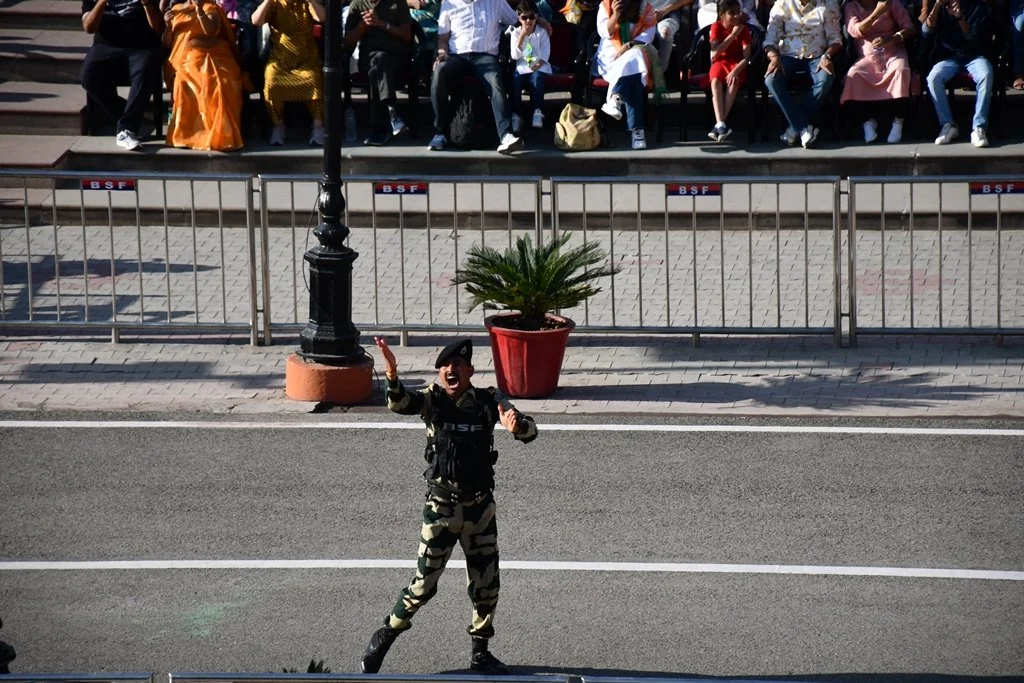
An Indian soldier rallying the crowd during the ceremony begins — audience participation is part of the ritual on the Indian side.
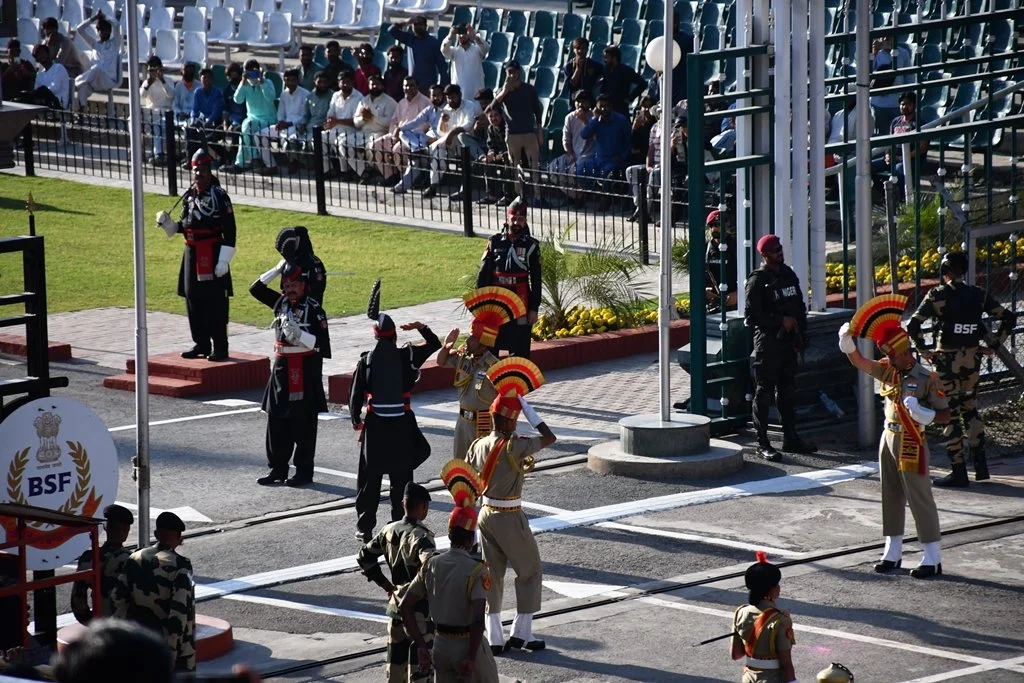
The border gates between India and Pakistan open briefly at the ceremony's end — both sides visible to each other for a few seconds before the gates close for the night.
The following morning we visited the Golden Temple — the holiest site in Sikhism, built around the sacred pool the city takes its name from. The marble glows in the early light in a way that makes you want to slow down, even if the rest of your itinerary doesn't allow it.
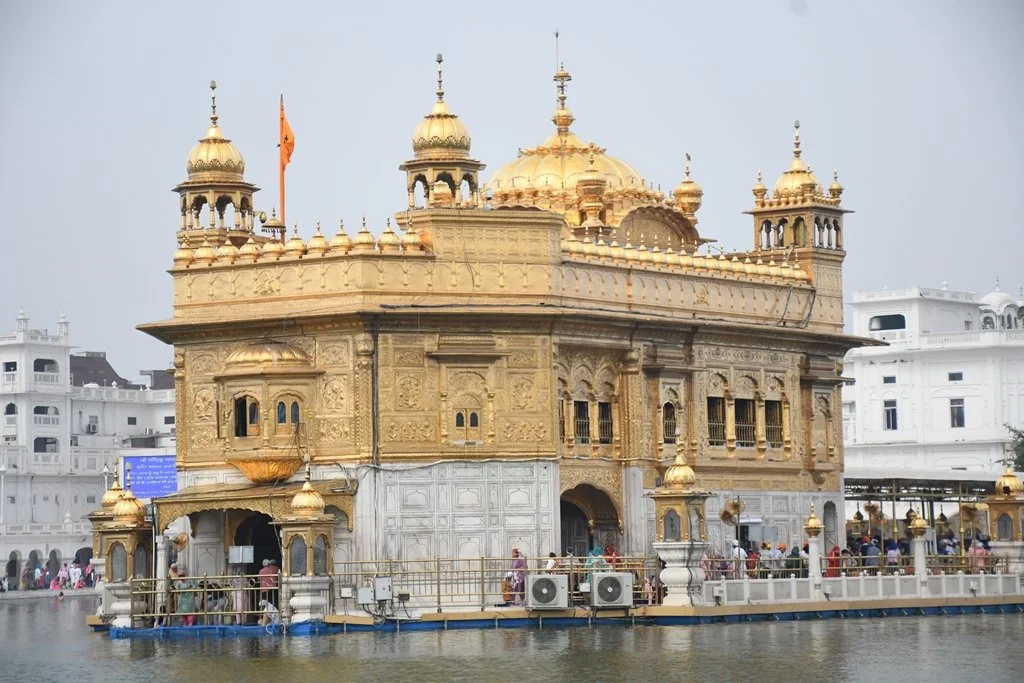
The Golden Temple at dawn — the holiest site in Sikhism, built around the sacred pool the city of Amritsar takes its name from. The marble glows differently in the early light.
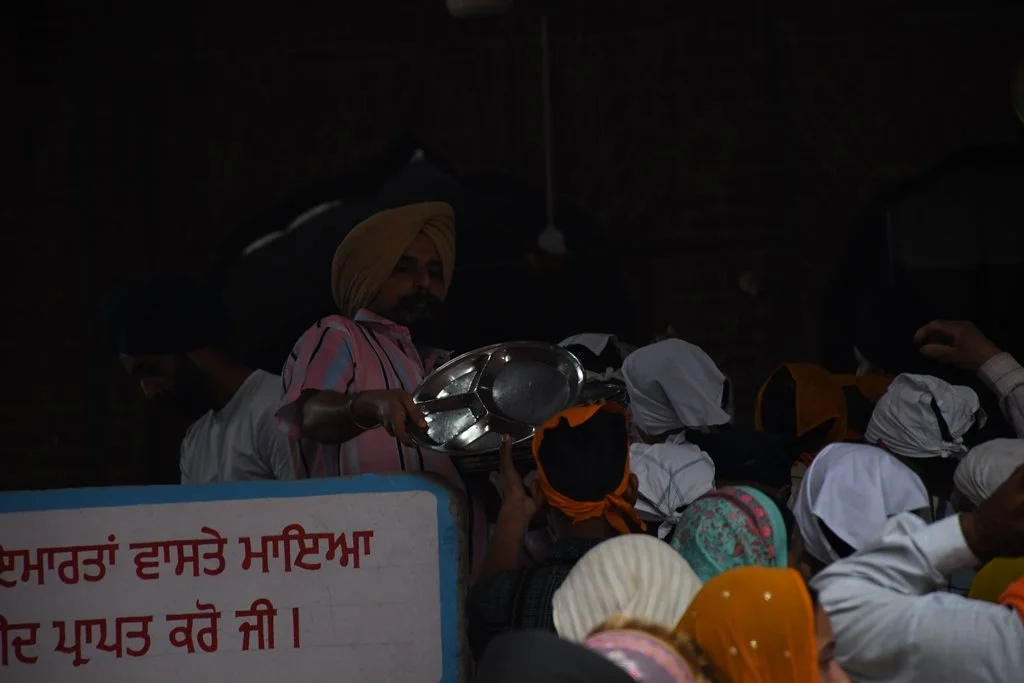
The langar — the Sikh tradition of free community meals served to all visitors regardless of background. The Golden Temple feeds tens of thousands of people every day.
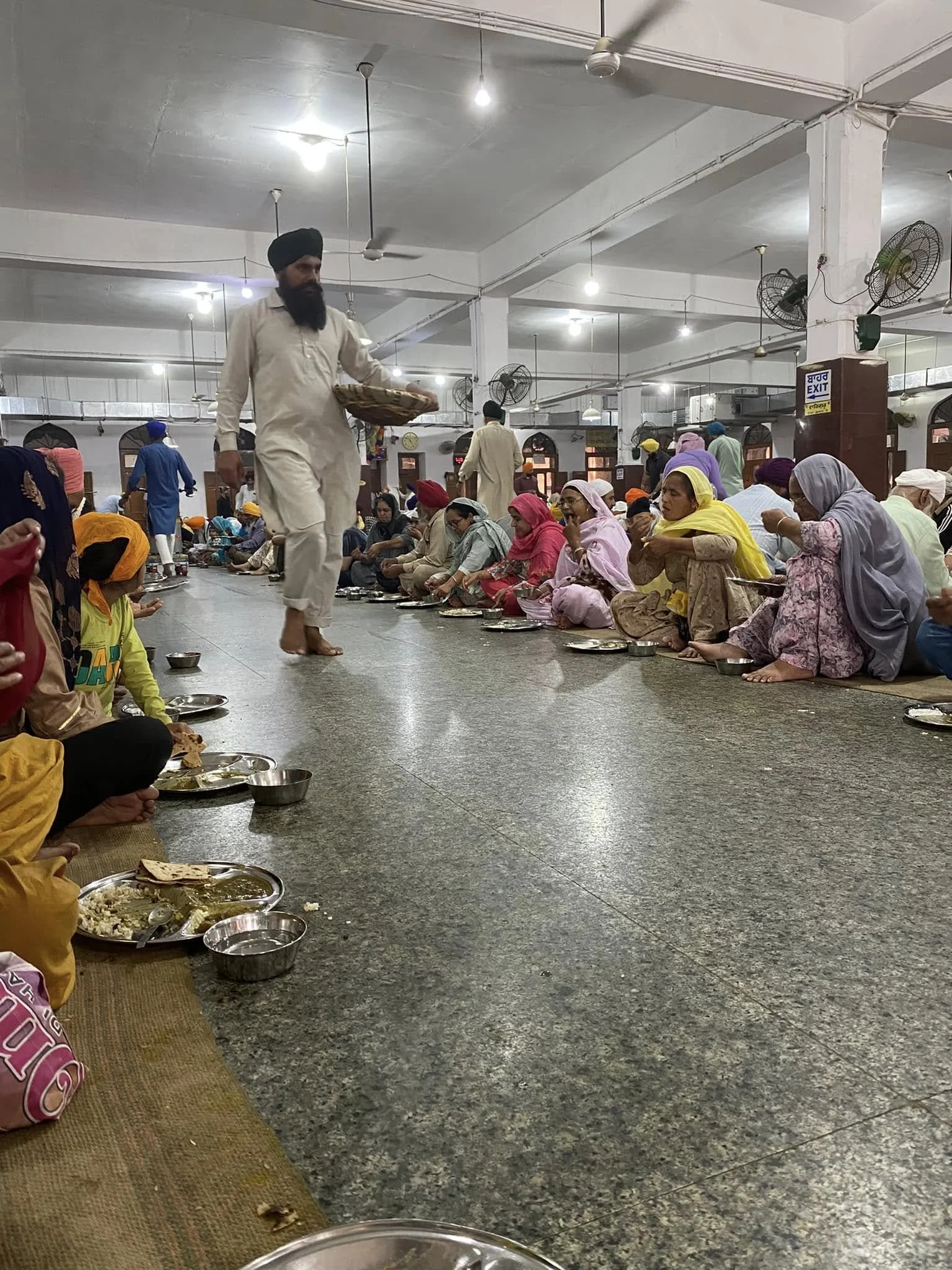
Sitting with locals at the langar inside the Golden Temple — our guide had encouraged us to try it. The food was simple and, surprisingly, one of the best meals of the trip.
Then came the goodbye none of us had planned for emotionally. Before boarding the Shatabdi train back to Delhi — departing at 16:55, arriving 23:05 — we said farewell to our Himachal Pradesh drivers. Through mountain roads that had made at least one of us sick, past cliffs where buses shouldn't have fit but did, across terrain that required everything they had — they had brought us through all of it, without complaint and without incident. A thank you felt inadequate. We gave one anyway.
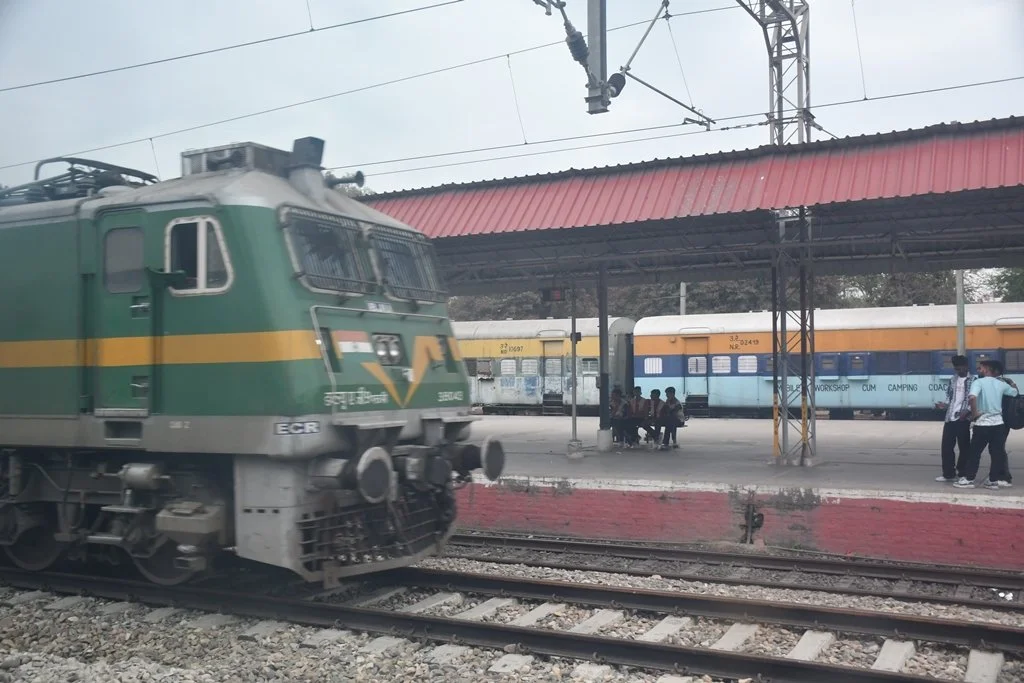
The view from the Shatabdi train leaving Amritsar for Delhi — departing 16:55, arriving 23:05. The last leg south, and the start of the plains again
The Golden Triangle: Agra and Jaipur
The plains portion of the trip covered what most foreign visitors to India come to see — and they come for good reason.
The Taj Mahal demands an early start. We were there before sunrise, and the first thing worth knowing is that the crowds are real even at that hour — this is one of the Seven Wonders of the World, and the queue reflects it. The second thing worth knowing is that the building changes colour as the light shifts. Before the sun appears, the outline is barely there — you sense it more than see it. Then the light arrives and the marble does something unexpected: it goes pink first, a soft warm flush that lasts only a few minutes before shifting to gold. By the time full daylight arrives it has settled into the brilliant white of every photograph you've ever seen.
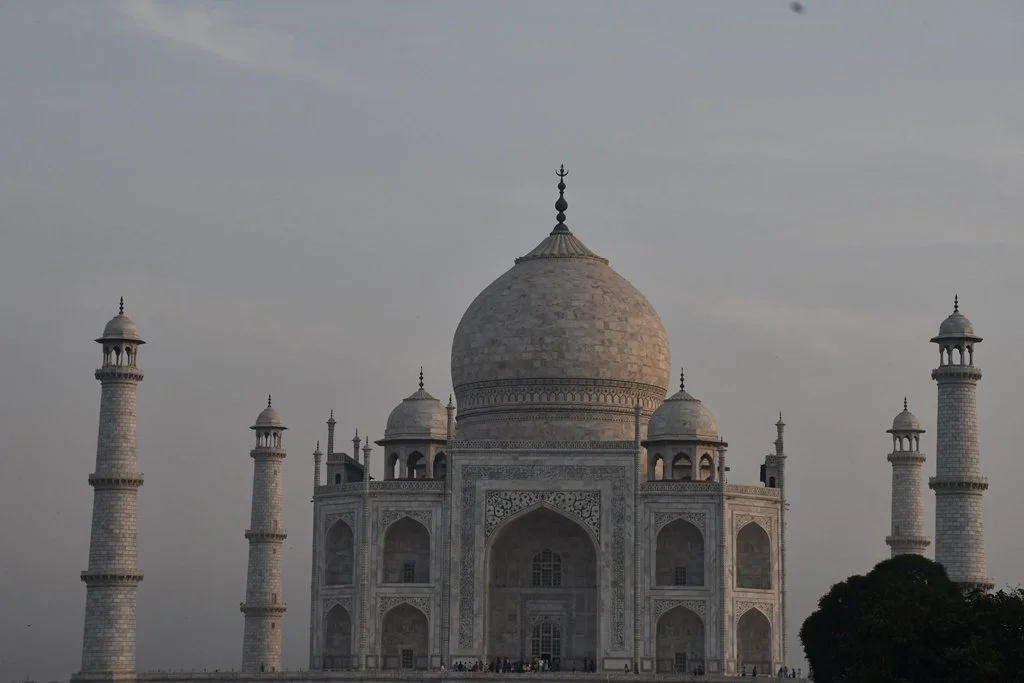
The Taj Mahal before full sunrise — at this hour the marble hasn't yet settled into its daytime white. The pink flush lasts only a few minutes.
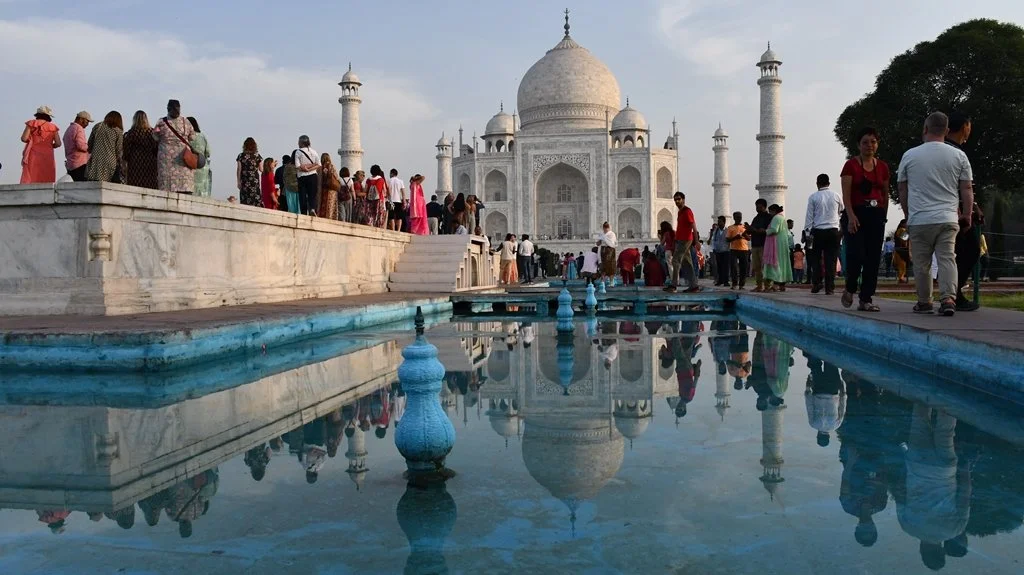
The Taj Mahal in full daylight — built entirely from white Makrana marble, one of the Seven Wonders of the World, and still capable of stopping you in place.
From there we moved to the Red Fort — the Mughal sandstone citadel that sits a few kilometres away — before the heat of the morning made moving around uncomfortable.
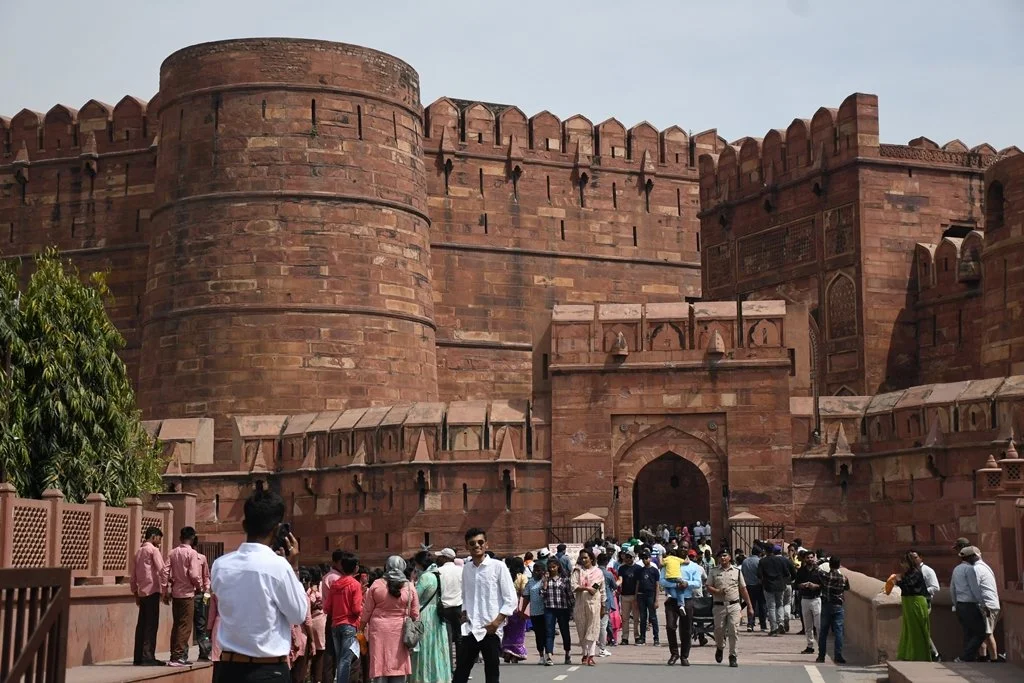
Agra's Red Fort — the Mughal sandstone citadel built in the 16th century, a few kilometres from the Taj Mahal and visited by considerably fewer people.
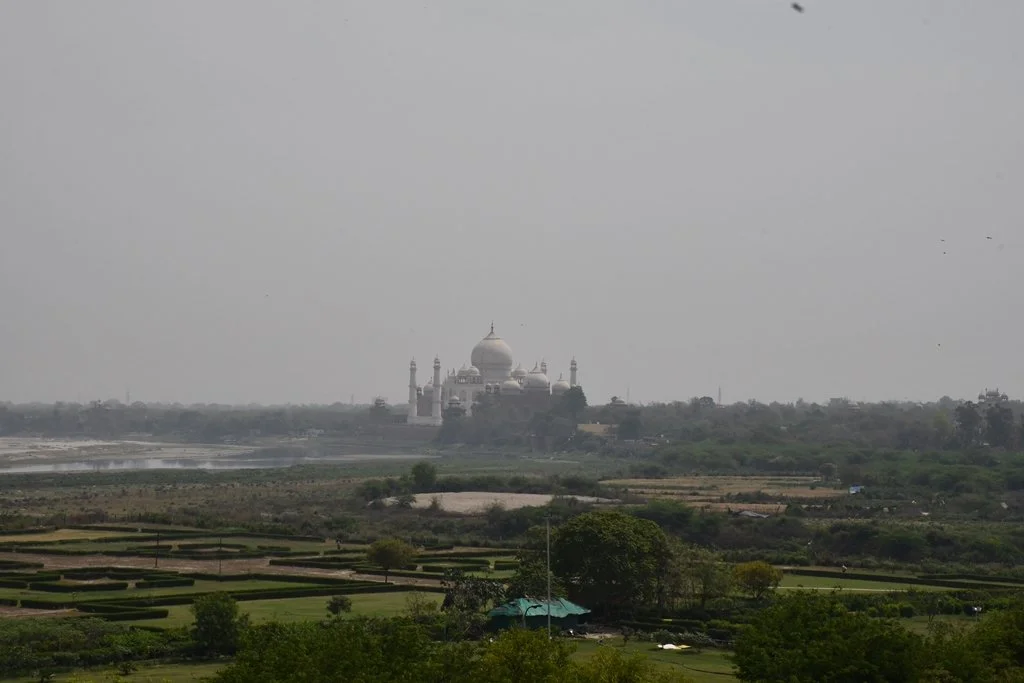
The Taj Mahal viewed from the Red Fort — the same monument, different angle, different light. Worth the walk across.
Jaipur, the Pink City, arrived the following day. Maharaja Jai Singh II built Jaipur to a plan — specifically the Shilpa-Shastra, a Hindu architectural treatise — and you can still see it in the streets. They're a grid. In a medieval city. It's one of those details that makes you look at a map twice. We visited the Jantar Mantar Observatory, built in the 1700s and still looking strangely futuristic —a collection of enormous geometric instruments for measuring celestial time that sit in the open air — and are still precise enough, three centuries later, that trained observers can use them to make accurate astronomical readings.
Nearby is the Hawa Mahal, the ornate Palace of Winds with its latticed sandstone facade, and the City Palace complex, home to the Maharaja Sawai Man Singh II Museum — a rare mix of Mughal and Hindu architecture housing Rajput armour, paintings, and costumes. The morning had been Amber Fort, a hilltop fortress that towers over the valley below and requires a climb that earns every view it gives you.
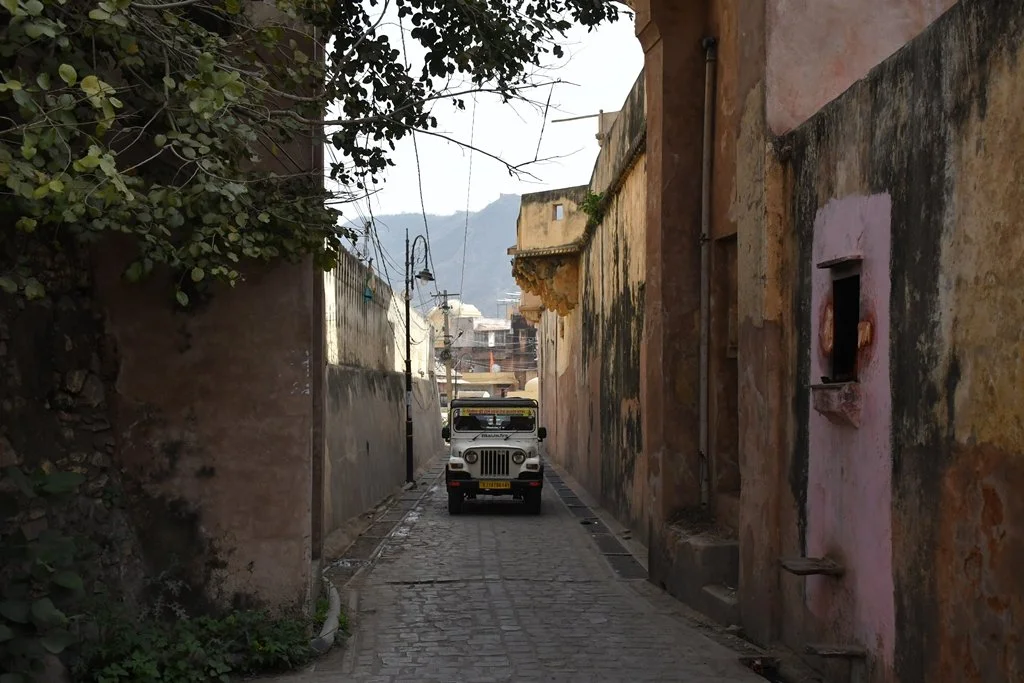
Jeep to Hilltop Fortress, Amber at Jaipur
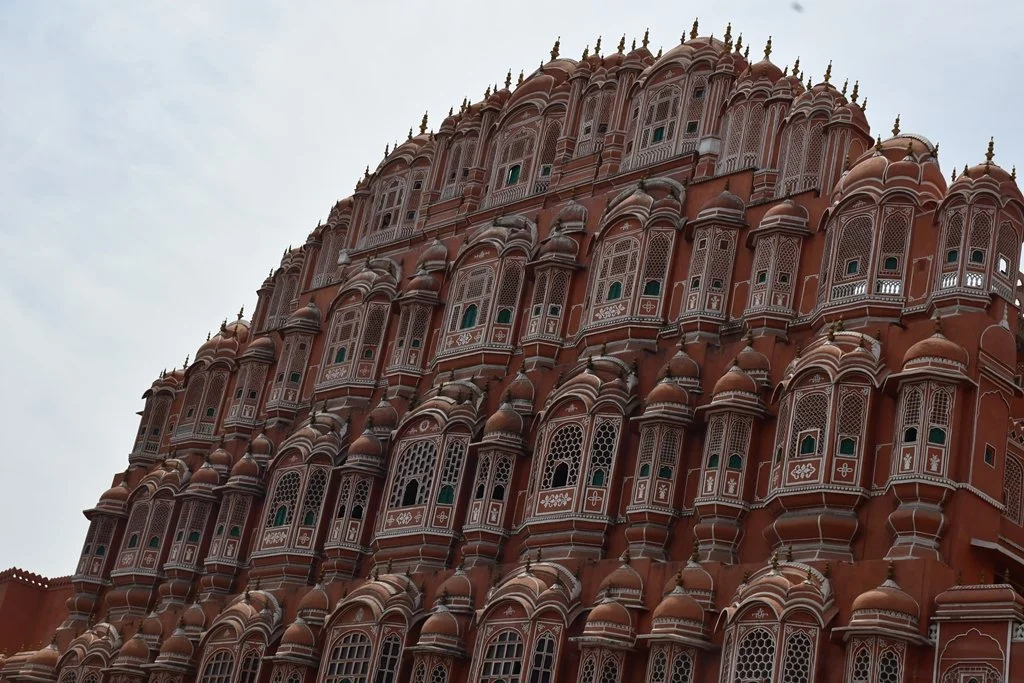
Hawa Mahal (The Palace of Winds)
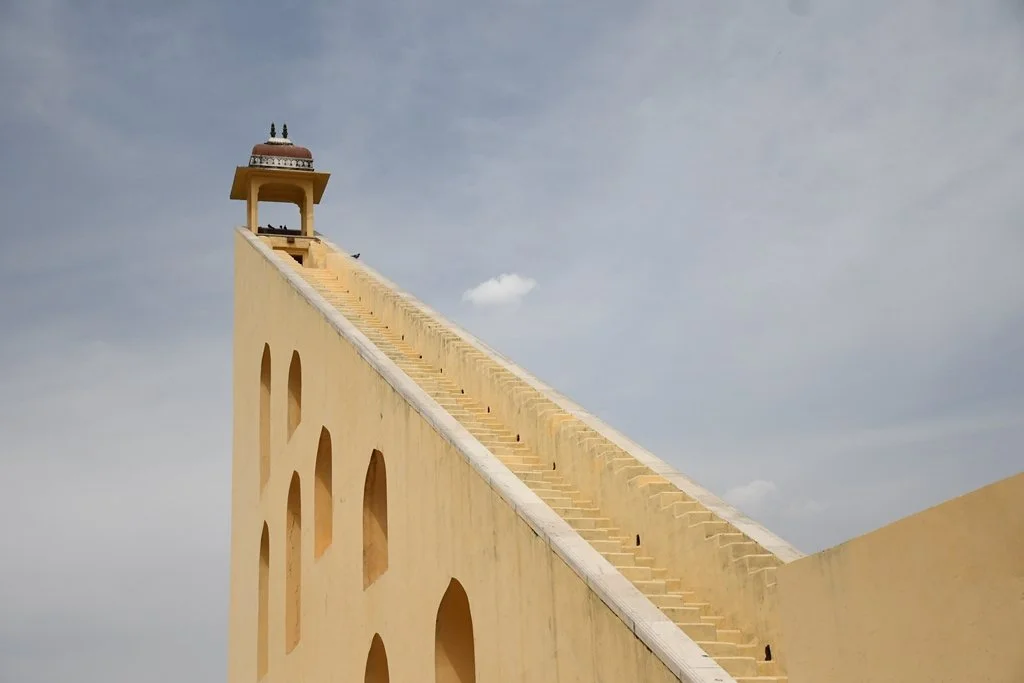
Jantar Mantar Observatory
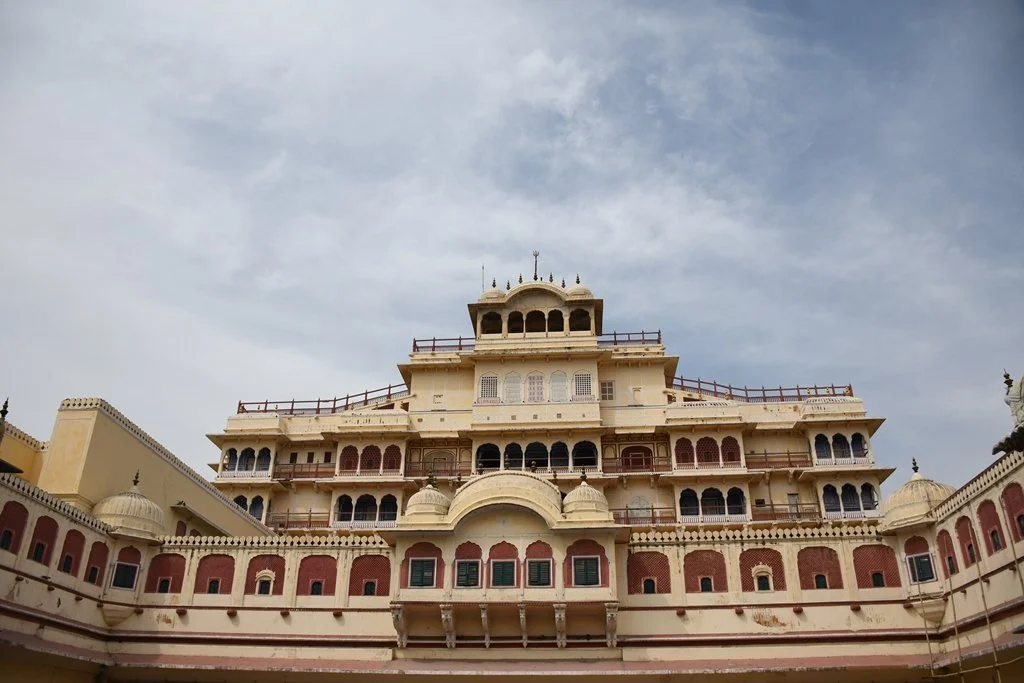
Maharaja Sawai Man Singh II Museum City Palace
The heat through both cities was relentless — 38-40 °C by mid-afternoon, the kind that shortens your ambitions for the day whether you plan for it or not. These are places worth seeing. They are also places that remind you, by contrast, exactly what the north had given you.
Arrive at the Taj Mahal before sunrise for the colour change — the pink flush lasts only minutes. Jaipur rewards a slower pace than most itineraries allow for it.
A Few Things Worth Knowing Before You Go
None of us drank tap water the entire trip — and boiling it isn't the workaround it might seem. Boiling kills bacteria and viruses, but India's tap water also carries chemical contaminants — arsenic, heavy metals, fluoride — that heat can't touch. Sealed mineral water from a reputable brand is the only reliable option. We bought it consistently, were cautious with restaurant glasses, and were selective about street food. A few people in the group still got food poisoning. This is worth stating plainly: caution reduces risk in India, it doesn't eliminate it. Build hydration management into your daily planning as an active habit rather than an afterthought.
The temperature difference between Himachal Pradesh and the plains is real and meaningful. Shimla and Dharamsala sit between 10–16°C in March; Manali runs colder, −3°C at the low end. The plains cities — Delhi pushing 29°C, Agra and Jaipur hitting the high 38°C to 42°C by afternoon — are a different world. If you're building your own itinerary, knowing this matters for packing alone.
Budget: food and accommodation in Himachal Pradesh are noticeably cheaper than in the major tourist cities. We ate well in Shimla and Manali for considerably less than equivalent meals in Agra or Jaipur.
Foreign tourists are sparse in Himachal Pradesh relative to the Golden Triangle. This is mostly an advantage — the pace is quieter, the experience feels more unmediated. The trade-off is that English-language tourist infrastructure you'd take for granted in Agra simply doesn't exist in the same form in Manali or Dharamsala. Build flexibility into your days.
Drink only sealed mineral water, take car sickness tablets before you board — not after — and build flexibility into your days in the north.
The Bookshop on the Last Afternoon
On the 30th of March, our last day in India before the flight home, we were back in Delhi with a few hours free. We ended up at a shopping mall — one of those large, air-conditioned spaces that feel like a small relief after two weeks of full-volume India — and somewhere inside it, a bookshop.
I went in without much intention beyond having a look at what they stocked.
Something I hadn't known before this trip: books in India are priced for a local market. What you'd pay three or four times as much for at home sits on the shelf here at a fraction of the price — same book, same words, just a different economic reality. I moved along the shelves slowly, picking up titles with no particular plan, putting them back.
One kept pulling my eye back. Days at the Morisaki Bookshop by Satoshi Yagisawa. I'd scrolled past it on BookTok more times than I could count, always vaguely curious, never curious enough at full price. At Delhi prices, the decision made itself.
That book quietly opened something — a genre I didn't have a name for yet, a reading habit I'd never quite managed to build before. This, of all places, is where it started. But that's its own story, and it belongs somewhere else on this blog.
I've written about where that one book led — and the genre of Healing Fiction it turned into a reading habit.
What India Left Me With
I've been trying to write a tidy ending to this trip for a while, and I keep not quite managing it. India doesn't really lend itself to tidy conclusions.
What I can say honestly: Himachal Pradesh and the plains are not the same experience, even though they share a country. The north felt accessible in a way the south of this trip didn't — cooler, quieter, cheaper, slower. People felt friendlier here too, and there was an ease to moving through the days that the bigger cities simply didn't have — something closer to feeling safe rather than just managing to be fine. That's not a value judgement on either. It's what I found.
But looking back through the photographs, what stays with me isn't the monuments. It's the people in the margins of the frame. A man bent double under a gas cylinder on a Shimla street. A vendor balancing pots and a bag of oranges on his head through the deodar trees. A tailor working his machine in a Delhi shop barely wide enough to turn around in. A woman carrying her whole life's weight across a dry outskirt roadside. None of them posed. None of them were performing for the camera. They were just — there, getting on with it, the way most of the world does, in plain sight.
The bigger cities showed me something true about how a large portion of the world actually lives — and I don't think you come away from that unchanged, even if you can't immediately name the change. The north gave me the space to absorb it.
India asks you to pay attention even when paying attention is uncomfortable. The north made that easier. I'm glad we went.
Himachal Pradesh Quick Summary
Best for: Travellers who want two Indias in one trip, mountains and plains, not just the Golden Triangle
Trip length: 13 days, 12 nights covers Himachal plus Amritsar, Delhi, Agra and Jaipur
Getting there: Fly into Indira Gandhi International, Delhi. Then north by road to Shimla, and the Kalka–Shimla. Railway for the stretch that deserves a train
Route: Delhi → Shimla → Manali → Dharamsala → Amritsar → Delhi → Agra → Jaipur → Delhi
Must-do: The Kalka–Shimla toy train, Snow Point at 3,978 metres, the 13th-century Shiva temple at Baijnath, and the Wagah-Attari border ceremony at 5pm
Best time to go: March. Expect 10–16°C in Shimla and 38–42°C in Agra and Jaipur on the same trip
Getting around: Private car with a driver for the mountain legs. Shimla's Mall Road is pedestrian-only, so you walk it
Not ideal for: Anyone who wants a single climate or a short trip. The Manali to Dharamsala drive alone is 260km and eight to nine hours
Pair it with: The Golden Triangle. The contrast is the point
Frequently Asked Questions
What is Himachal Pradesh like compared to Delhi for travellers?
Himachal Pradesh feels like a different country from Delhi and India's plains cities. Temperatures in March sit between 10–16°C in Shimla and Dharamsala, and as low as −3°C in Manali, compared to 38–40°C afternoons in Agra and Jaipur. Cities are smaller, quieter, and noticeably more affordable — food and accommodation cost less, foreign tourists are sparse compared to the Golden Triangle, and the air is cleaner in a way you feel immediately after the plains. People felt friendlier here too, and there was an ease to moving through the days that the bigger cities simply didn't have — something closer to feeling safe rather than just managing to be fine.
What happens at the Wagah Border flag ceremony and when should I arrive?
The Wagah Border ceremony is a daily flag-lowering ritual performed by Indian and Pakistani soldiers at the official border crossing between the two countries, held every evening at sunset — around 5 to 5:30pm. Both sides perform high-kick marching and precision drills in mirror image before lowering their national flags simultaneously and saluting each other across the gate. Arrive at least an hour early to secure a seat in the stadium-style stands, as the ceremony draws large crowds on both sides of the border.
Is tap water safe to drink in Himachal Pradesh and India?
Tap water is not safe to drink anywhere in India, including Himachal Pradesh — and boiling it is not a reliable fix, as India's tap water contains chemical contaminants such as arsenic and heavy metals that heat cannot remove. Sealed mineral water from a reputable brand is the only consistently safe option for travellers. Even with careful habits around water and street food, some travellers still experience food poisoning — caution reduces risk in India, it does not eliminate it.
Is Himachal Pradesh safe for foreign tourists?
Himachal Pradesh is generally considered one of the safer regions in India for foreign visitors. Cities are smaller, crowds are thinner, and the pace is noticeably more manageable than the major plains cities. The standard precautions apply — drink only sealed mineral water, be cautious with street food, and arrange reputable transport. The mountain roads require experienced drivers, which organised tours provide.
How do you get from Delhi to Shimla?
The most straightforward route is by train from Delhi to Chandigarh on the Shatabdi Express, followed by a road transfer of approximately four hours to Shimla — which is the route we took.
What is the best time of year to visit Himachal Pradesh?
March to June offers cool, pleasant temperatures across Shimla and Dharamsala (10–16°C) with Manali cooler still. Snow is still present at higher elevations in March, making Snow Point accessible for snow activities — though Rohtang Pass itself typically remains closed until around May.
Is the Kalka–Shimla Railway worth taking?
Yes — particularly if you have time for the full journey or at least a partial leg. The narrow-gauge line is a UNESCO World Heritage site, running through 103 tunnels and over 800 bridges between Kalka and Shimla. The pace is deliberately slow, which makes it a genuinely different experience from road travel. Arrive at the station early and book tickets in advance, especially during peak season.
You might also enjoy
🌏 Wander · Northern Xinjiang: Bare Land, Sayram Lake, and Everything Between the Postcards
📸 Capture · Photo of the Week: One Silhouette. One Sunset. What India looked like when I stopped moving.