The Camera Stays in My Lap, Not in the Bag
17 June 2026
I keep my camera in hand rather than packed away on every transit ride, because the photo worth keeping rarely announces itself ahead of time. This habit isn't unique to one trip. It's standard practice for me on buses, trains, and shuttles alike, including the ride back from Alberta's Columbia Icefield to Banff along the Icefields Parkway.
My hands are already up before the window fully clears the rock face. The bus is dropping back down the Icefields Parkway toward Banff, hours after the Columbia Icefield, and my camera has been sitting in my lap since we left the parking lot. Not in the bag. On my lap, or on the empty seat beside me when I get lucky enough to have one, lens cap off, ready.
This isn't a one trip habit. It's every trip. Bus, train, ferry, it doesn't matter. If there's a window and I'm awake, the camera is within reach, because I have never once correctly guessed in advance which fifteen seconds will turn out to matter.
Why the Window Seat Isn't Optional
The seat itself is the first decision, and I make it before I've even sat down. Window, always. Right side, more often than not, though I couldn't really tell you why. Sun and shadow shift over a long drive anyway, so guessing which side will pay off is mostly luck.
This particular drive was on a private bus chartered by Golden Tourworld Travel (GTT), the Malaysia-based agency running our group's Canada tour. The route back to Banff covers roughly 180 kilometres, much of it along the Icefields Parkway.
What I'm actually defending against is reaction time. The camera doesn't just stay out of the bag, it stays switched on, finger already resting near the shutter, for as long as we're moving. If it's powered down, or my hand has wandered somewhere else when something appears outside, that's already too slow. Standby isn't paranoia. It's removing every step between seeing something and pressing the shutter.
Fall asleep, and you'll never know what you missed outside the window.
I Wasn't the Only One Watching
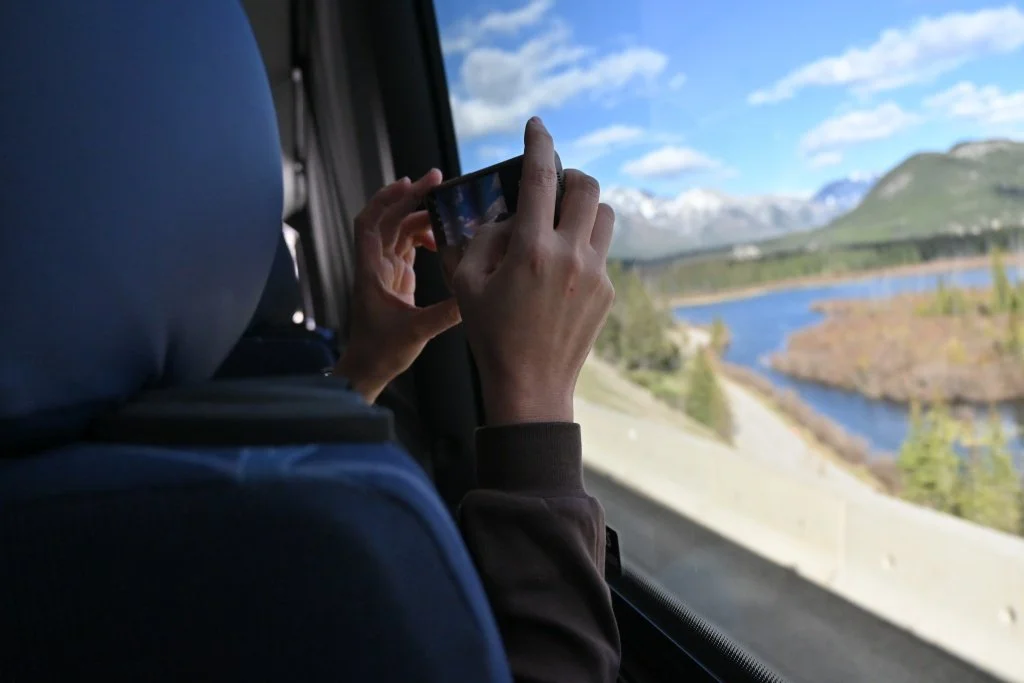
My friend, equally trigger happy, caught mid shot from the seat ahead.
My camera was already up, the way it always is on this kind of ride, when I noticed her hands doing the same thing in the seat ahead of me. I turned it toward her instead of the window, just for one frame.
She wasn't shooting anything dramatic, just water and tree line, the kind of view that's easy to let pass. But she didn't let it pass, and that's the actual point. The instinct to keep a camera, or a phone, ready isn't some specialized habit of mine. It shows up in anyone who's been burned once by a good view they didn't catch.
Most people reach for the shot eventually. Few keep the camera out long enough to actually take it.
The Payoff Happens After the Trip, Not on the Bus
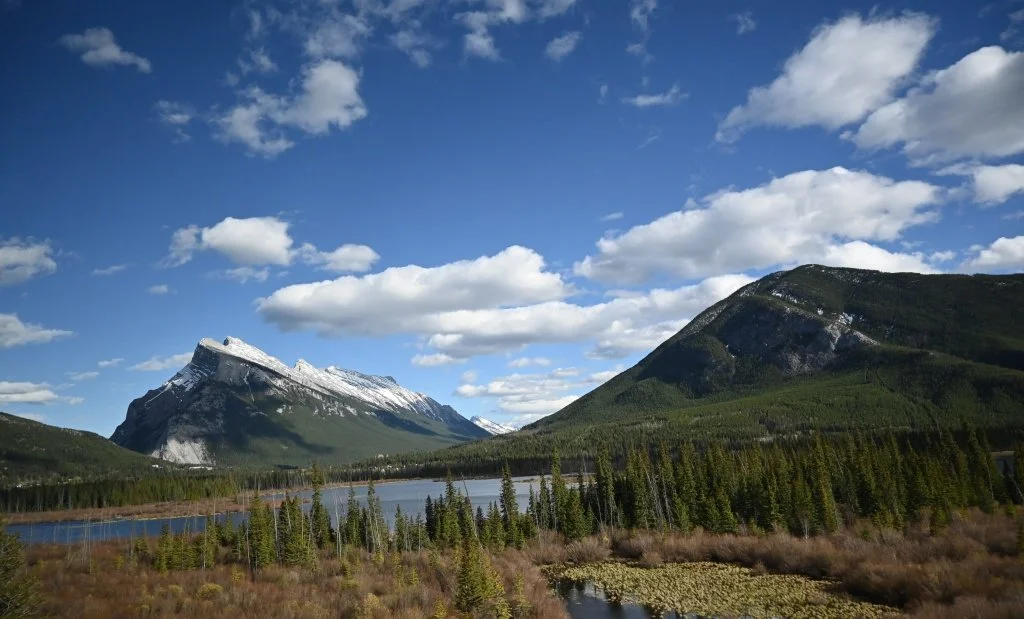
Somewhere along the Icefields Parkway, on the drive back into Banff.
I took this one without knowing if it would work. The bus was still moving, and the light kept shifting every few seconds. The window glass wasn't exactly clean either. There's no real preview in that kind of situation, just a guess and a press of the shutter.
Mountains held their shape on both sides, water sat flat between them. By any reasonable standard, a shot taken like that shouldn't come out clean. This one did.
Staying alert isn't the only way to get a good photo. Sometimes the opposite instinct, staying still instead of staying alert, works just as well. That's a different kind of ride than this one, though.
I didn't actually know I had it until later, going through the day's shots properly. That's the real test, not the moment itself.
The bus window doesn't show you the photo. Finding out later does, when it's too late to go back for it.
Closing Reflection
I check my photos the same way after every trip, not just this one. Back home, on a screen bigger than anything the camera itself can show, I scroll through what I actually got.
That's usually when I'm glad I didn't sleep, or didn't sleep much, through whichever ride it was. Some shots only really show themselves properly on a laptop screen rather than the small one on the back of the camera. More than once, a frame I almost scrolled past turned out to be the one that stopped me.
I've never once regretted staying awake on a bus instead of sleeping through it. Standby, the whole ride, every time I can manage it. That's the trade I'd make again.
Frequently Asked Questions
Do you ever just relax during long bus or train rides instead of taking photos?
Rarely on rides with a view. I treat scenic transit the same way I'd treat a planned shoot, camera accessible, attention on the window, and save the actual rest for after I've reviewed what I got.
Is it worth keeping a camera out the whole ride instead of just near the destination?
Yes, based on experience. The most surprising shots tend to come from the unplanned middle of a ride, not the parts everyone already expects to be scenic, like just before arrival.
What kind of camera works best for shooting through a bus or vehicle window?
A mirrorless camera with reasonably fast autofocus works well, since reaction time matters more than image stabilisation in most cases. A phone works too. The habit matters more than the equipment.
Do you get good photos every time you try this on a ride?
More often than not, yes. My success rate sits around 95%, helped a lot by a fast shooting mode on my camera built for exactly this kind of situation. On rides where I end up using my phone instead, the results hold up just as well.
Why take the window seat specifically instead of any other seat on a bus?
Because it's the only seat where nothing blocks the view. Sitting elsewhere means someone else's seat, shoulder, or head ends up between me and the window. From the window seat, the camera can go right up against the glass without anything in the way.
You might also enjoy
🌏 Wander · Eight Days at Sea: What an Alaska Cruise on Celebrity Edge Actually Feels Like
📸 Capture · The Stories Behind My Favourite Travel Photos