Zoo Negara, From the Other Side: A Behind-the-Scenes CSR Experience Most Visitors Will Never Have
16 Sep 2023
Zoo Negara Malaysia has been open since 14 November 1963. Managed by the Malaysian Zoological Society — a non-governmental organisation — it is less a conventional tourist attraction and more a working conservation institution that depends on public support to keep its animals and programmes running. Most people see it from the visitor's side. This is what the other side looks like.
I did not arrive at Zoo Negara the way most visitors do.
There was no leisurely morning, no queue at the ticket counter, no map unfolded at the entrance. I arrived on 16 September 2023 as part of my company's CSR programme — assigned to assist the zookeepers in providing daily care for the wildlife, including behavioural enrichment activities such as husbandry, exhibit cleaning and food preparation. My team was assigned to the penguin enclosure.
I was not expecting that to be the part I remembered most.
Before the Free Time: What CSR at Zoo Negara Actually Looks Like
Zoo Negara's CSR programme invites companies to contribute directly — not money, but time. Physical effort. On the day, our group was divided and assigned to different activities across the zoo: cleaning around enclosures, sweeping, assisting zookeepers with daily maintenance work that most visitors never see.
Our team was sent to the penguin enclosure.
Before any cleaning began, we were briefed on what the work involved and what to expect inside. Then it was brooms and hoses — the kind of unglamorous, necessary work that happens every day before the gates open. No cameras were allowed inside the enclosure, and that detail has stayed with me — not as an inconvenience, but as a signal. The zoo takes the welfare of these animals seriously enough to limit what happens in their space, even on a day when corporate volunteers are moving through it.
Lunch was provided. By the time the morning's work was done, something had shifted in how I was looking at the rest of the place.
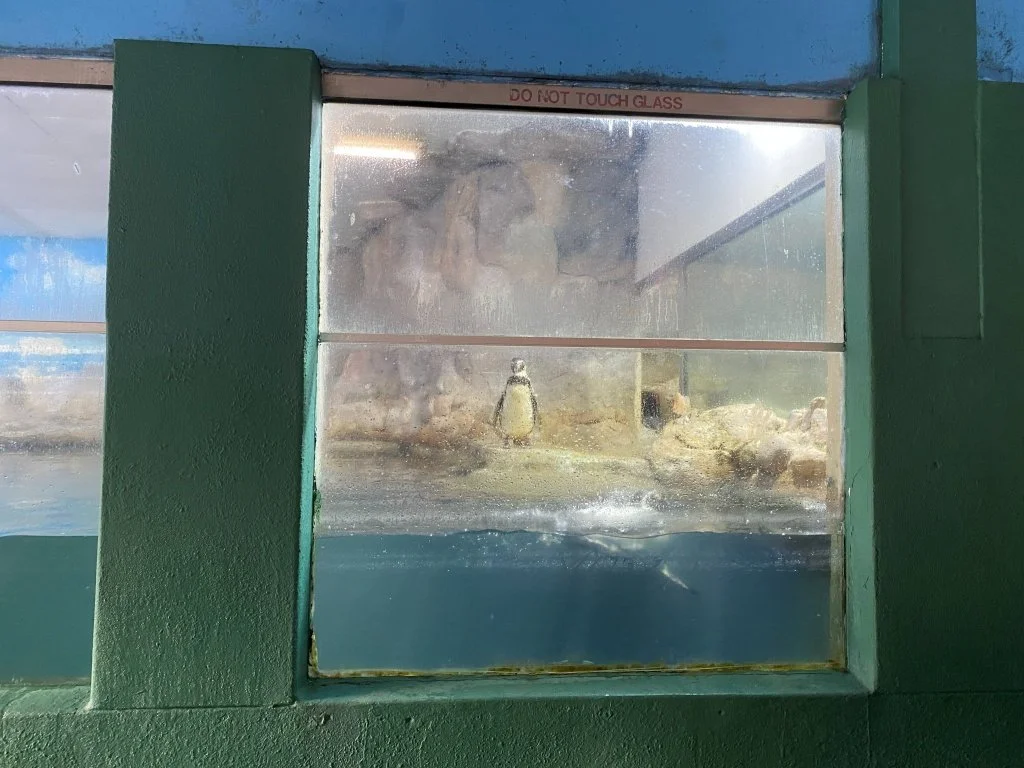
The view from outside the penguin enclosure at Zoo Negara — the side most visitors see. We got to see the other side.
Getting behind an enclosure — even briefly, even just with a broom and a hose — changes what you see when you're standing in front of one.
After the Work: Walking the Zoo with Different Eyes
Free time after the morning meant walking through the zoo as a visitor, but not quite the way I would have if I'd simply bought a ticket at the gate.
The hippopotamus was the first stop that made me pause — massive and unhurried in its open enclosure, working through a pile of vegetation with complete indifference to whoever was watching. There is something grounding about that level of focus.
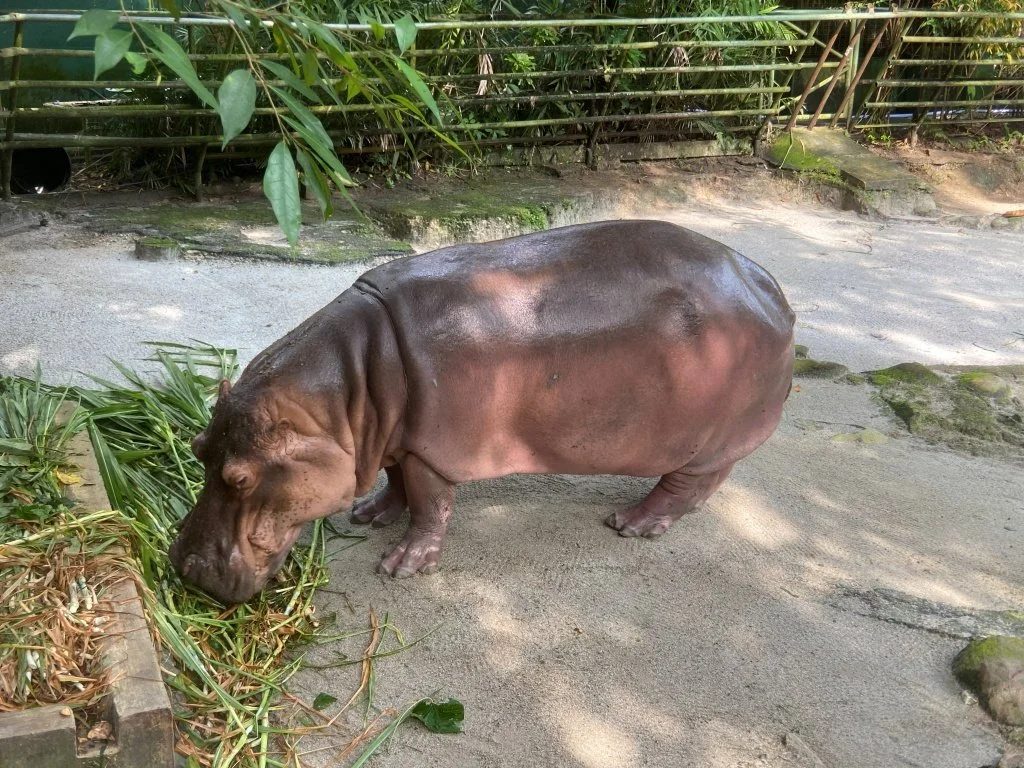
Hippopotamus — completely unbothered, entirely focused on lunch
The capybara enclosure had a surprise that stopped everyone in their tracks: Oyen, a resident orange cat who has become something of a local celebrity. Oyen and the capybaras are genuine companions — the photos of them together went viral, and once you see him draped across the wooden platform while the capybaras graze around him completely unbothered, you understand why. No official guide mentions him. That's exactly why he's the detail you remember..
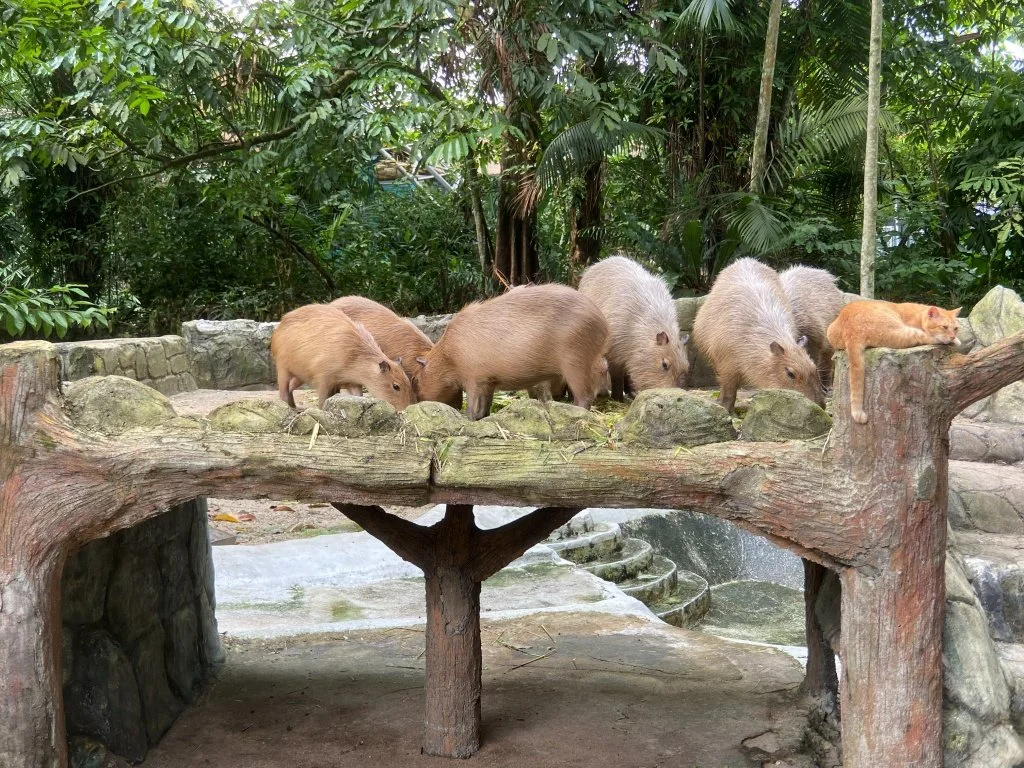
Oyen, Zoo Negara's resident orange cat, with his capybara companions — this duo went viral for good reason
The sun bears were working through their enrichment toys — orange balls and a suspended backpack arrangement that kept them occupied and moving. I hadn't thought much about enrichment before the morning's briefing. After it, I noticed the toys in most of the enclosures.
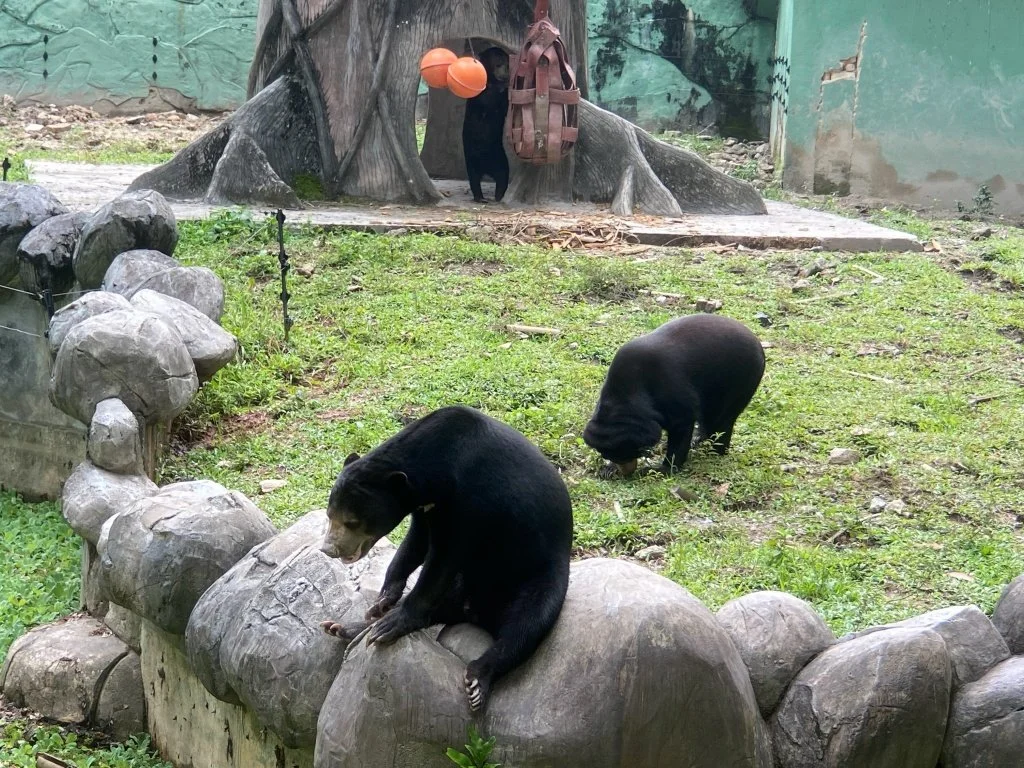
Sun bears — the orange balls and suspended items are behavioural enrichment tools to keep them mentally stimulated
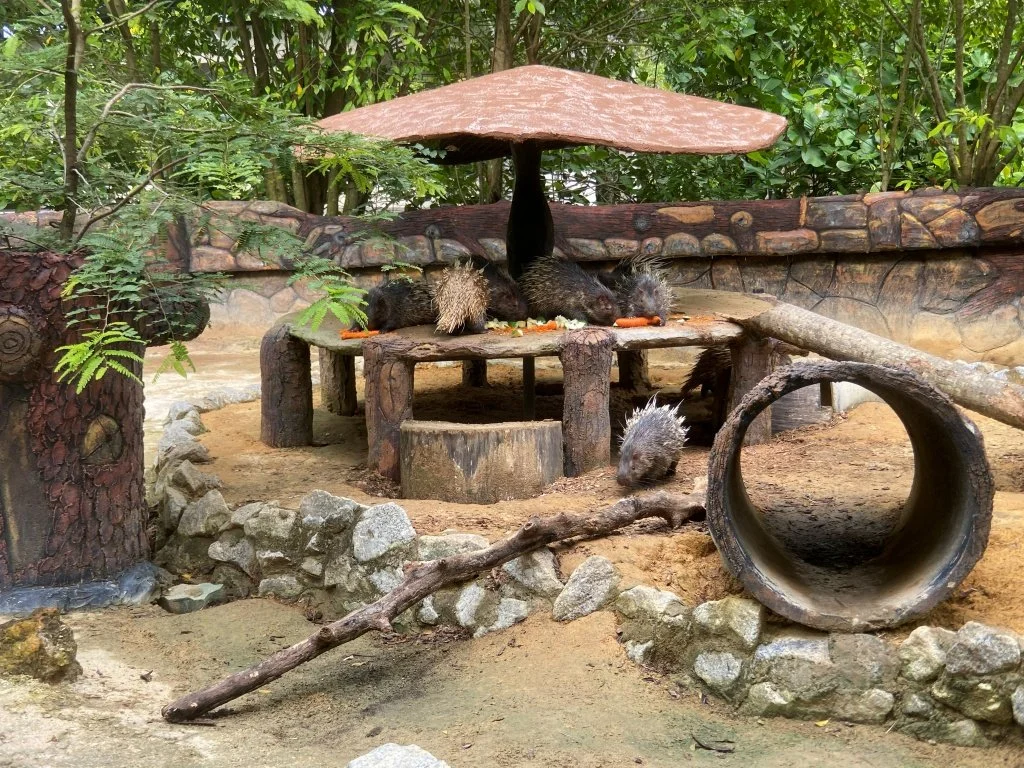
Porcupines at feeding time
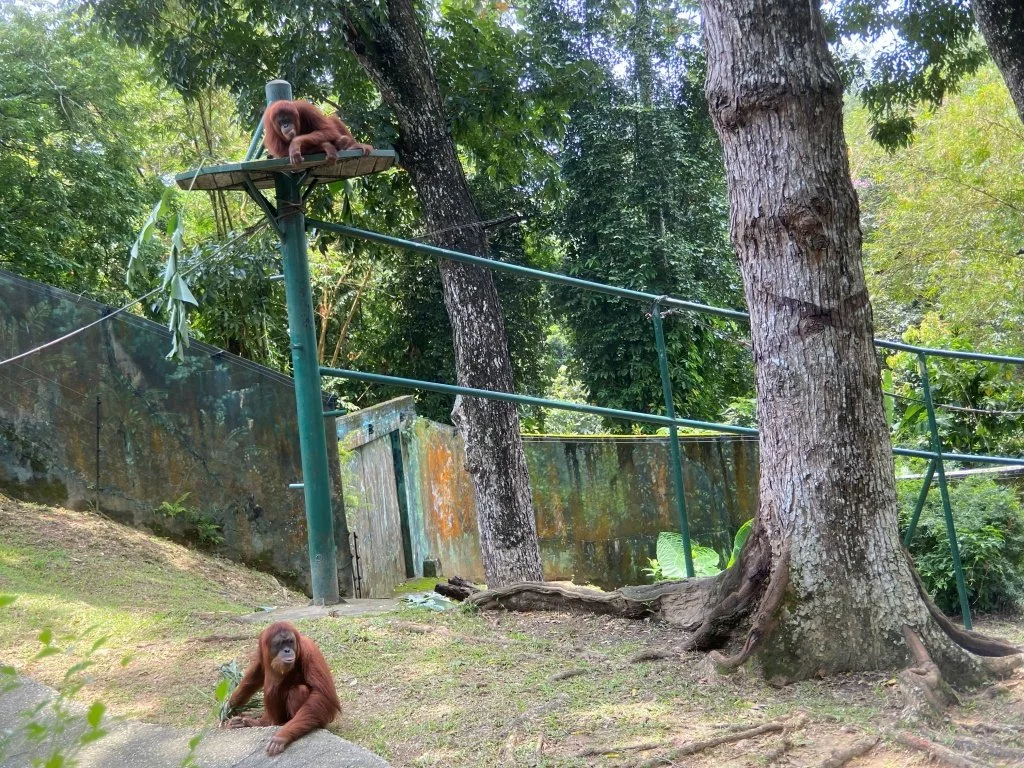
Orangutans
The savannah enclosure is the one that earns the most time. Zebra, giraffe, deer and ostrich sharing the same open field — it is the closest thing to a landscape that Zoo Negara offers, and it rewards standing still for longer than you think you need to.
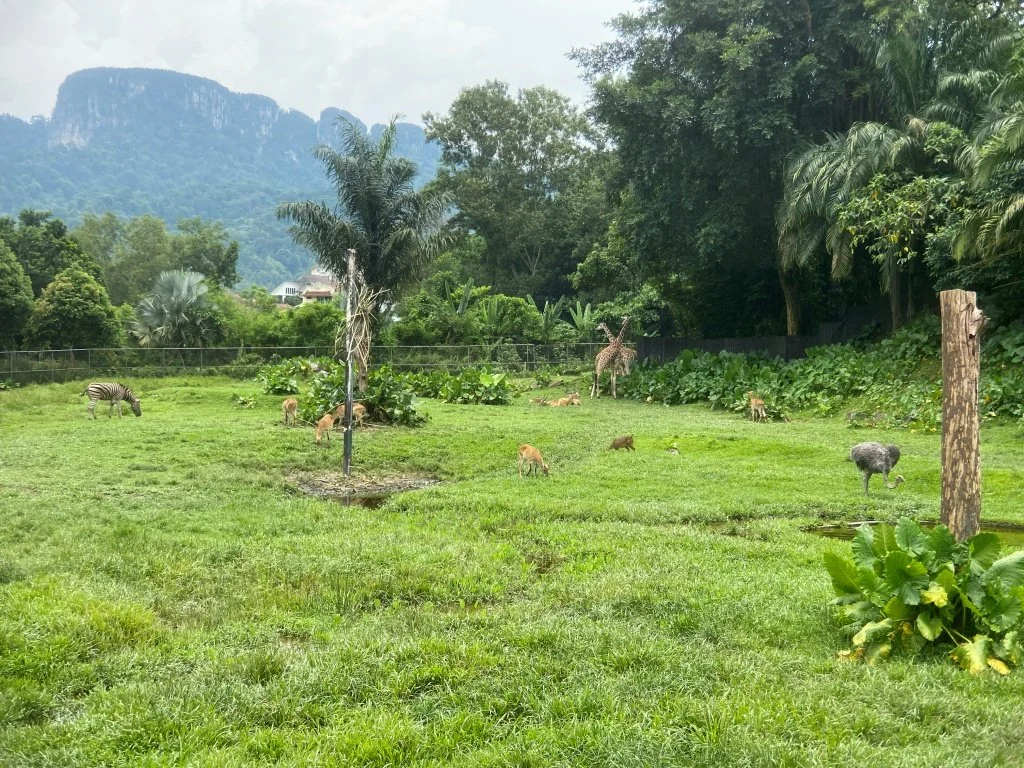
The savannah enclosure at Zoo Negara — zebra, giraffe, deer and ostrich sharing the same open field
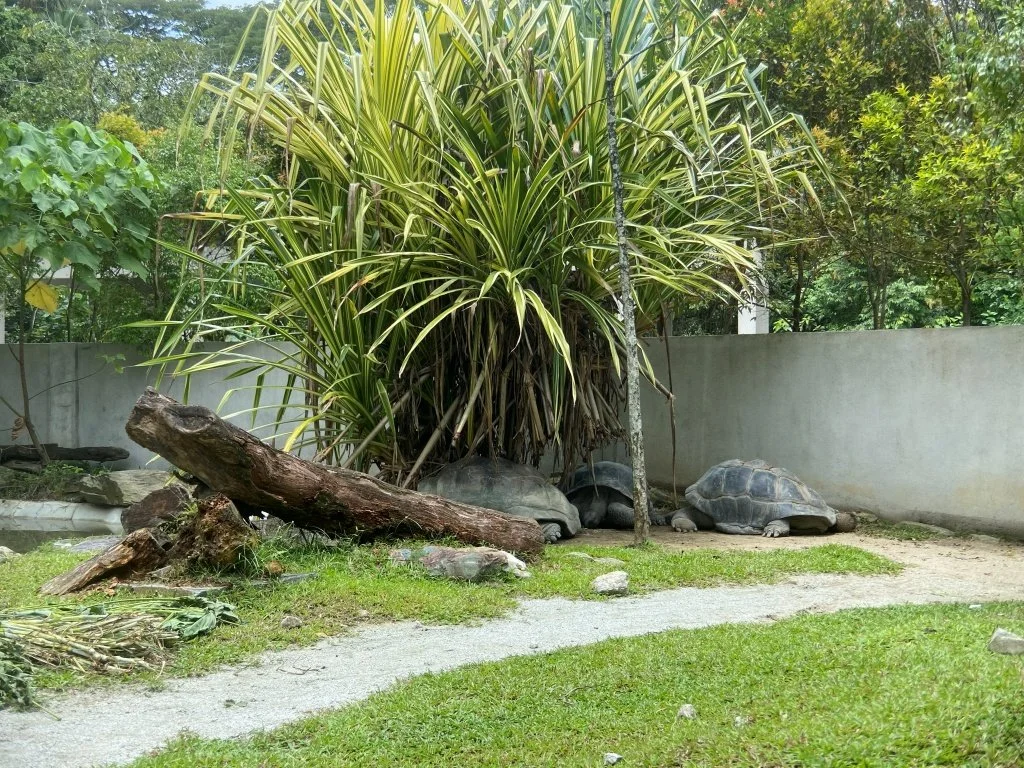
Giant tortoises resting in shade
The white tiger was the moment that stopped me completely. Seeing one swim — moving through the water with a kind of ease that you intellectually know tigers are capable of but don't quite believe until you see it — is different from knowing it. I stood there longer than I planned to.
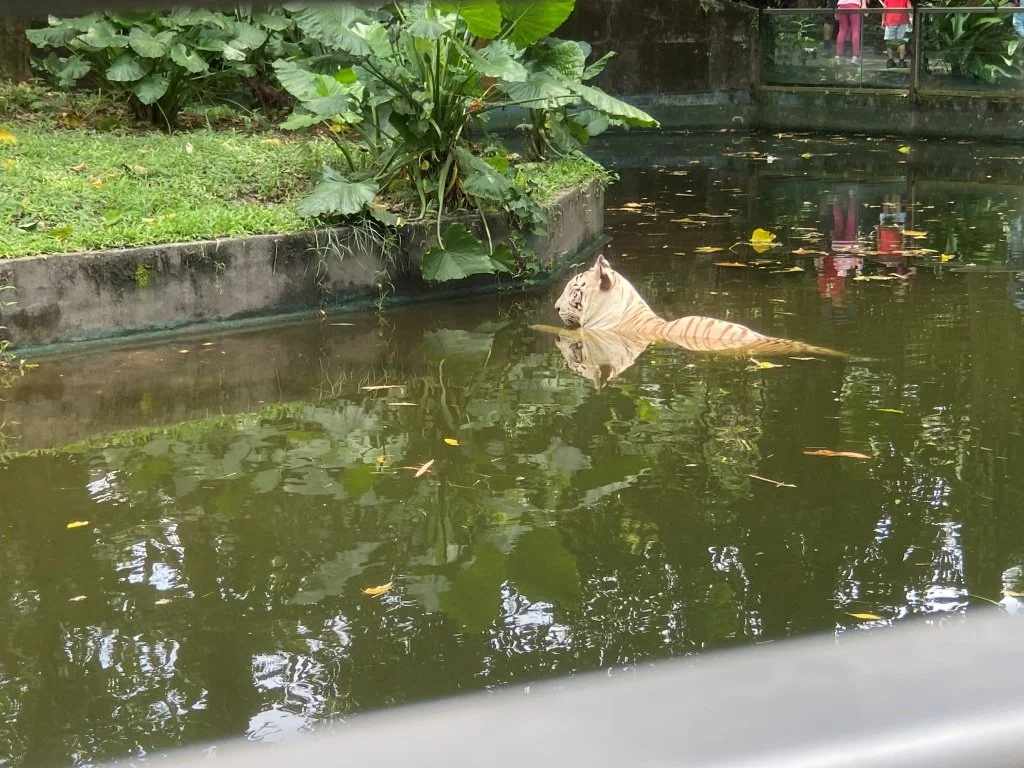
A white tiger swimming at Zoo Negara — tigers are strong swimmers, but seeing one actually in the water is something else entirely
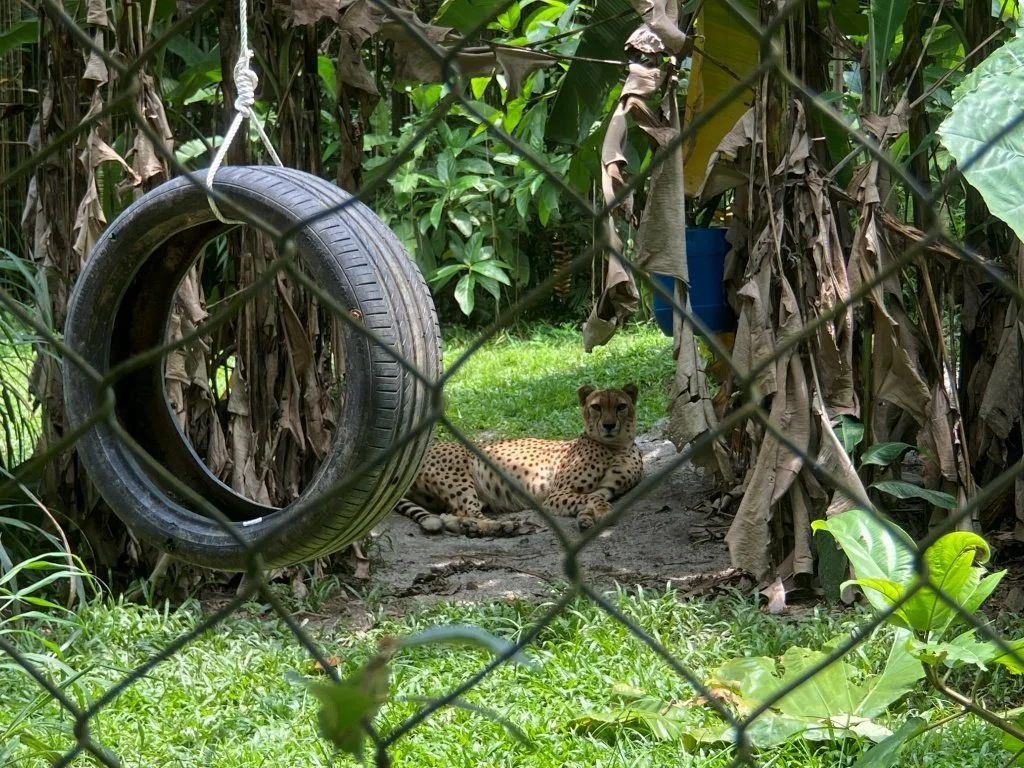
Cheetah at Zoo Negara — the tire hanging in the enclosure is a behavioural enrichment tool
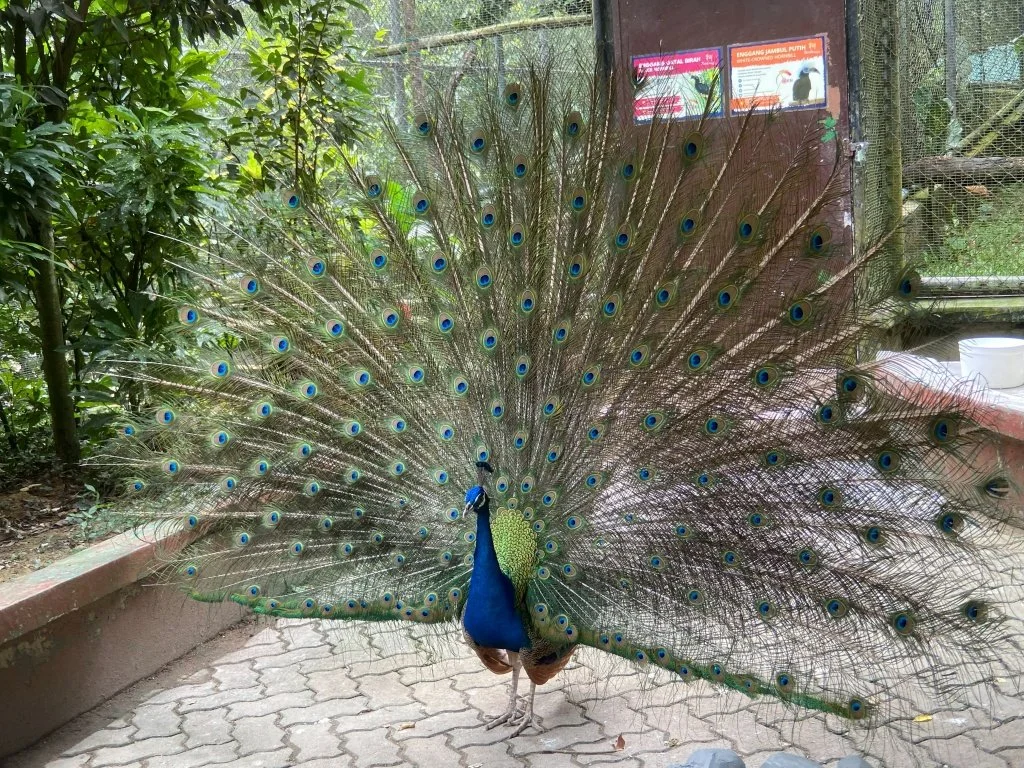
A peacock in full display at Zoo Negara — caught at exactly the right moment
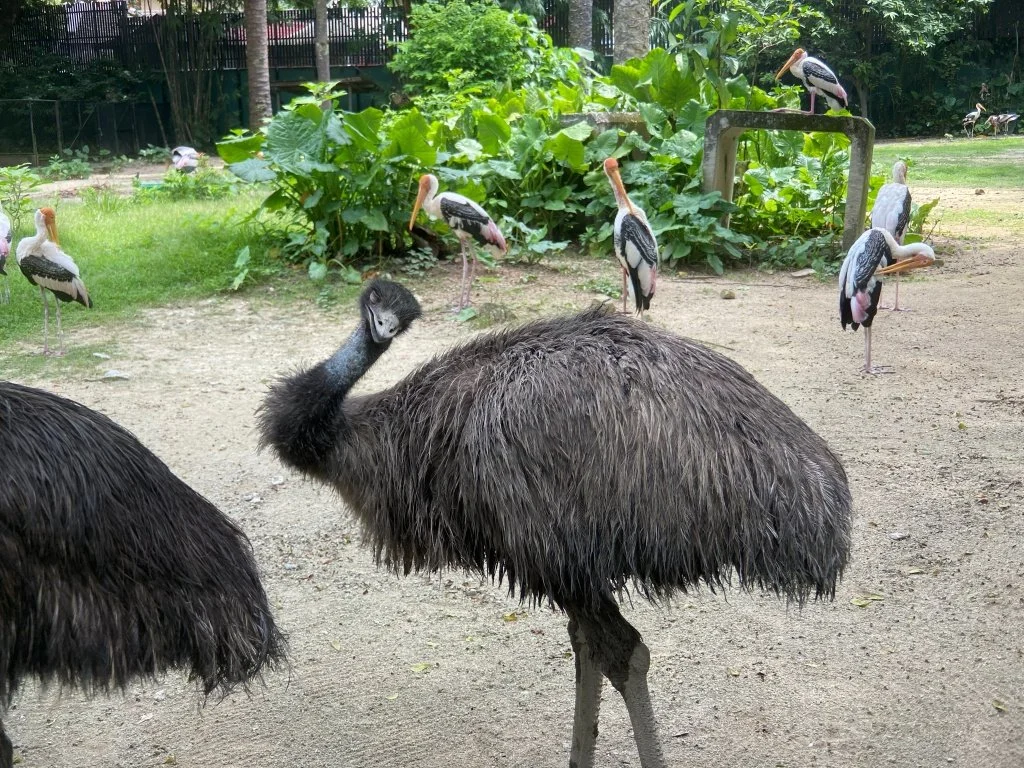
Emu and storks at the lake birds area, Zoo Negara
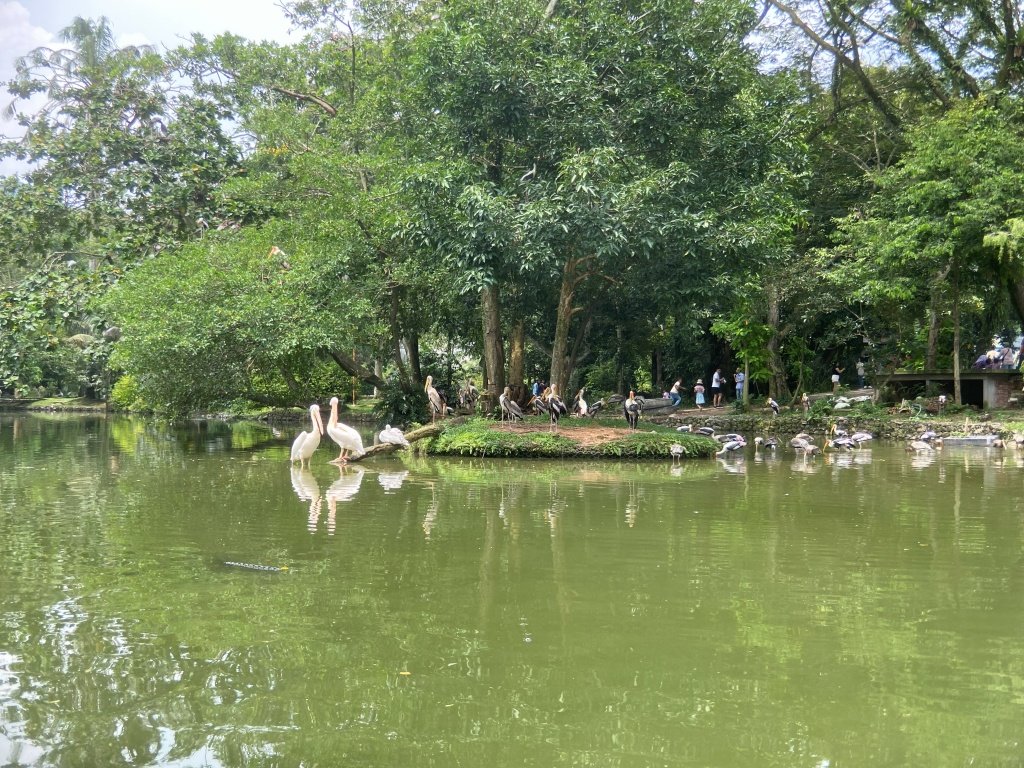
Pelicans and storks at the lake, Zoo Negara
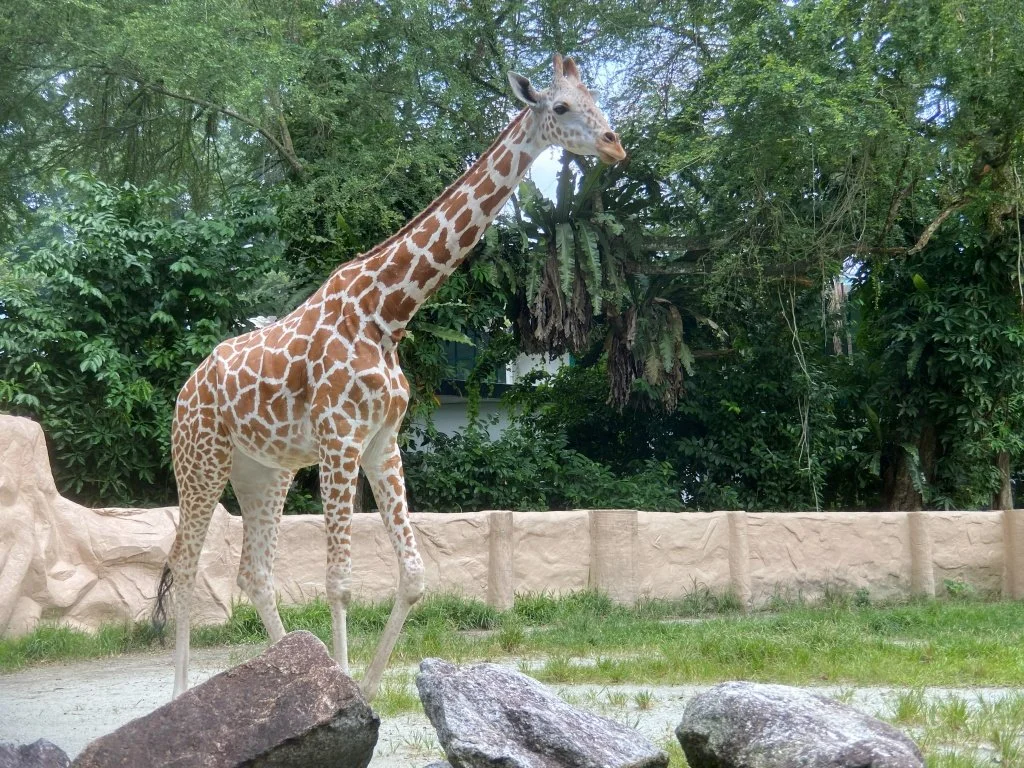
Giraffe at Zoo Negara — up close, they are considerably more imposing than the savannah view suggests
The penguins I now felt oddly connected to. The giraffe I'd already seen from across the savannah, now close enough to study properly. All of it looked different after a morning of understanding, even slightly, what it takes to keep this place running.
What Zoo Negara Is Actually Doing
Zoo Negara is home to over 4,000 animals. The question worth asking as you walk through isn't just "what animals will I see" — it's what Malaysia's national zoo tells you about how this country sees its relationship to its own wildlife.
The Malayan tiger is the answer that matters most. Fewer than 150 remain in the wild, down from an estimated 3,000 in the 1950s. Zoo Negara is part of the active effort to change that trajectory — alongside government agencies and conservation NGOs — through breeding programmes and research. These are not abstract statistics when you're standing in front of one.
The zoo survives primarily on ticket revenue and public and corporate sponsorship. There is no government funding cushion. What that means practically is that every visit, every adoption, every CSR programme contributes directly to whether these programmes continue.
What I Learned
A morning inside an enclosure teaches you something that an afternoon walking past them doesn't.
The animals are there because people show up every day — before the gates open, before the visitors arrive — and do unglamorous, necessary work. Enrichment is not decoration. That backpack hanging in the sun bear enclosure, those orange balls, the suspended arrangements — they're the difference between an animal that is surviving and one that is living. Conservation is not a statement on a placard. It is a broom. It is a hose. It is a briefing before you're allowed to step inside.
If your company is looking for a CSR programme with genuine impact, Zoo Negara is worth considering. You won't just be writing a cheque — you'll be working alongside the people who keep this place running, doing something that matters in a way that's harder to forget than a team lunch.
Not part of a company programme? The KeeperKu Programme is open to students aged 16 and above from schools, colleges and universities — a structured half-day experience running Thursday to Sunday, working with animals on husbandry, enrichment, and more. Contact Zoo Negara's Education Department at education@zoonegaramalaysia.my for details.
If neither of those is accessible right now, there is still the Adopt An Animal programme — sponsoring an animal's annual food, enrichment and veterinary care, with a certificate of adoption in return. The zoo needs the support. And after a morning inside it, that sentence means something different than it did before.
You don't have to clean a penguin enclosure to care about what happens inside one. But it helps.
Is Zoo Negara Worth Visiting?
Yes — and worth supporting beyond the entry ticket. Come with realistic expectations: this is a working conservation institution, not a theme park. Some parts of the zoo show their age. What it offers in return is something more specific — the chance to see Malaysia's own wildlife and to understand, even in small ways, what it takes to keep them alive.
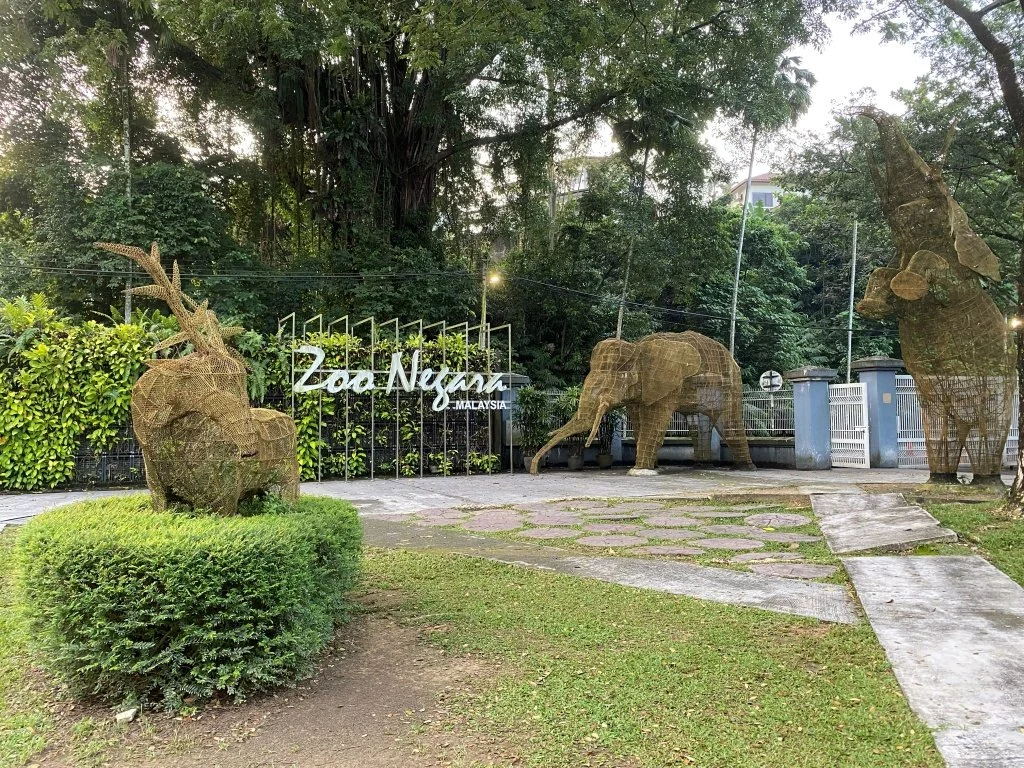
Zoo Negara Malaysia entrance — the wire animal sculptures are the first thing you see before the gates
How to Get There and What to Know Before You Go
Getting there: Zoo Negara is in Ampang, Selangor. The most practical public transport route is the LRT Kelana Jaya Line to Wangsa Maju Station, then a Grab or taxi from the station to the zoo entrance. Most people drive, especially those visiting with family.
Entry: Check the official Zoo Negara website for current admission rates. If it's your birthday month, Zoo Negara offers free entry to the birthday person for up to one month from their birthday date — verify current terms on the site before visiting.
How to get involved:
CSR Programme — for companies; contact csr@zoonegaramalaysia.my
KeeperKu Programme — for students aged 16 and above; contact education@zoonegaramalaysia.my
Adopt An Animal — for individuals; via Zoo Negara's adoption page
Frequently Asked Questions
How do you get to Zoo Negara without driving?
Take the LRT Kelana Jaya Line to Wangsa Maju Station, then a Grab or taxi to the zoo entrance. Most visitors drive, particularly families, but the LRT-plus-Grab route works fine.
Can individuals do a behind-the-scenes experience, or is it companies only?
The KeeperKu Programme is open to students aged 16 and above from schools, colleges and universities. It's a structured half-day running Thursday to Sunday, working with keepers on husbandry and enrichment. Email the Education Department at education@zoonegaramalaysia.my for details.
Is Zoo Negara worth visiting?
Yes, and worth supporting beyond the entry ticket. Come with realistic expectations. This is a working conservation institution, not a theme park, and some parts show their age. What you get in return is Malaysia's own wildlife and a sense of what keeping it alive actually costs.
How is Zoo Negara funded?
Primarily ticket revenue plus public and corporate sponsorship. There's no government funding cushion, which is why every visit, adoption and CSR programme feeds directly into whether the conservation work continues.
What is the Adopt An Animal programme?
You sponsor an animal's annual food, enrichment and veterinary care, and receive a certificate of adoption. It's the option that stays open if a CSR day or KeeperKu isn't accessible to you.
You might also enjoy
🌏 Wander · Kuala Lumpur, Slowly
🌏 Wander · Is Pulau Rawa Worth the Trip? Your Complete Guide to Malaysia's Hidden Island Paradise