Kuala Lumpur, Slowly
Last Updated on Apr 2026
Kuala Lumpur is worth more than a weekend itinerary. Born from the meeting point of two rivers— its name literally means Muddy Confluence — the city holds layers of colonial history, living heritage, intellectual culture, and neighbourhood character that most visitors, and even many locals, never slow down enough to find. This is a guide to the places that changed how I see thecity I grew up in.
I was born and brought up in Kuala Lumpur, and for most of my life, I had seen almost none of it. That sounds like the kind of thing you'd say to be dramatic. It isn't. The practical reasons were real: difficult parking, expensive parking, no obvious way to get from one part of the city to another without a car and a great deal of patience. KL is a city that has historically punished you for not driving and doesn't always reward you when you do. So I stayed in the parts I knew, and I told myself I'd get to the rest eventually.
Eventually arrived on 17 July 2017, when the MRT opened.
I remember taking the Kajang–Sg Buloh line from one end to the other — not going anywhere in particular, just riding it for the elevated view. There's something about seeing a city from above, at speed, that rearranges it in your head. Streets you've driven through at ground level suddenly have context. Neighbourhoods you thought were separate turn out to be adjacent. The city stops being a collection of individual errands and starts being a place with a shape.
I got off at different stations after that. I started walking. Bukit Bintang first, then outward.
It still took me years to learn what my own city's name means. Kuala Lumpur: Muddy Confluence. Named for the meeting point of two rivers — the Klang and the Gombak — where the earliest settlers built the first structures of what would become a capital city. I learned this recently, at a heritage talk, standing in the middle of Downtown KL. I'd driven past that confluence more times than I could count.
This is what happens when you slow down enough to pay attention. You find out what the place you've always lived next to actually is.
These are the places that have changed how I see Kuala Lumpur.
Chinatown, KL
I've been coming to Chinatown across different visits, and each time I arrive with my camera, I find something I missed before.
That's the thing about this neighbourhood — it doesn't give itself away in a single visit. The covered market on Petaling Street is the obvious entry point, and it's worth walking through, but it's not the reason to stay. The reason to stay is everything that surrounds it: the temples, the murals, the old shoplots, the food that has been drawing people to these streets for decades. Walk slowly enough and half a day disappears before you notice.
Guan Di Temple and Sri Mahamariamman Temple both sit within easy walking distance of Petaling Street, and both will stop you mid-stride. The gopuram tower of Sri Mahamariamman rises above the shophouse rooflines in a way that takes you by surprise the first time, and Guan Di Temple, dedicated to the Chinese deity of righteousness, carries the particular quiet of a place that has been here long enough to simply belong.
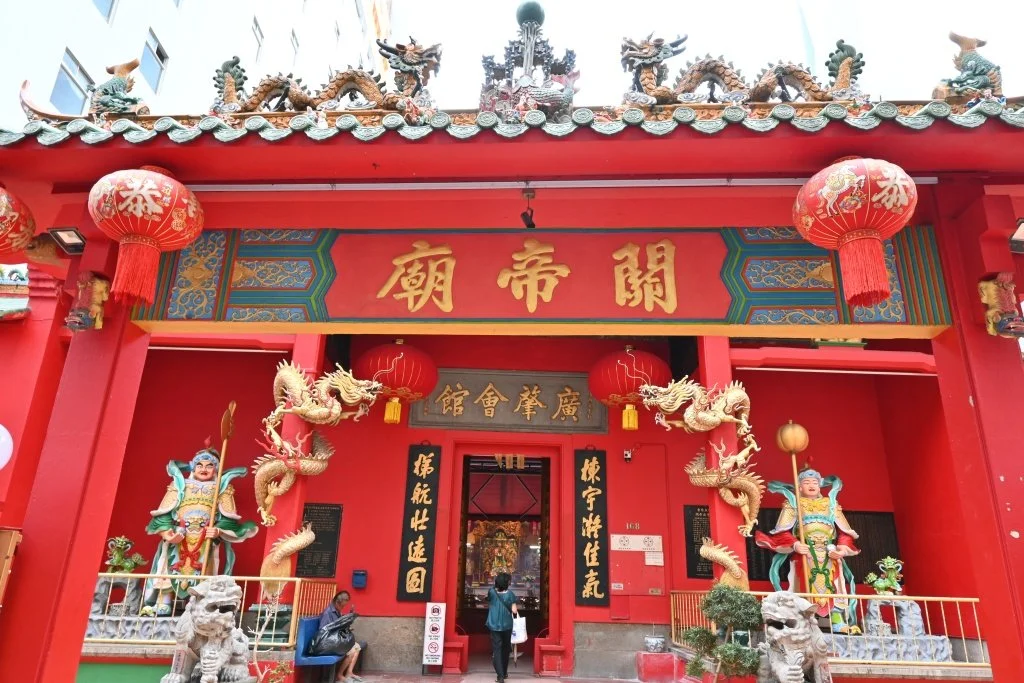
Guan Di Temple at Jalan Tun H S Lee, Chinatown KL
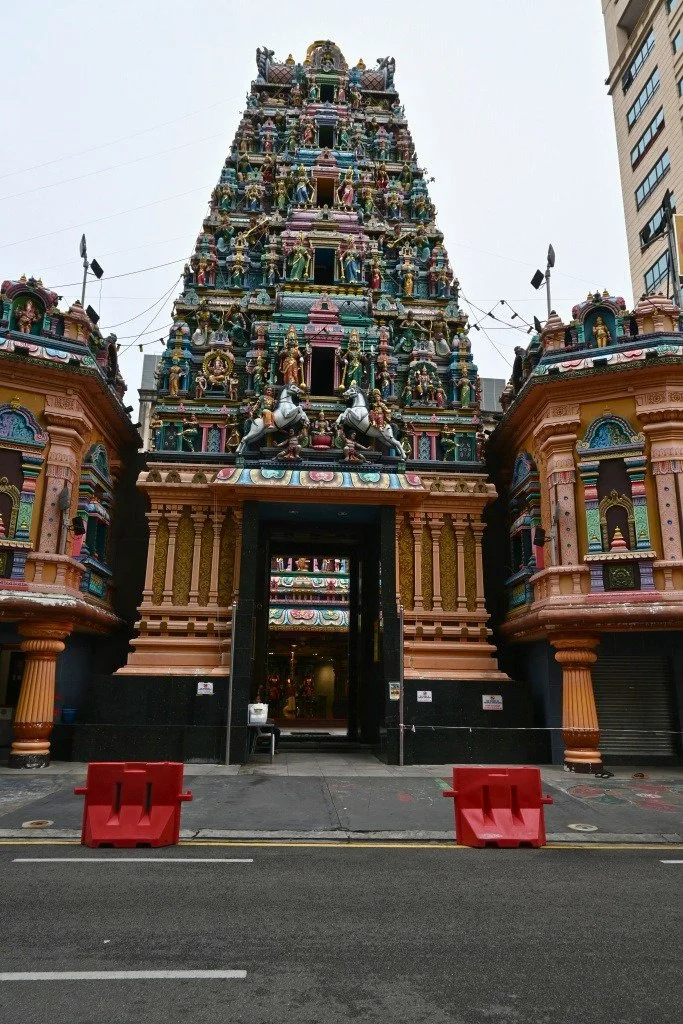
Sri Mahamariamman Temple at Jalan Tun H S Lee, Chinatown KL
The street art is where Chinatown rewards the slowest walkers. Kwai Chai Hong, Lorong Petaling 2, the Merdeka 118 mural along Jalan Sultan, The River of Life. These are the ones people photograph most, but the better finds are the ones that aren't on any list: murals painted directly on shophouse walls and pillars, easy to miss if you're moving at any kind of pace. Photography walk tours use Chinatown as a base because there is always another corner worth turning.
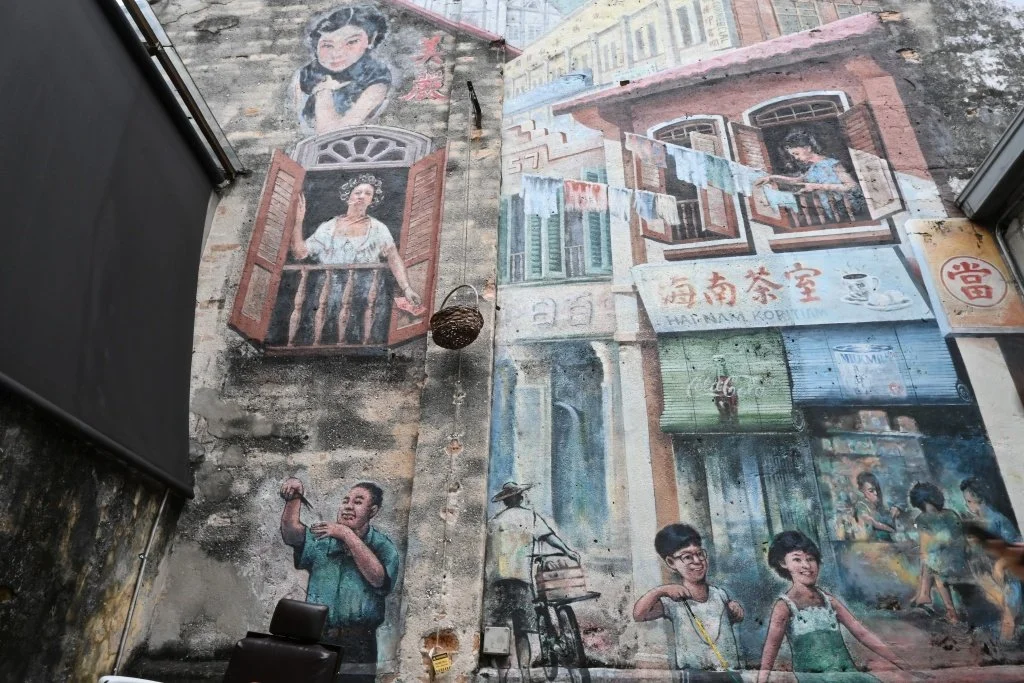
Kwai Chai Hong aka Little Demon Alley at Lorong Panggung Chinatown KL featuring old Chinatown in the 1960s
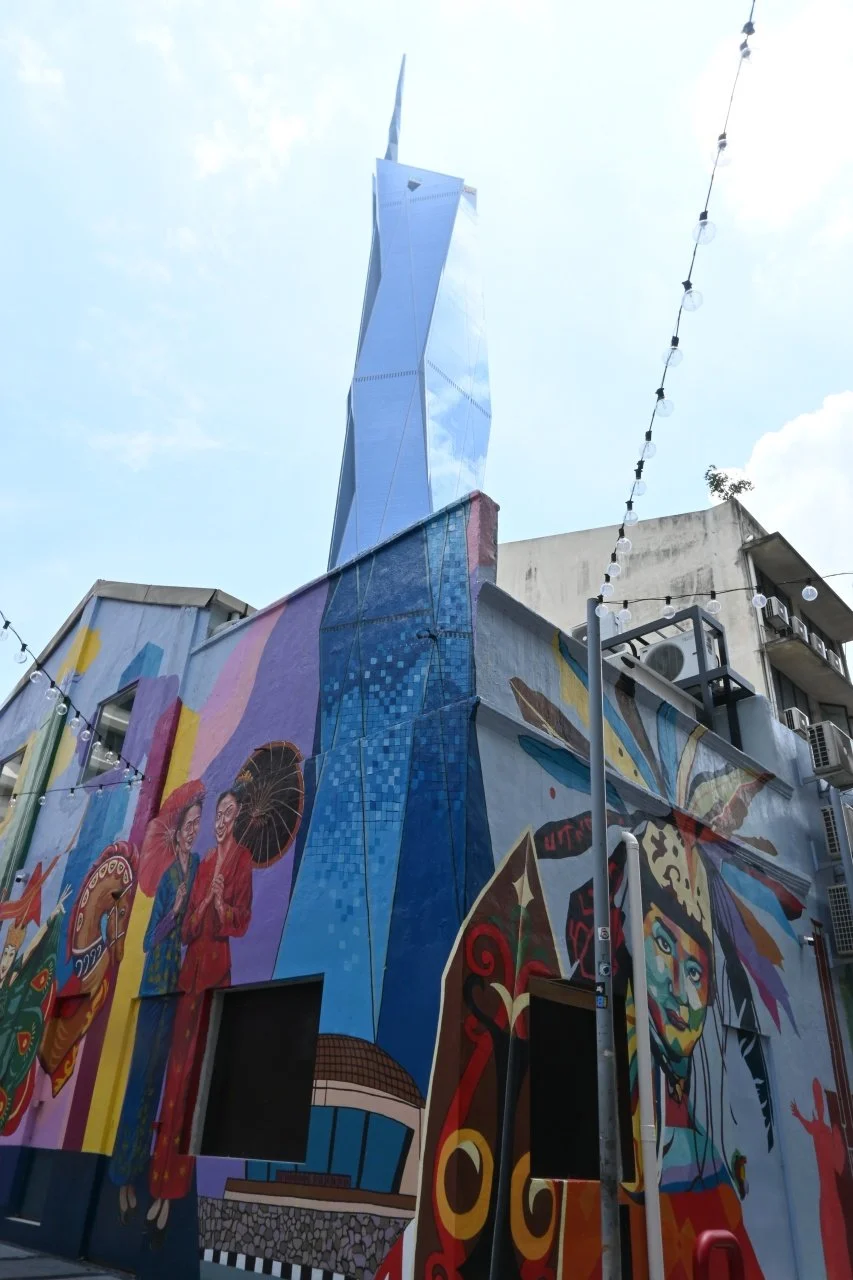
Creative Merdeka 118 street art at Jalan Sultan
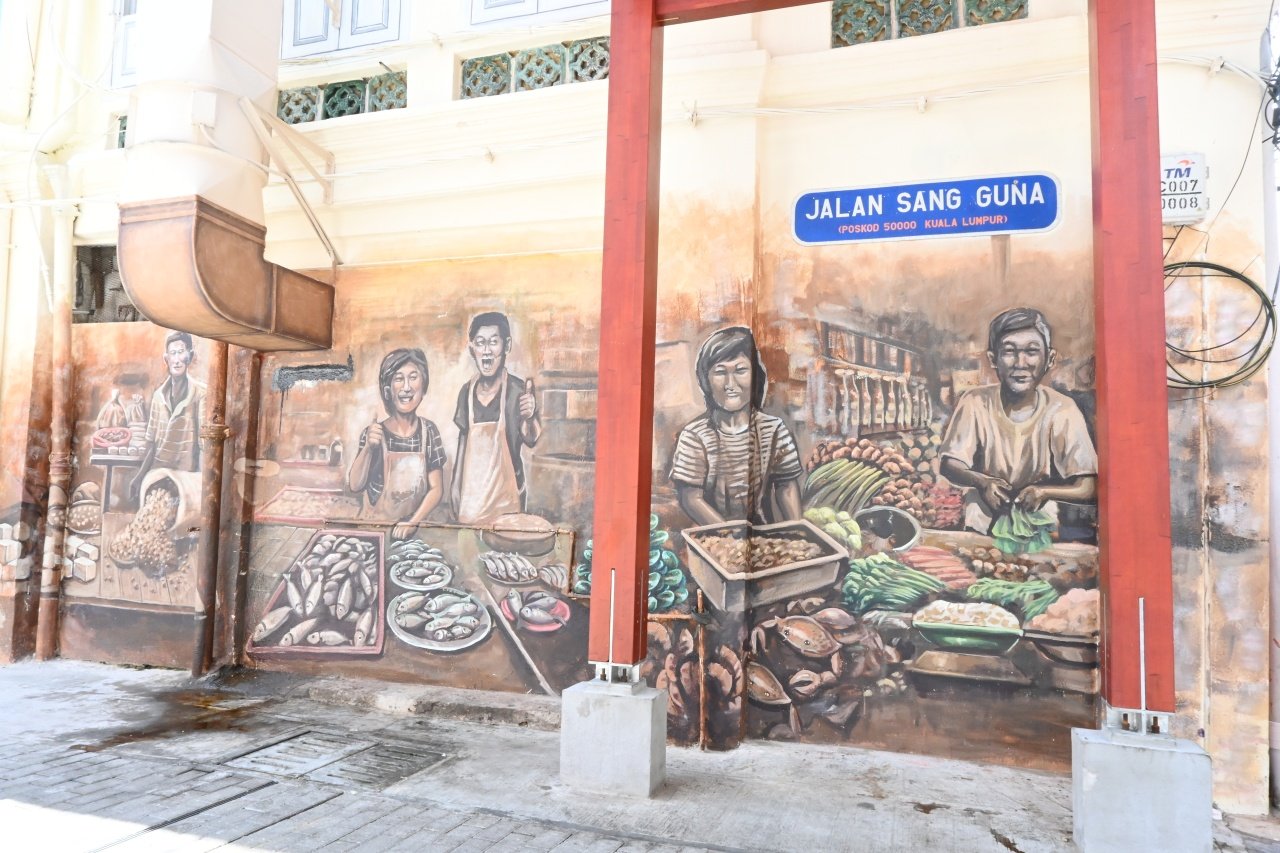
Jalan Sang Guna street art in KL at Pasar Lee Lam Thye - featuring scenes and people from the area’s past, including theatre-goers, street hawkers, and market traders.
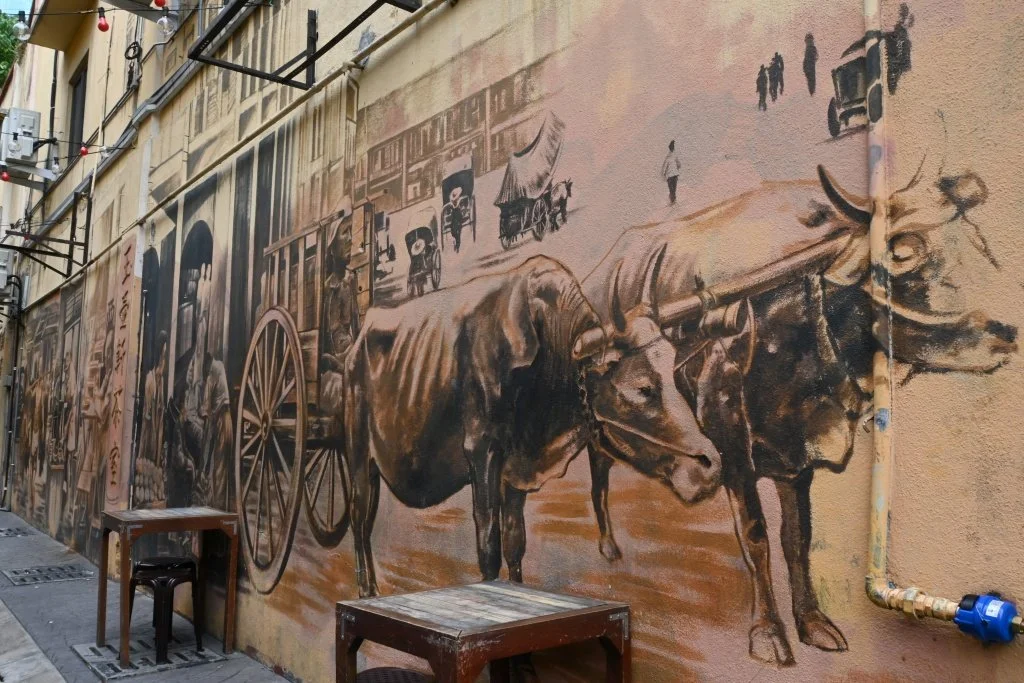
Old Kuala Lumpur street art at Lorong Petaling - featuring old trades and cultural elements
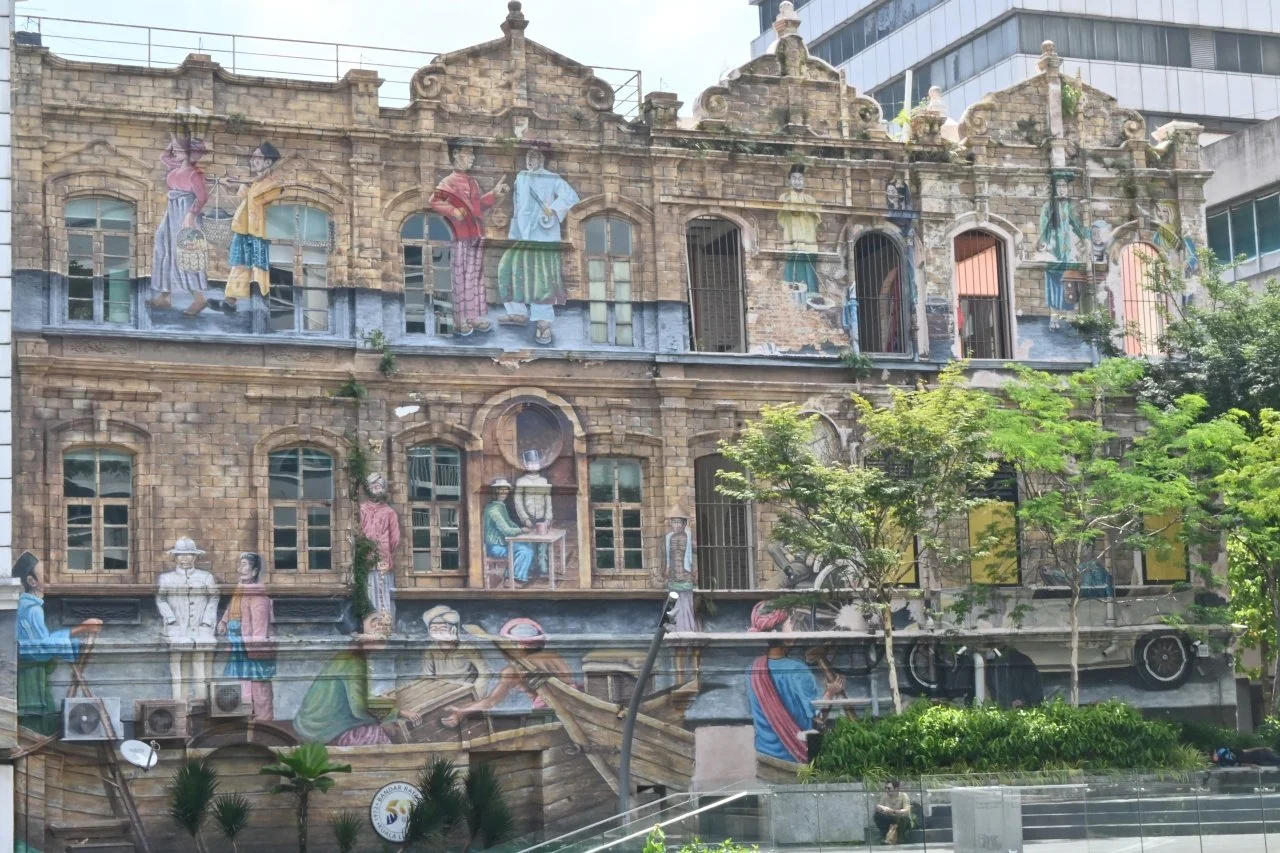
The River of Life street art featuring fishermen and traders along the river in Kuala Lumpur of the scenes of historical time (city's rich history and connection to the river).
Kwai Chai Hong deserves its own mention. The art installations here change with the calendar — Chinese New Year, the lantern festival, seasonal themes — which means the version you visit is never quite the version someone else visited. It's designed to be revisited, and it shows.
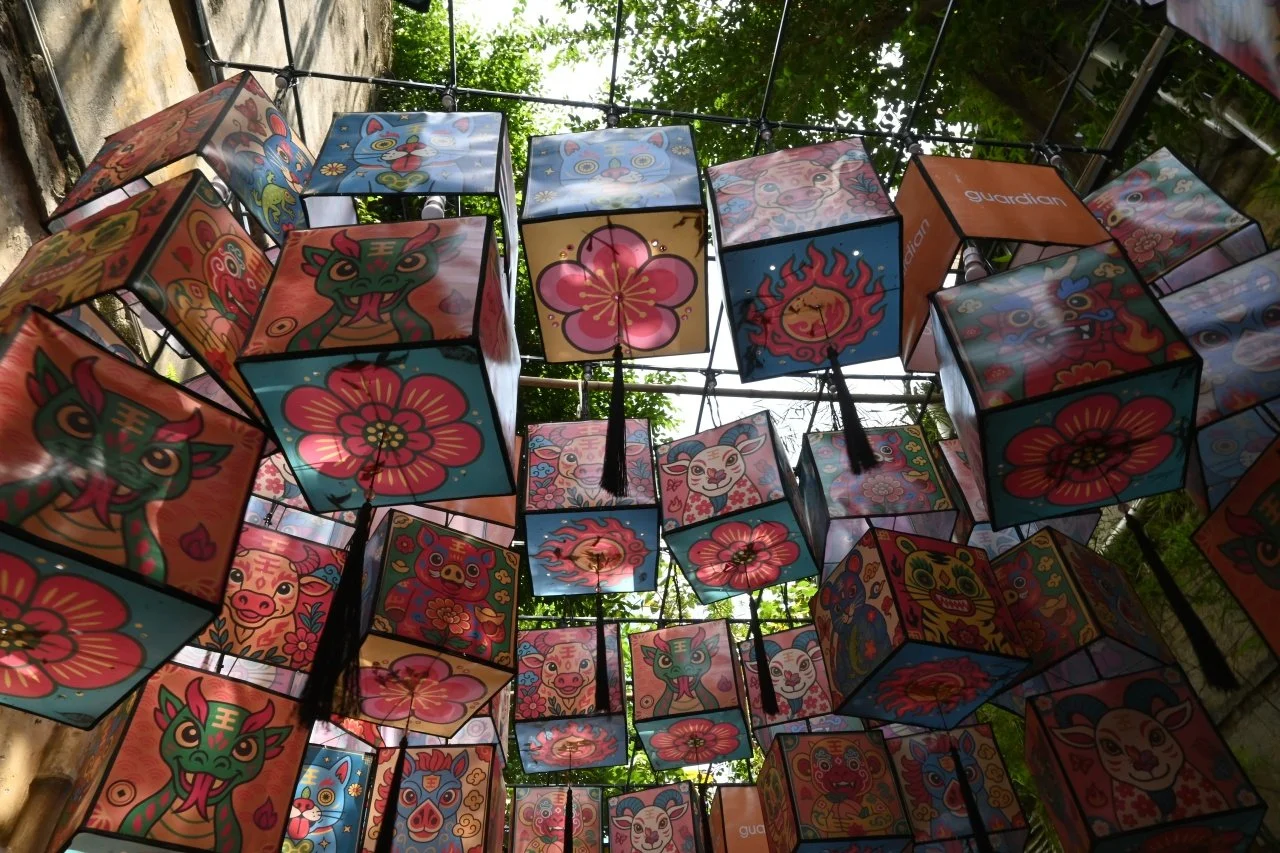
Guardians of Legacy theme during Chinese New Year 2026 art installation
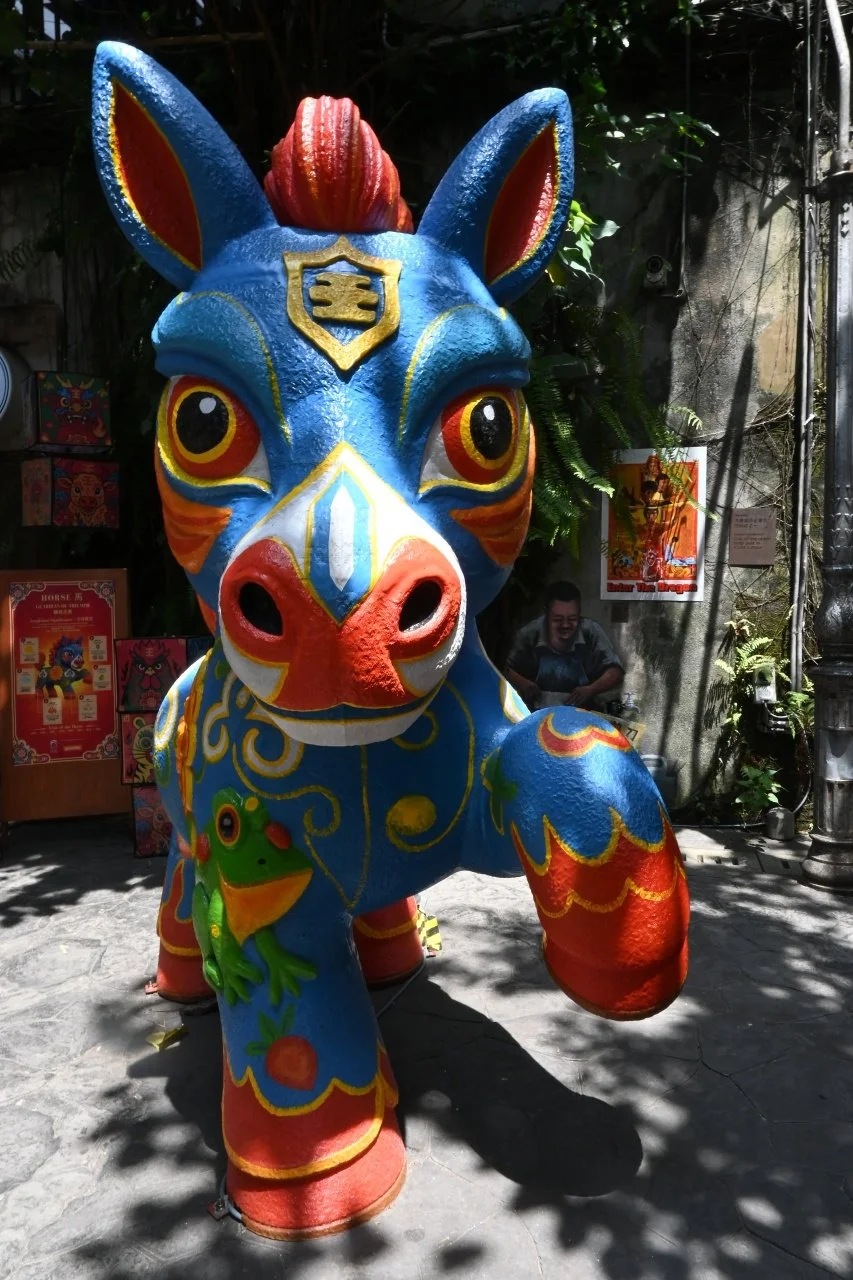
Horse art installation of Guardians of Legacy theme during Chinese New Year 2026
Pasar Lee Lam Thye has been recently refurbished and is worth a look for anyone interested in what a traditional market looks like when it's been thoughtfully updated rather than gutted.
The old shoplots along the surrounding streets are equally interesting: a button shop, traditional culinary suppliers, a second-hand bookstore — some still carrying their heritage look, some refurbished, all of them places you either walk past in ten seconds or spend twenty minutes inside — nothing in between, depending entirely on what you're paying attention to.
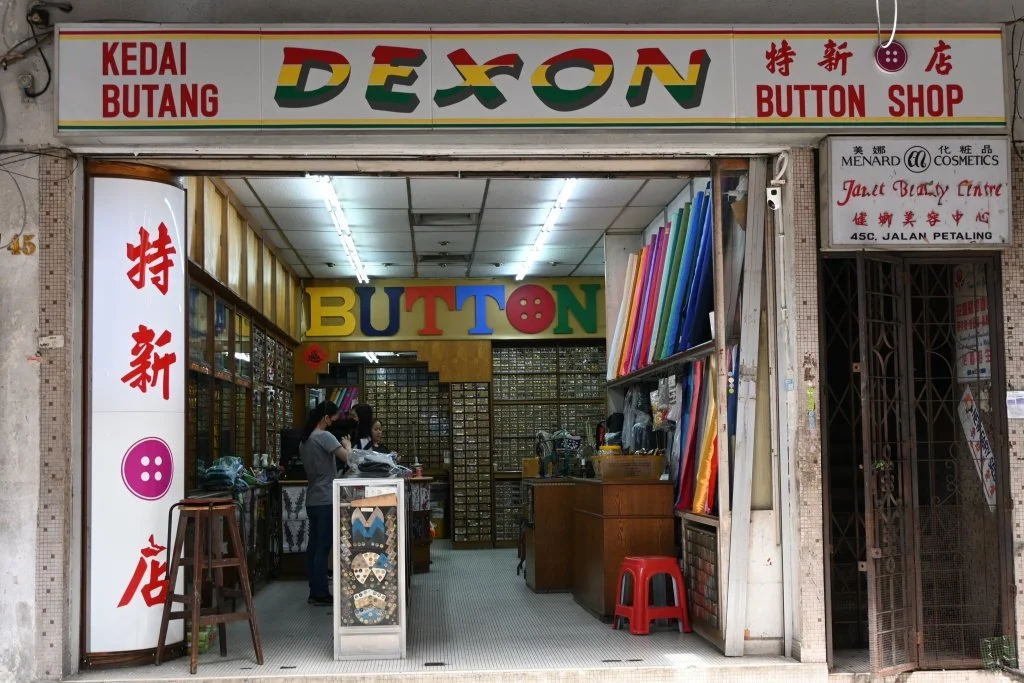
Button shop at main Petaling Street, Chinatown KL
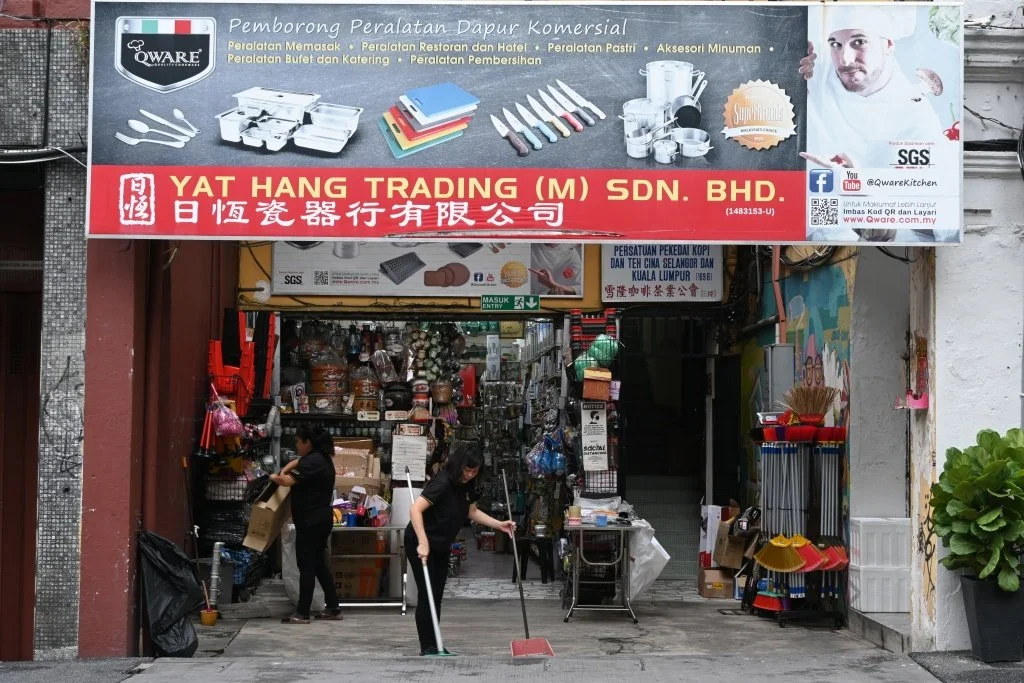
Yat Hang Trading at Jalan Tun H S.Lee selling traditional ceramic and porcelain crockery and cutlery (kitchenware and tableware)
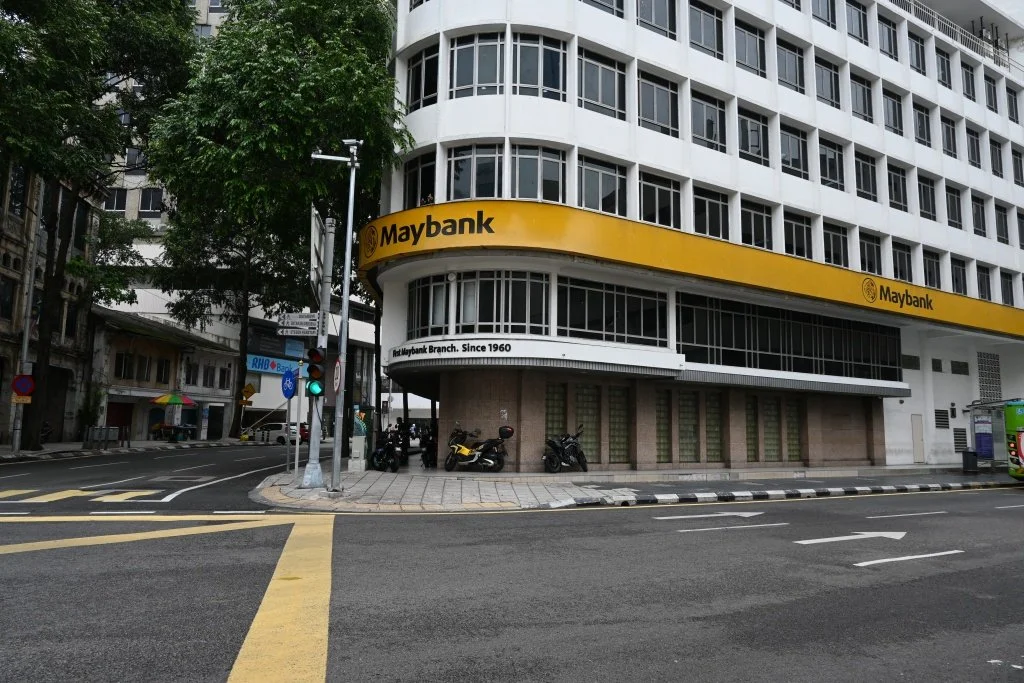
First Maybank branch in Malaysia operating since 12 September 1960 at Jalan H S Lee
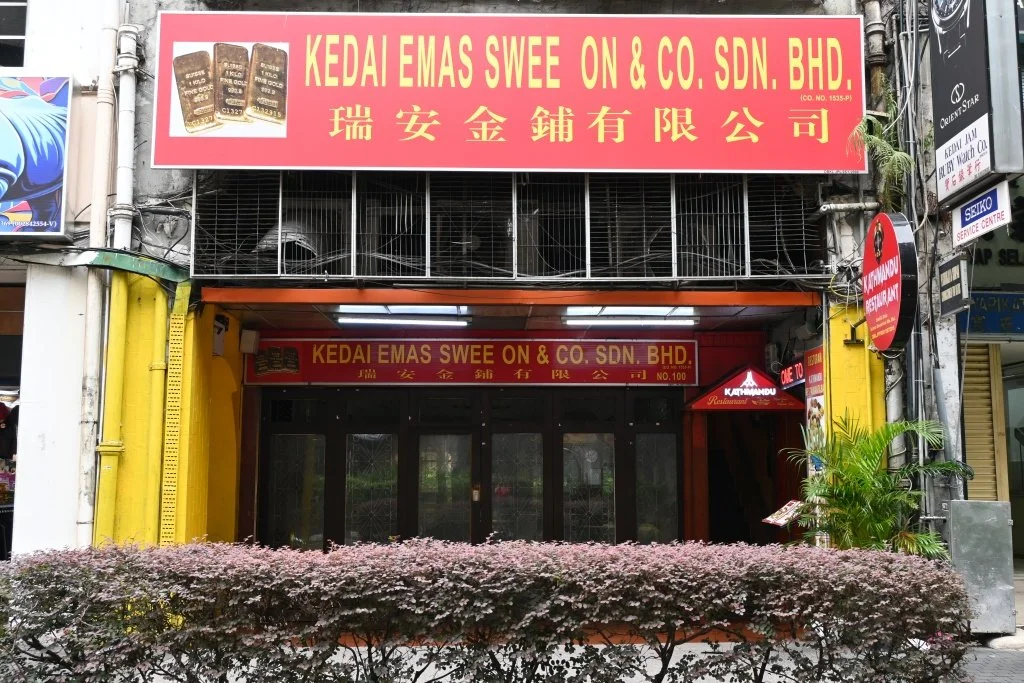
Old goldsmith shop at Jalan Petaling
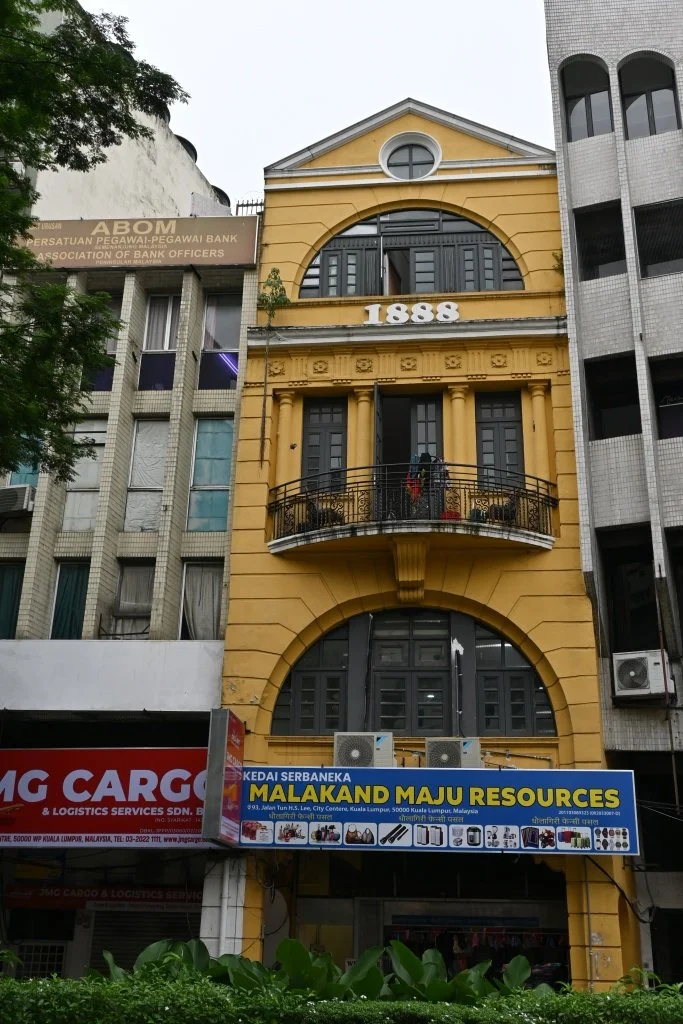
One of Jalan Petaling's oldest shophouse buildings, dating to 1888
The food here is the other reason people keep coming back. Along Petaling Street and the surrounding lanes: Petaling Street Apek's Apam, Kim Soya Bean, Hon Kee Porridge and Chee Cheong Fun, Sze Ngan Chye Roasted Duck, Madam Tang Muah Chee.
For sit-down meals: Lai Foong Lala Noodles, Koon Kee Wantan Mee, Hong Kee Claypot Chicken Rice, Madras Lane Yong Tau Fu.
For something more relaxed: Pik Wah Cafe, Ho Kow Hainam Kopitiam, Restaurant Bunn Choon. And for something sweet before you leave: Pek Yoke's Cake, Swiss Roll and Kaya Kok, which has been making the same things the same way for long enough that the queue outside tells you everything you need to know.
Is Chinatown KL Worth Visiting?
Yes — and budget more time than you think you'll need. The covered market on Petaling Street is busy and commercially driven, and you'll find the same souvenirs available everywhere else in the city. But the neighbourhood around it — the temples, the murals, the old shoplots, the food, Kwai Chai Hong — is a half-day at minimum if you're walking with any intention. Come in the morning before the crowds build, or in the early evening when the light hits the shophouse facades differently. Both versions of Chinatown are worth your time. They're just different cities.
Chinatown rewards the walk you take after you leave the main market — and then the one after that.
Bangunan Sultan Abdul Samad
Before anything else, it's worth standing across the Padang at Dataran Merdeka and just looking at it.
The terracotta brickwork. The copper domes turning green at the edges. The clock tower that has been measuring time over Kuala Lumpur since 1897. Bangunan Sultan Abdul Samad stops you mid-sentence the first time you see it. It doesn't fully become ordinary after that either.
For most of its life, it was a building most people admired only from the outside. Completed in 1897, it served first as the administrative headquarters of British Malaya, then later as the country's courts — a building that held the legal machinery of a colonial government, and then of an independent nation. Now, following an extensive restoration under the Warisan KL initiative led by Khazanah Nasional, it has reopened to the public. You can walk inside.
The interior has been transformed into galleries and exhibition spaces that trace the growth of Kuala Lumpur from its earliest days to the city it is today. Interactive displays, scale models, curated heritage exhibits and cultural galleries now occupy rooms that most Malaysians have never seen. There are also cafés inside — which means for the first time, standing across the Padang and deciding to go in is a complete afternoon rather than a moment's pause on the way somewhere else.
What makes the building worth more than the renovation, though, is the tension it holds even before you step through the door. This is a building designed in a Moorish-inspired style, commissioned under British colonial administration, named after Sultan Abdul Samad (the ruling sultan of Selangor at the time when construction began). Every layer of that history sits on top of the previous one, and none of them cancel each other out. That's not something you get from an exhibition panel. You feel it standing outside, looking at the facade, knowing what happened in the field in front of it.
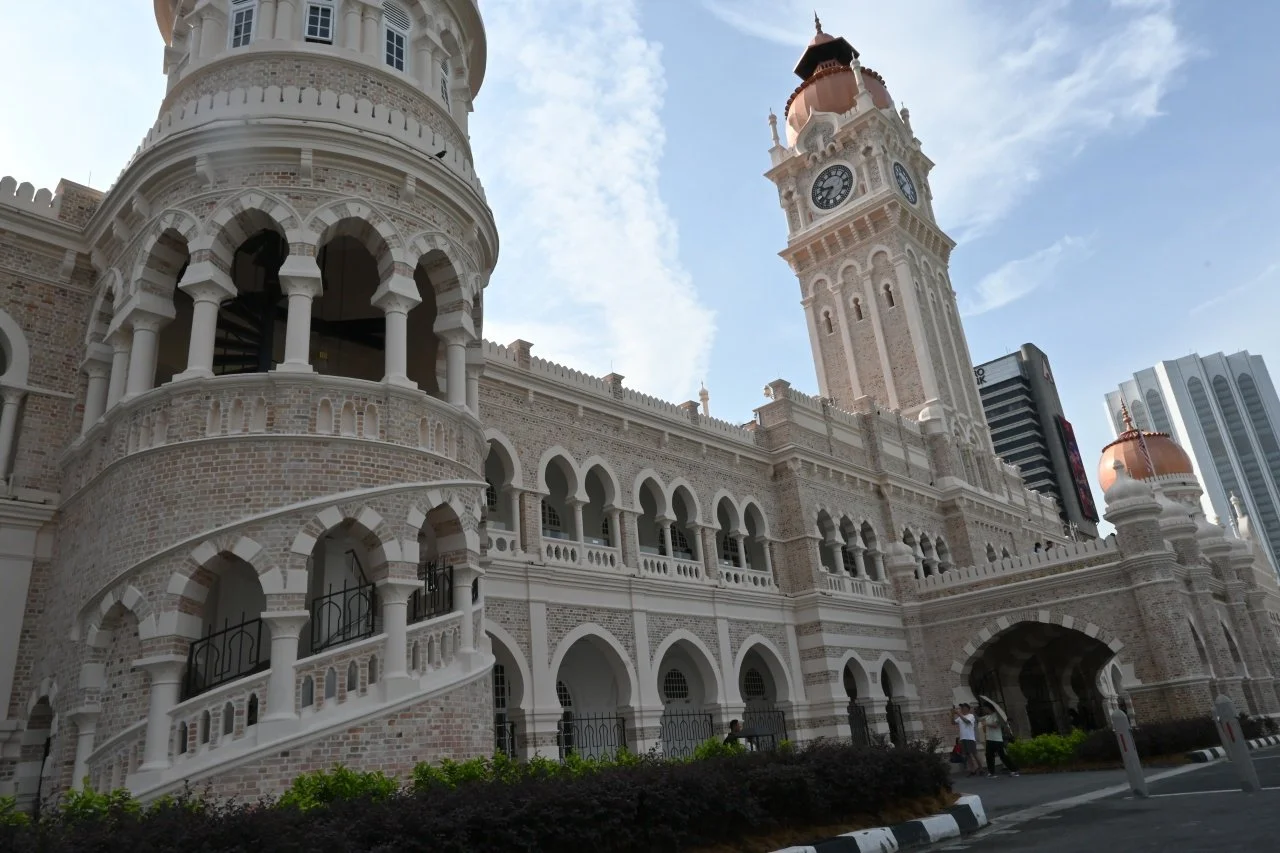
Bangunan Sultan Abdul Samad, KL — restored and reopened to the public in 2026 under the Warisan KL initiative
When Is the Best Time to Visit Bangunan Sultan Abdul Samad?
Now, frankly — the restoration (completed in 2026) has made it more worth visiting than it has been in years. For the exterior, golden hour still does the best work: the terracotta facade shifts from reddish-brown to something closer to amber in the last hour before sunset, and the copper domes catch the light in a way that midday photography can't replicate. The best vantage point remains across the Padang, using the open field as foreground. For the interior galleries, arrive earlier in the day when crowds are lighter and the exhibition spaces are easier to move through at your own pace.
The restoration turned Bangunan Sultan Abdul Samad from a building you admire as you pass into one you actually go to — go in.
Explore with Maxis: The Free Heritage Tour of Downtown KL
In the late Dec 2025 and Jan 2026, Maxis ran a free guided heritage tour through Downtown KL for Maxis Postpaid customers — five locations, five hours, a double-decker bus, and a tour guide who knew the city better than most people who live in it. It was one of the most thoughtfully run experiences I've been on, free or otherwise. The rooftop gamelan performance at a heritage hotel not open to the public, the original kilometre zero marker at Dataran Merdeka, the way the tour ended at the base of Merdeka 118 as the light shifted — it earned its own post.
→ Read the full blog: The Free KL Tour That Made Me Feel Like a Tourist in My Own City
Brickfields Heritage Walk Tour
Brickfields gets called Little India as there are high percentage of Indian residents and business operating.
The heritage walk is an initiative by the Brickfields Heritage Association — a guided experience through the district's history, its streets, its religious sites, and the community that has shaped it. I would have walked through without stopping. Now I understand it.
The route takes you through temples, churches, clan associations and streets that each carry a different layer of the neighbourhood's history. The name itself is literal — clay pits and brick kilns once lined the railway tracks here, supplying bricks for some of KL's earliest colonial buildings. The Indian community that settled and stayed shaped everything about how Brickfields looks and functions today, and the walk makes that visible in a way that simply walking through doesn't.
What stayed with me most, though, wasn't the heritage buildings. It was learning how deeply Brickfields is built around its blind community. Signboards throughout the neighbourhood remind pedestrians to be aware. Massage centres line Jalan Thambypillai. These aren't tourist curiosities — they're how people here earn a living. Persatuan Bagi Orang Buta Malaysia, the Association for the Blind, has a presence here, and volunteers are always needed to help members learn and navigate independently. It exists quietly until someone points it out. After that, you notice it everywhere.
That's what the walk gave me: reasons to notice things I'd have walked past.
I found something else on that walk too — a monorail shot I wasn't expecting [Read it here].
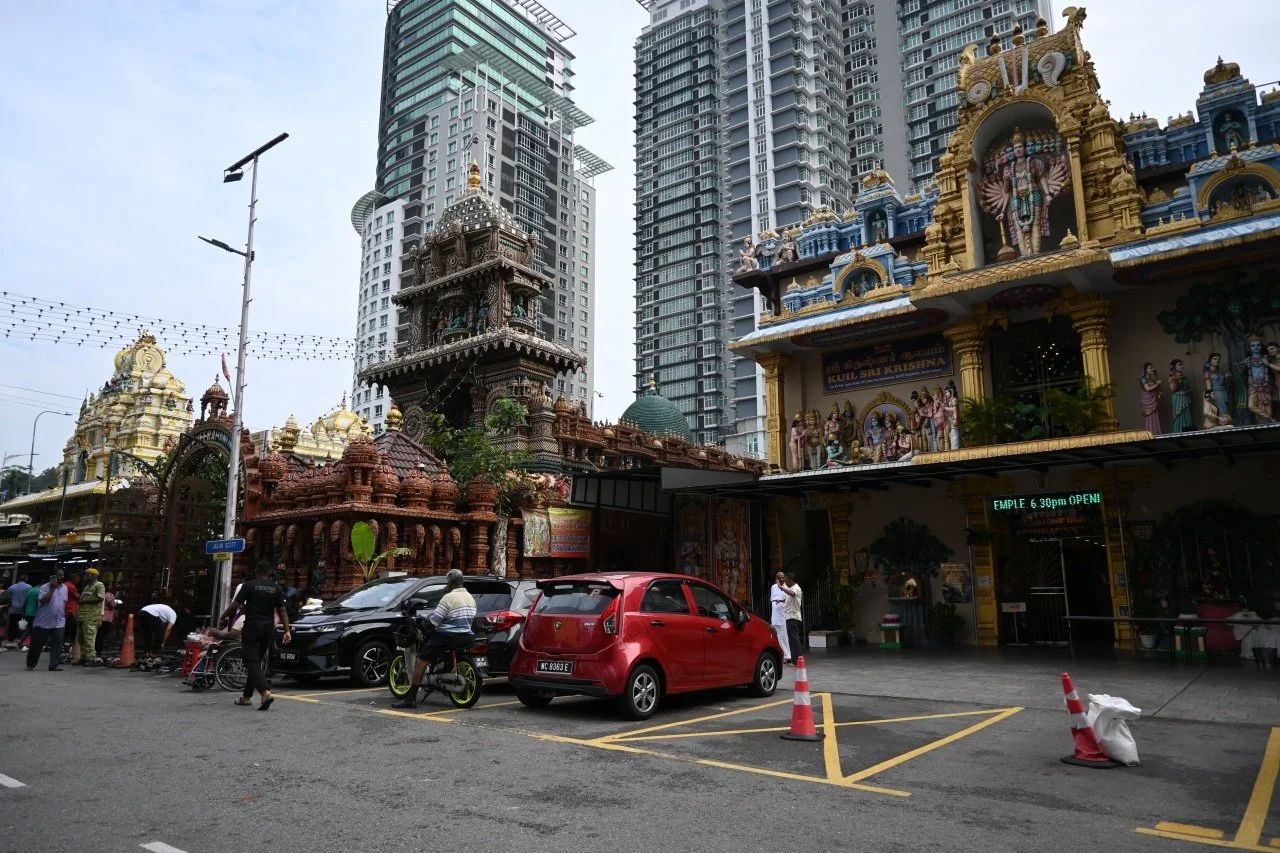
Jalan Scott, Brickfields — said to be the only street in Malaysia with three temples standing side by side
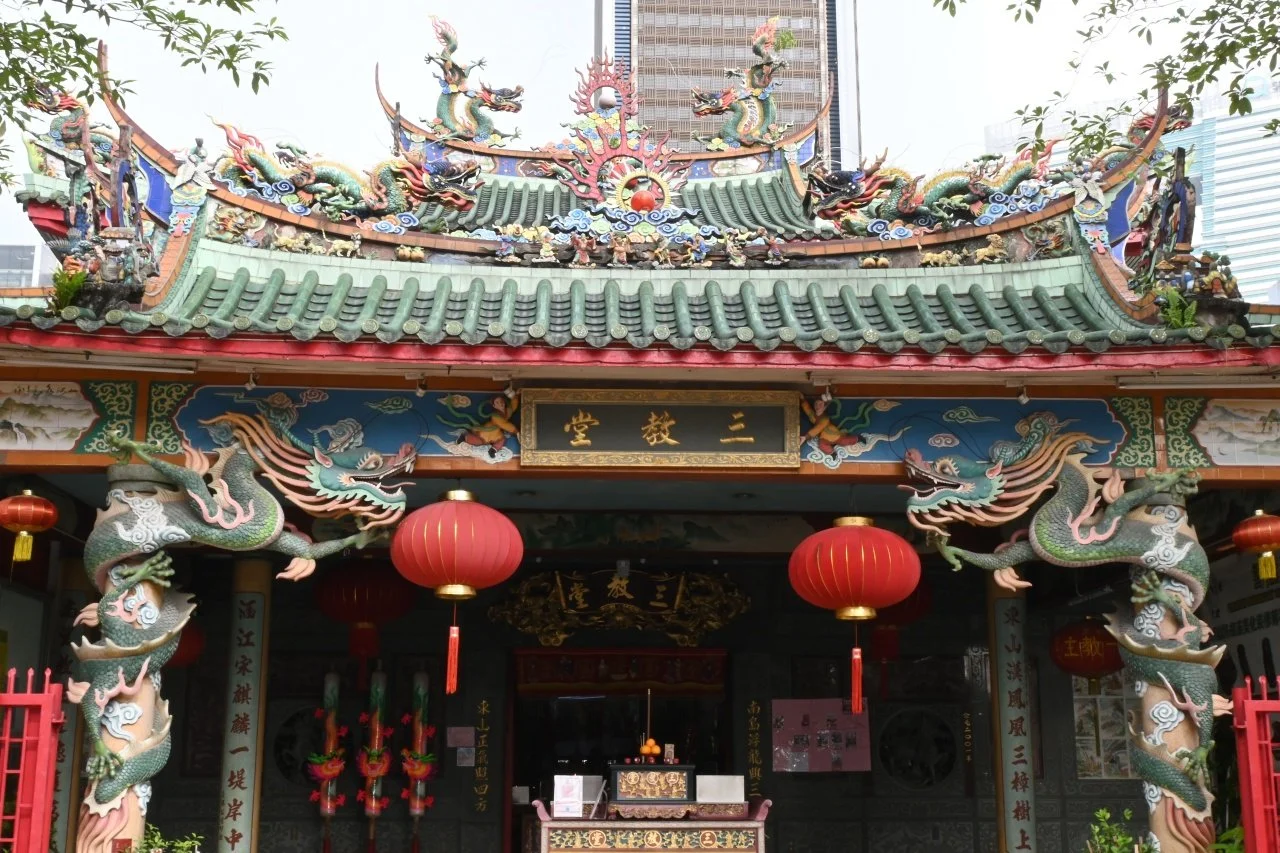
Sam Kow Tong Temple at Brickfields
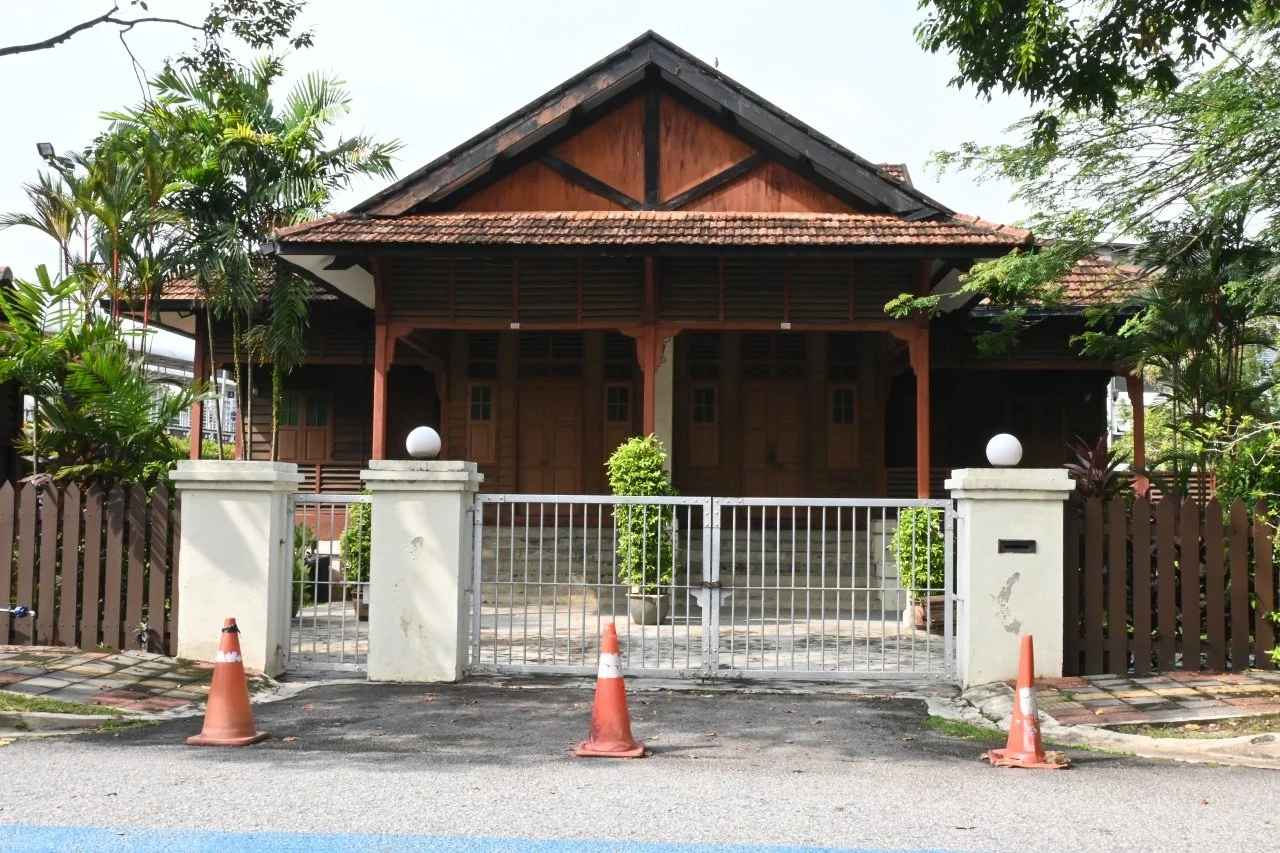
Ananda Krishnan childhood home Brickfields Kuala Lumpur heritage building
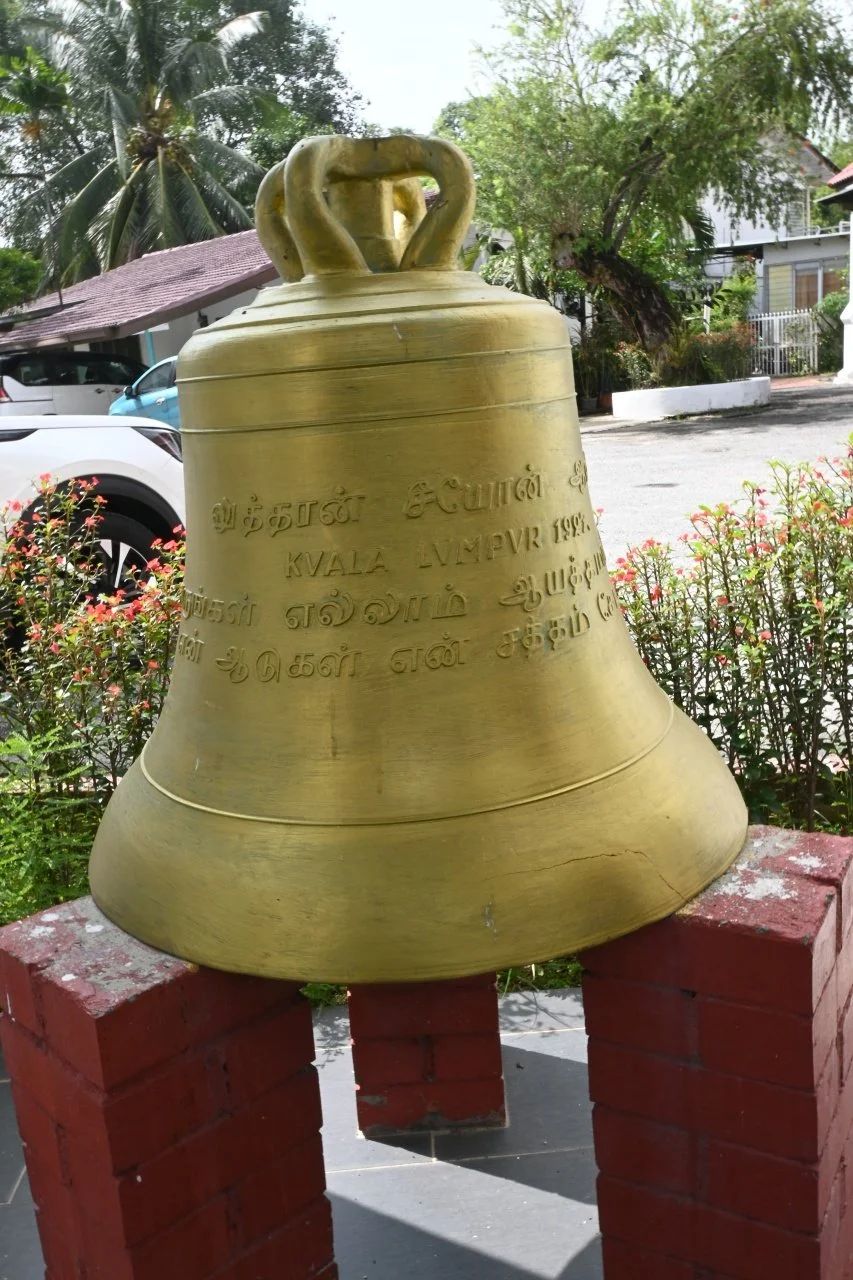
Bell with Tamil inscriptions at Evangelical Lutheran Zion Church, Brickfields
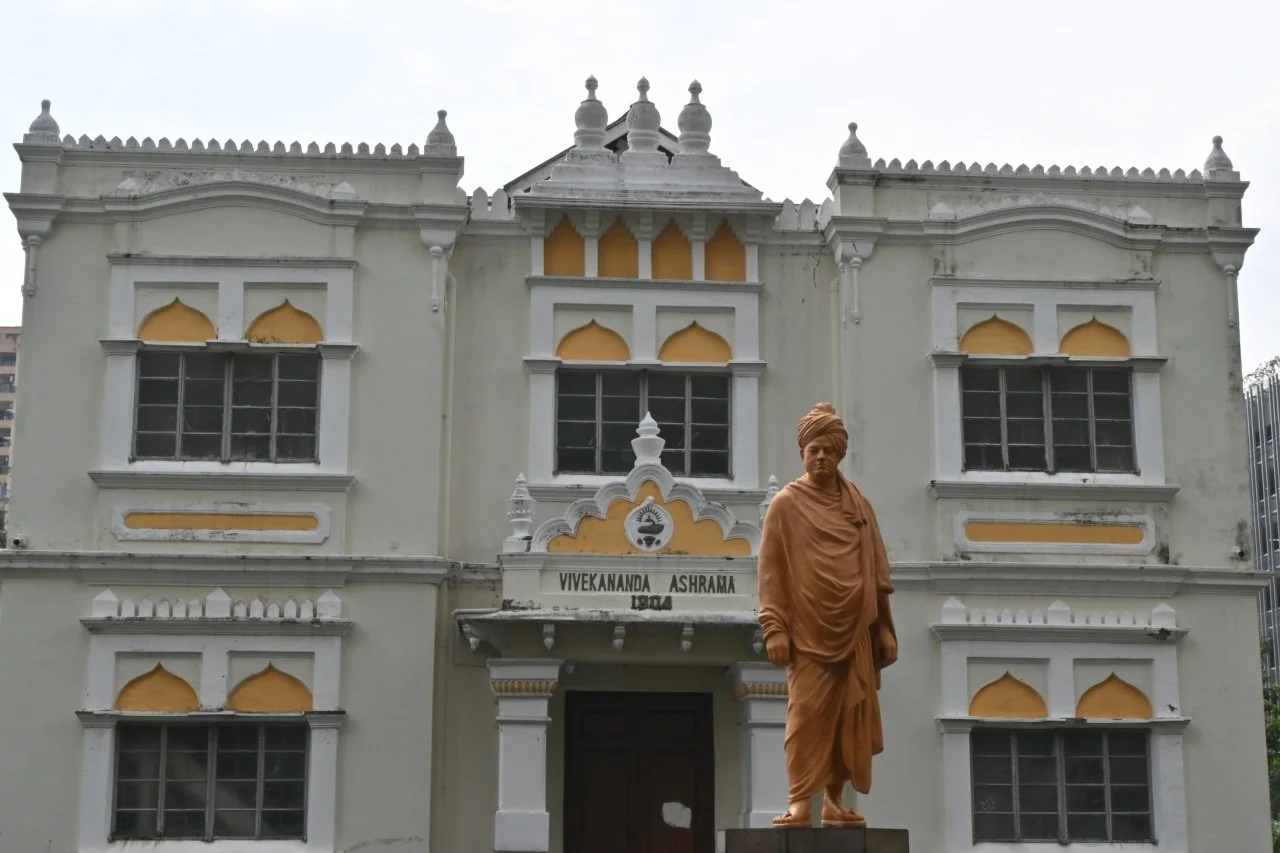
Vivekananda Ashrama, Brickfields — built in 1904, one of KL's oldest heritage buildings and a national heritage site
Syed Muhammad Naquib al-Attas Library, ISTAC
The first thing that hits you is that this doesn't look like any library you've been to before.
Walking in, I kept thinking: Hogwarts. Not because of anything I could point to. The feeling, mostly. High wooden bookshelves, arched walkways, warm light through tall windows, a spiral staircase that seems to belong to a different century. Every corner of this place has been thought about. Every corner is worth photographing.
The architecture is inspired by the Alhambra Palace in Spain — and once you know that, you see it everywhere. The courtyard fountain at the entrance, the carved arches, the stone walls that feel cool even in KL's heat. The building was designed by Professor Tan Sri Dr. Syed Muhammad Naquib al-Attas himself — a philosopher who built his own library, to his own vision of what a space for serious thinking should feel like.
The library sits in Taman Duta on a hillside, and it is primarily a research space rather than a public one. That said, visitors are welcome on weekdays. Expect tight security at the entrance — state your purpose clearly, sign in, and you're free to walk through. The dress code is designed to maintain the sanctity of the academic and Islamic space: long pants or skirts and covered shoulders are required, and ladies are encouraged to bring a shawl or scarf to cover their hair as a sign of respect.
Some places earn your quiet without asking for it. This is one of them.
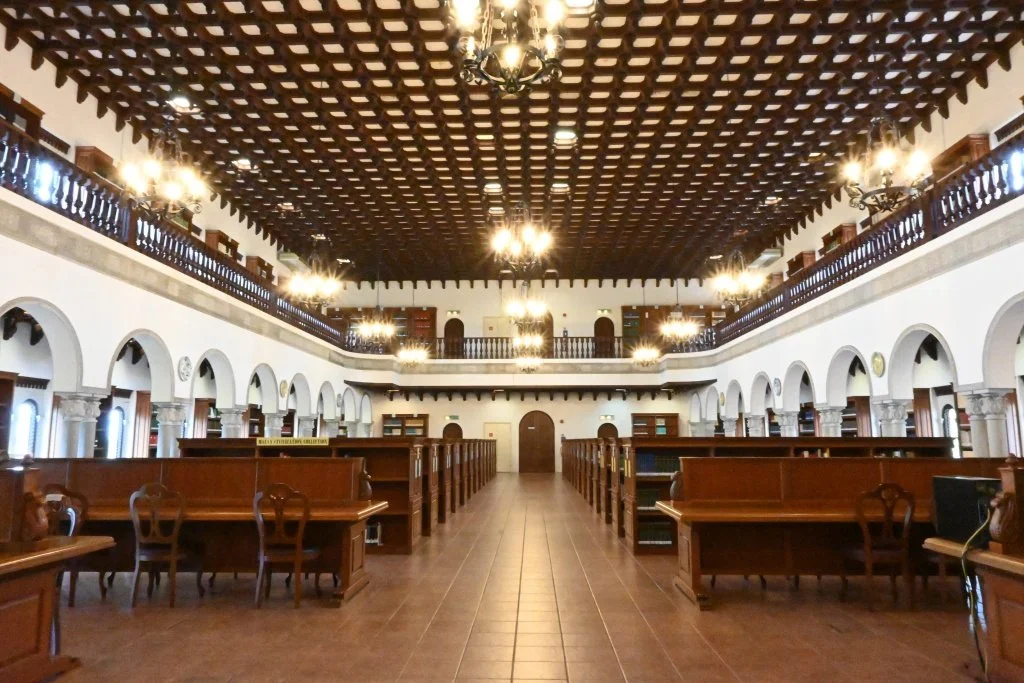
Interior of the Syed Muhammad Naquib al-Attas Library, ISTAC — the Alhambra-inspired architecture is visible in the arched walkways and warm wooden shelving
Bukit Bintang
Bukit Bintang is the heart of KL — and if you're walking it with a camera, it will keep you busy.
The neighbourhood has moods, and they depend entirely on when you arrive. At noon on a weekend, it is crowded the way any large commercial district in any large city is crowded — malls, heat, the particular exhaustion of too many people moving in too many directions. That's the version most visitors experience first. It's incomplete.
Come at 7pm on a weekday and walk Changkat Bukit Bintang — the strip of restaurants running off the main road — and the neighbourhood has settled into something more manageable. Tables out on the pavement, the smell of something grilling, a mix of people who work in the city and visitors who've made their way here after the day cooled down. It doesn't require a particular plan. You walk until something looks good.
Jalan Alor, two minutes away, is the hawker street. Also crowded, also lively, and the food is genuinely worth the effort — char kway teow, satay, grilled stingray if you're inclined. The stalls have been here long enough that the crowds are not accidental.
For photographers, Bukit Bintang offers more than most people realise. The pedestrian crossing near Pavilion — KL's own version of the Shibuya crossing — is worth timing right: at peak hour, the crossing fills from all directions at once and the energy of it is genuinely photogenic. The elevated KL Monorail passing through Bukit Bintang station is the other target worth hunting — position yourself on the street below and wait for the train against the city skyline. It takes patience, but the shot is there.
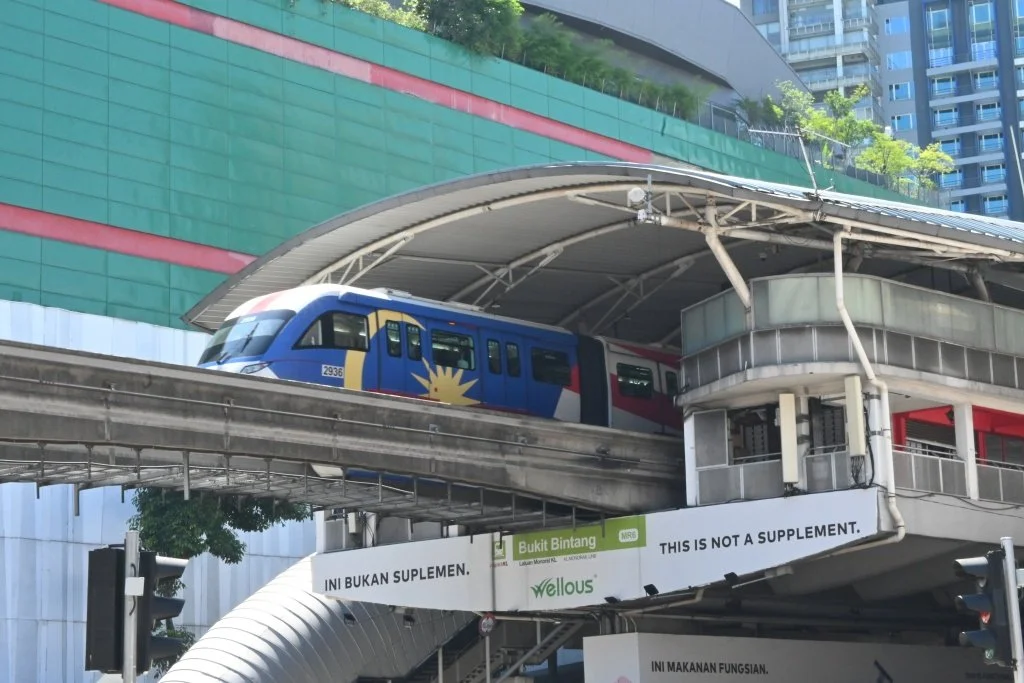
KL Monorail passing through Bukit Bintang — photographed from street level
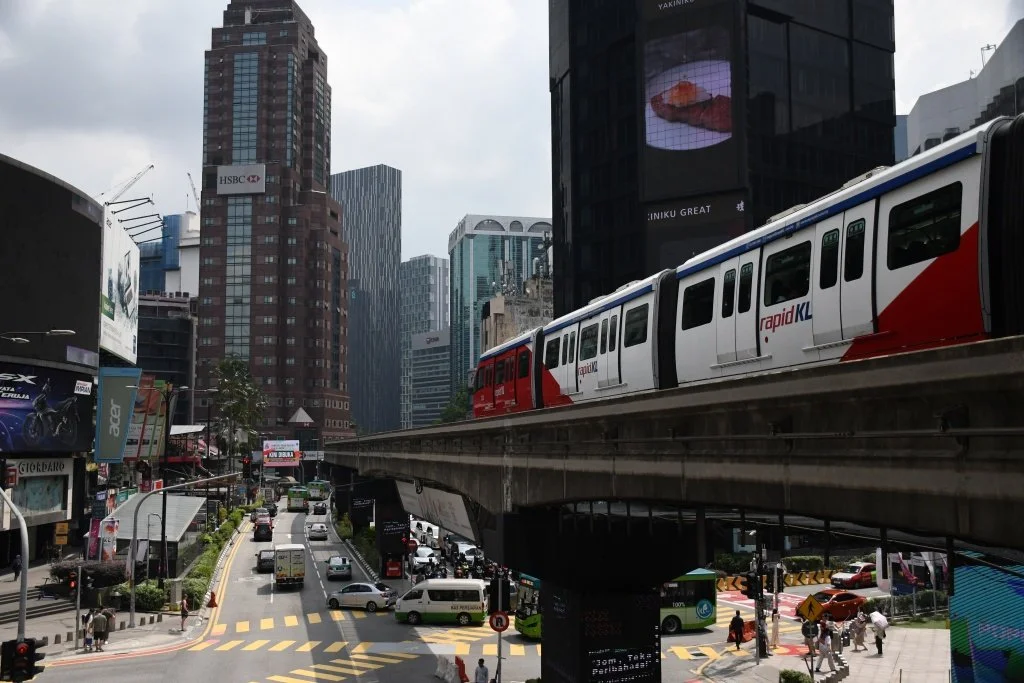
Looking down from the Bukit Bintang Monorail Station — a different angle on the same train hunt
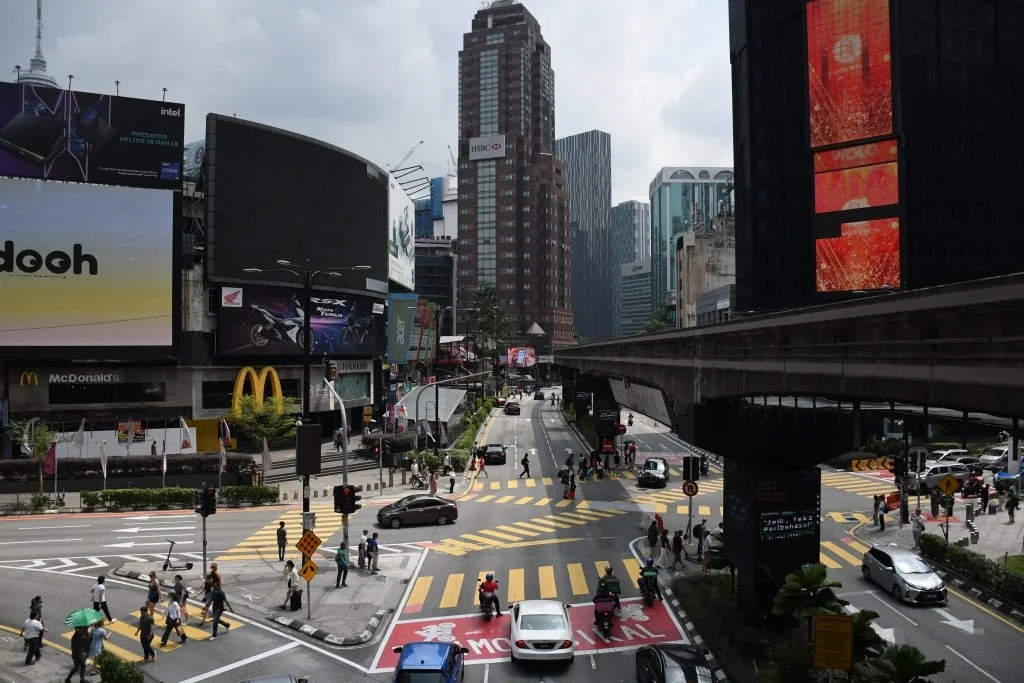
Kuala Lumpur Shibuya Crossing at Bukit Bintang (cross from Lot 10)
Is Bukit Bintang Worth Visiting?
Yes, if you go in with honest expectations. Pavilion and Lot 10 are large, air-conditioned malls, and they're useful if you need them. But the reason Bukit Bintang earns its reputation as the heart of the city is the walkability: Changkat, Jalan Alor, and the connecting streets between them form a compact area you can cover on foot in an evening, with nothing planned in advance and no itinerary required. That kind of unplanned walking — and unplanned photography — is what this neighbourhood is built for.
What Kuala Lumpur Looks Like When You Slow Down
I've been going back to these places across different years, different MRT lines, different moods.
What I keep noticing is that Kuala Lumpur holds its history lightly — not carelessly, but without making a performance of it. The Muddy Confluence that named this city is still there, still flowing, still the same two rivers meeting at the same point. The zero milestone at Dataran Merdeka doesn't have a fence around it. The clan house on Jalan Tun H.S. Lee shares its block with a parking lot. The library built to honour Islamic philosophy sits in a part of the city most people pass through without stopping.
None of it announces itself.
That's what I mean by slowly. Not slow in the sense of doing less, but slow in the sense of actually looking — at the building you've driven past fifty times, at the name of the street you've always parked on, at the river two cities were built around and that most of us walk over without looking down.
I was born here. I am still finding out what that means.
If Kuala Lumpur is somewhere you're passing through, slow down. If it's somewhere you've always lived, slow down anyway. The city has been here longer than either of us, and it has things to show you that it isn't going to shout about.
Muddy Confluence. What a thing to build a city on.
Kuala Lumpur Quick Summary
Best for: Seeing KL at walking pace rather than ticking off the towers
Trip length: 3 to 4 days, or a series of afternoons if you live here
Must-do: Chinatown and Petaling Street, Bangunan Sultan Abdul Samad, the Brickfields heritage walk, and the Syed Muhammad Naquib al-Attas Library at ISTAC
Food highlight: Petaling Street for Apek's Apam, Kim Soya Bean, Hon Kee porridge and chee cheong fun, Sze Ngan Chye roasted duck, Madam Tang muah chee. Jalan Alor for char kway teow, satay and grilled stingray
Best time to go: Chinatown early. Bukit Bintang at 7pm on a weekday, when Changkat has settled
Getting around: Monorail and LRT, then walk. Grab for anything beyond the core
Not ideal for: Anyone on a half-day layover. The whole point is not rushing
Pair it with: Penang, four hours north by ETS
Frequently Asked Questions
How many days do you need in Kuala Lumpur?
Three to four days is enough to walk Chinatown, the colonial core around Bangunan Sultan Abdul Samad, Brickfields and Bukit Bintang without rushing any of them. If you live here, treat it as a series of afternoons instead.
Where should you eat in Chinatown, KL?
Along Petaling Street and the lanes around it: Apek's Apam, Kim Soya Bean, Hon Kee porridge and chee cheong fun, Sze Ngan Chye roasted duck, and Madam Tang muah chee. These are the stalls people come back for, not the ones that catch tourists first.
When is the best time to walk Bukit Bintang?
Around 7pm on a weekday. Changkat Bukit Bintang has settled by then, with tables out on the pavement, and Jalan Alor is two minutes away for char kway teow, satay and grilled stingray.
Is Kuala Lumpur worth visiting beyond the Petronas Towers?
That's rather the point of this post. The towers take an hour. The city takes longer and gives back more, particularly Chinatown's heritage layers and the ISTAC library, which almost nobody visits.
You might also enjoy
🌏 Wander · Why Taiping Is Malaysia's Most Underrated City (And What to Do There)
🌏 Wander · Is Pulau Rawa Worth the Trip? Your Complete Guide to Malaysia's Hidden Island Paradise